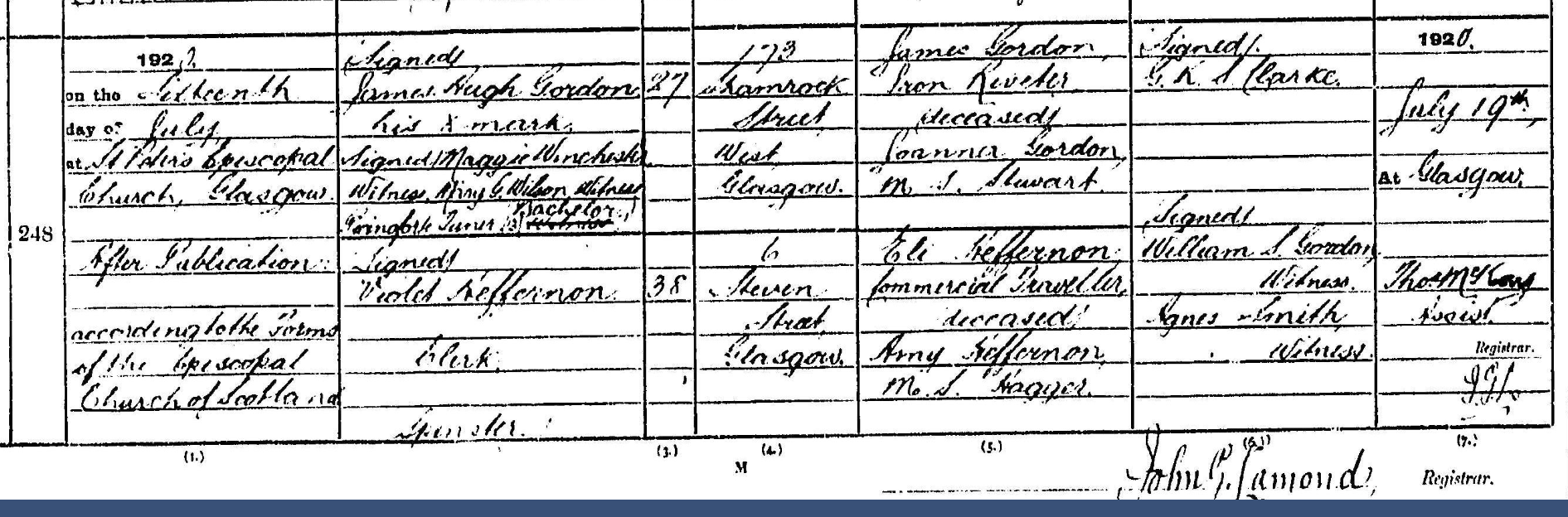
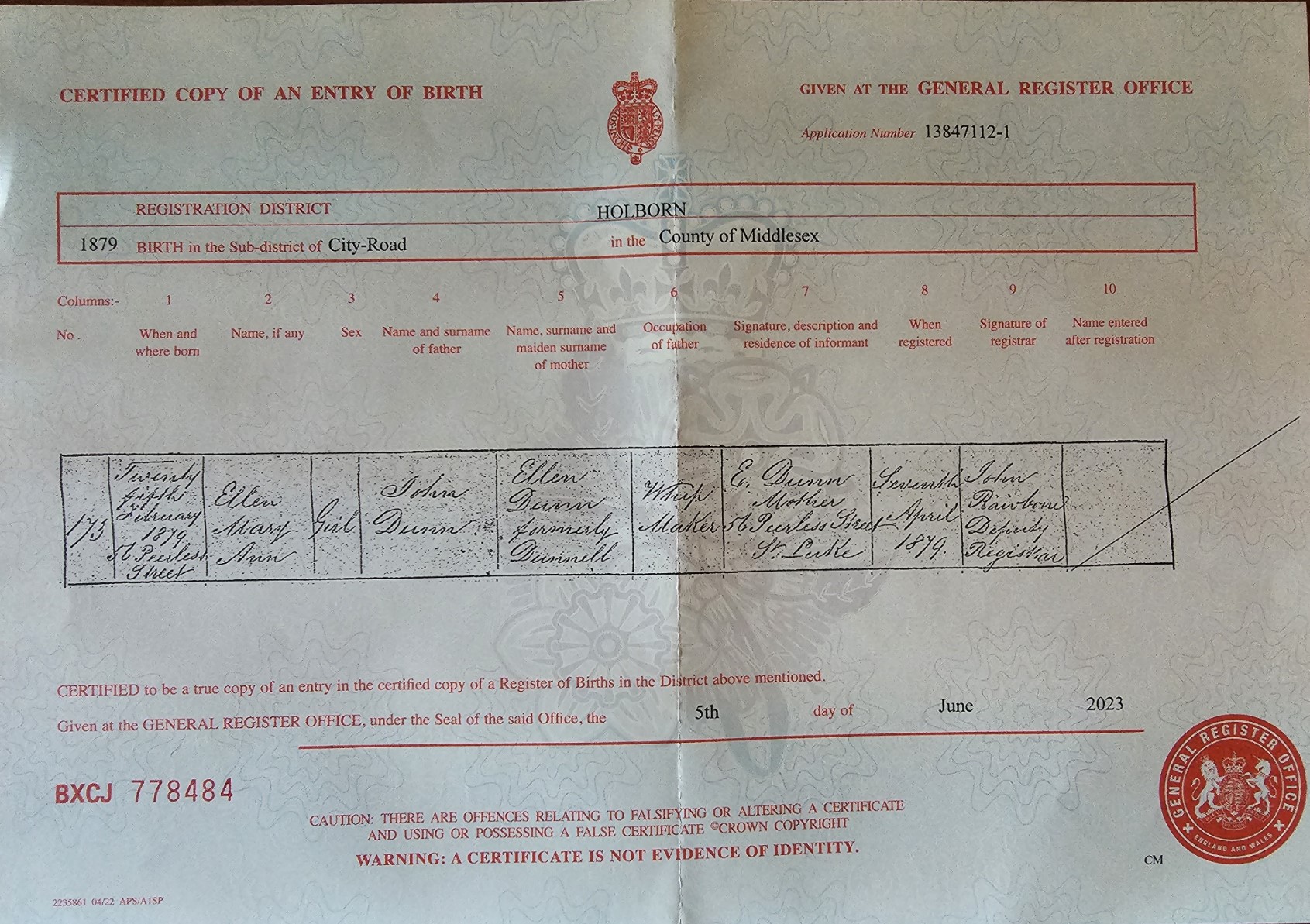
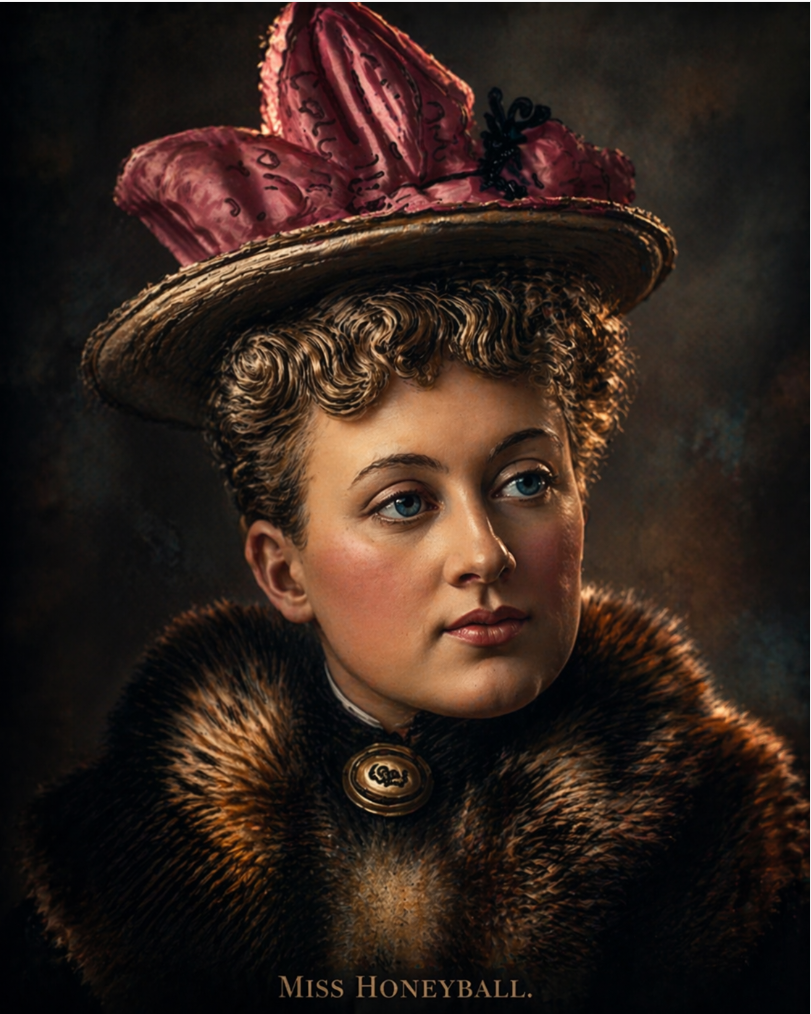
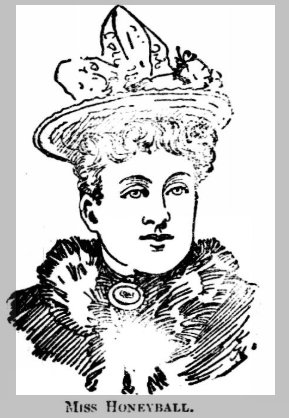
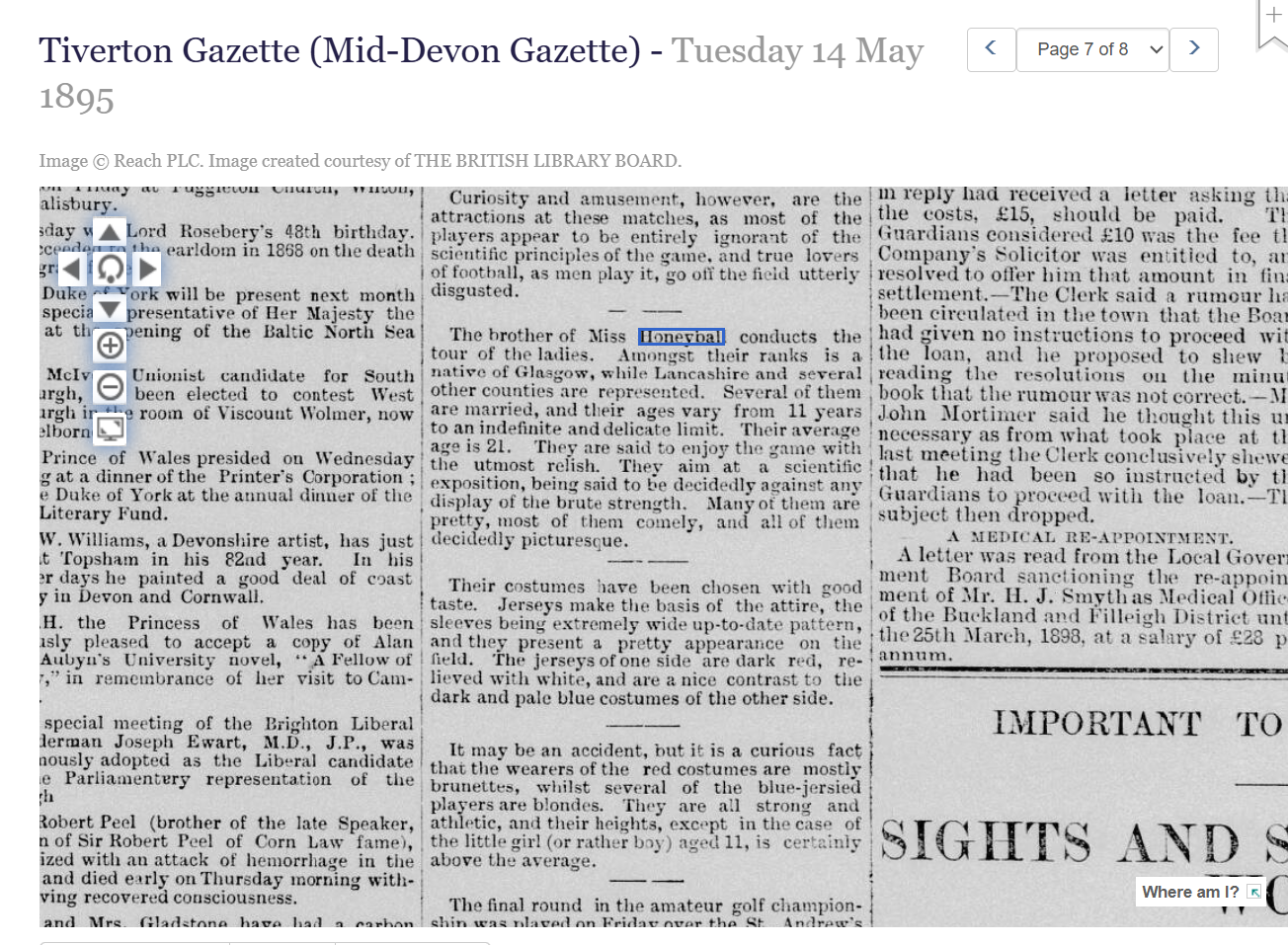
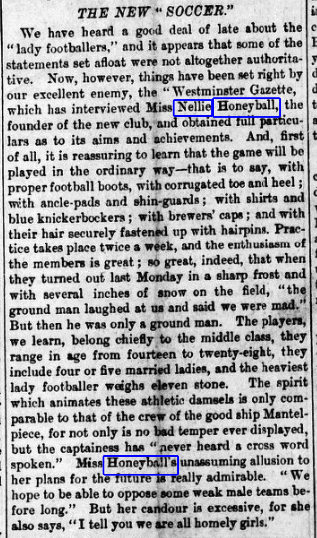
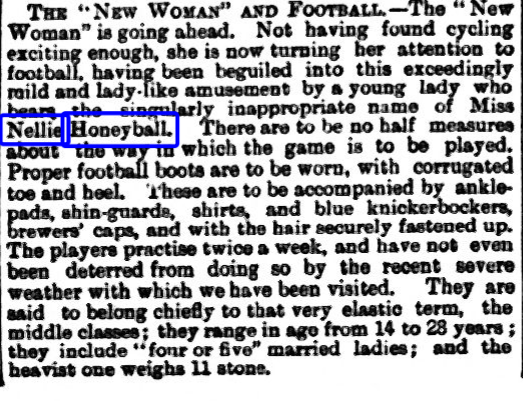
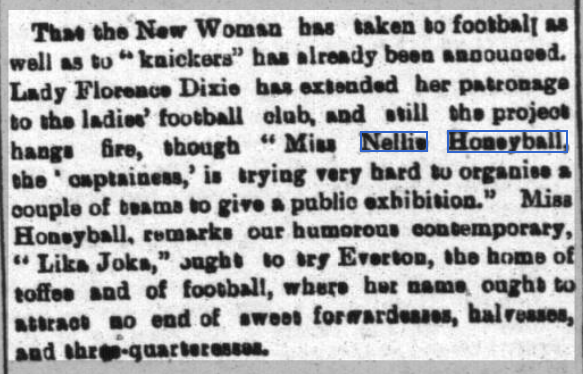
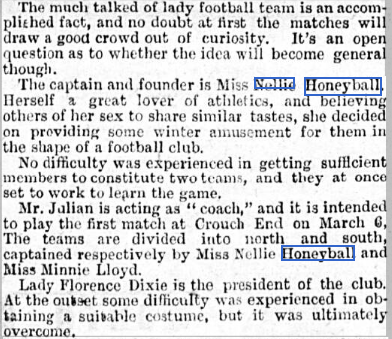
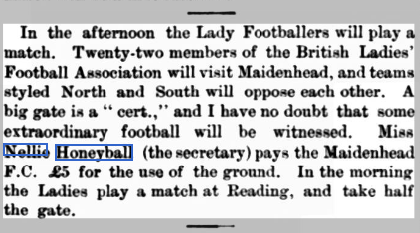
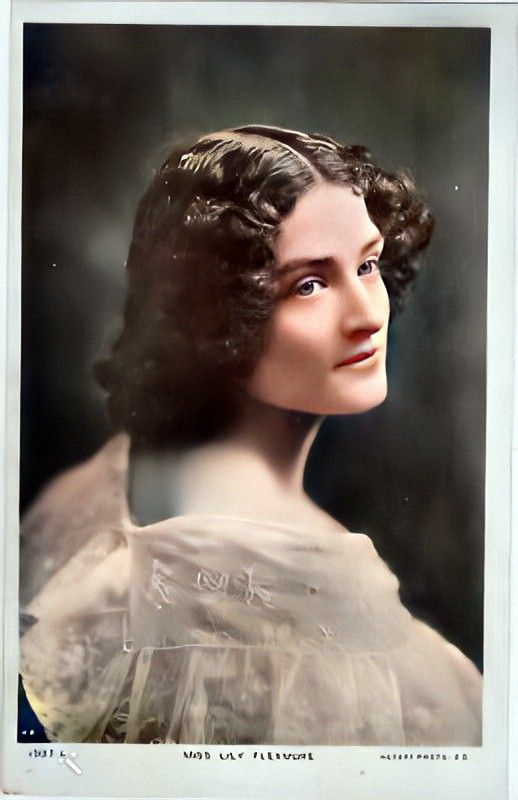
Helen Jane Matthew was born in Mile End Old Town, London, daughter of a Master Mariner who captained vessels on the Liverpool–Lisbon route — a journalist who wrote under a pen name, a footballer who played under a pseudonym, and a woman who lived to the age of eighty-nine — having witnessed, in her lifetime, the birth of women's football in England and its eventual rise to the highest levels of the game.
A BIRTH ON THE THAMES — OR NEARLY SO
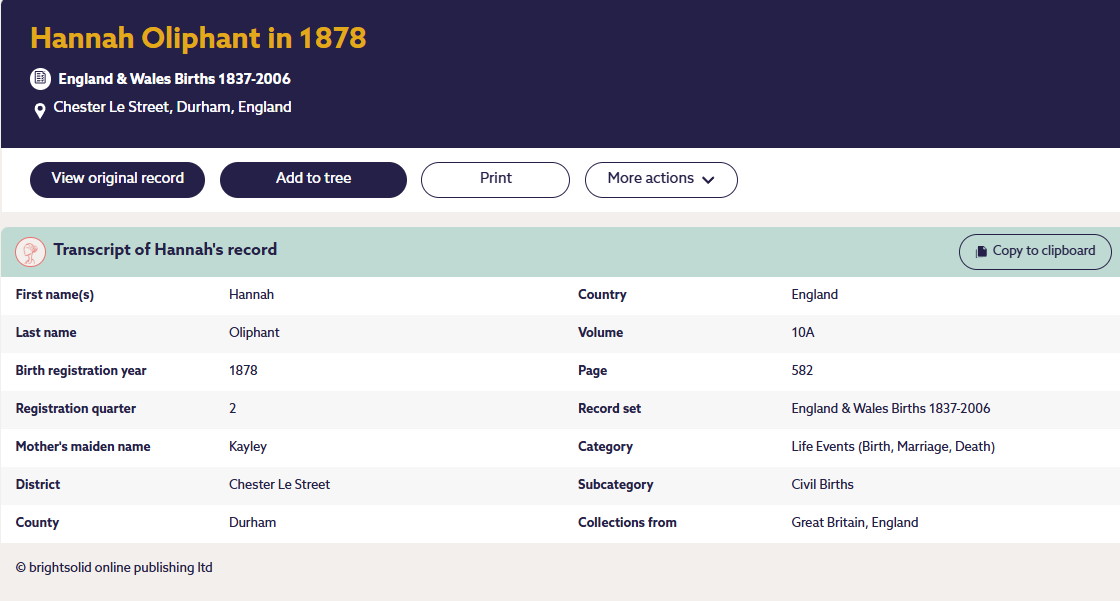
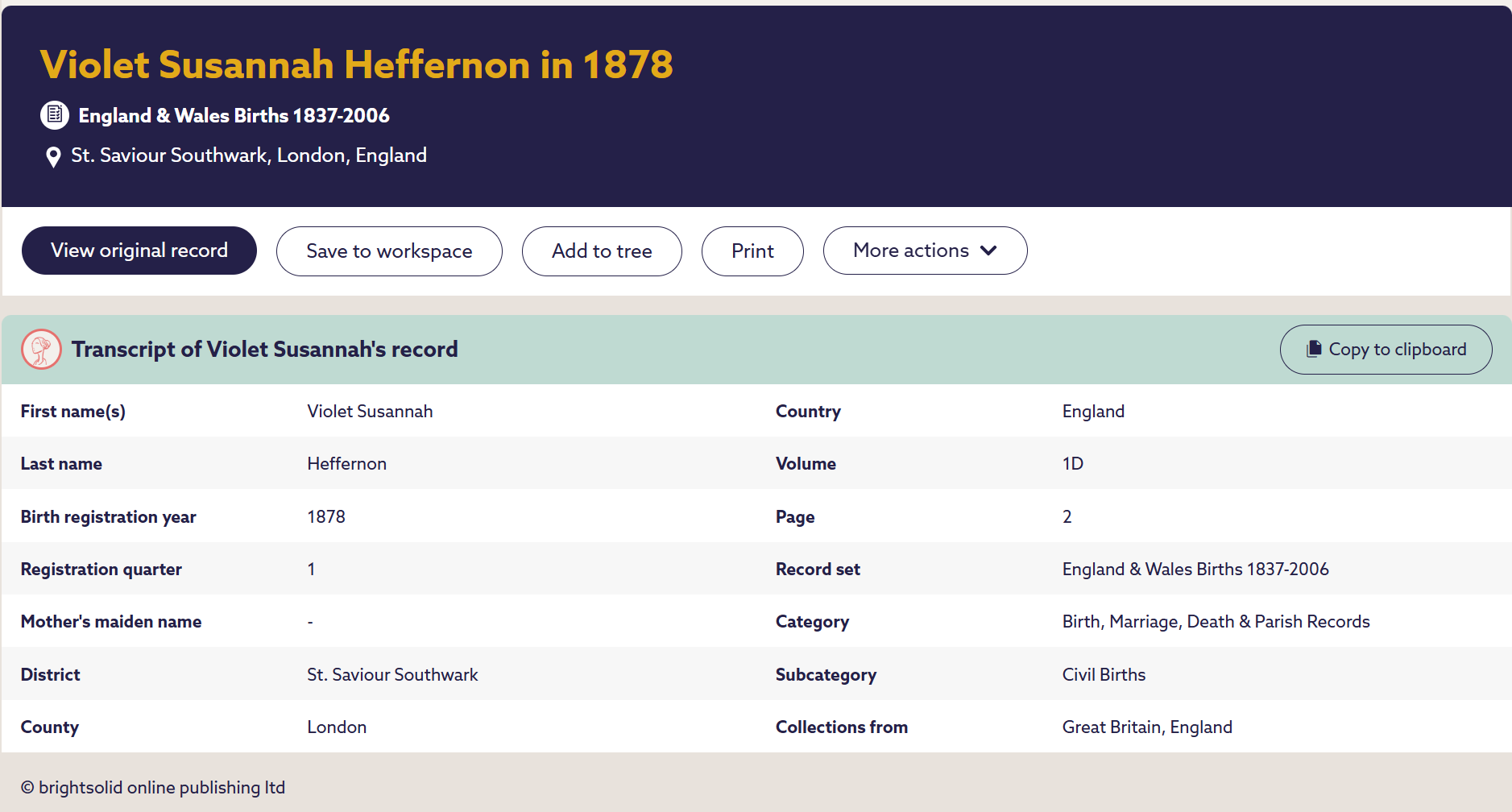
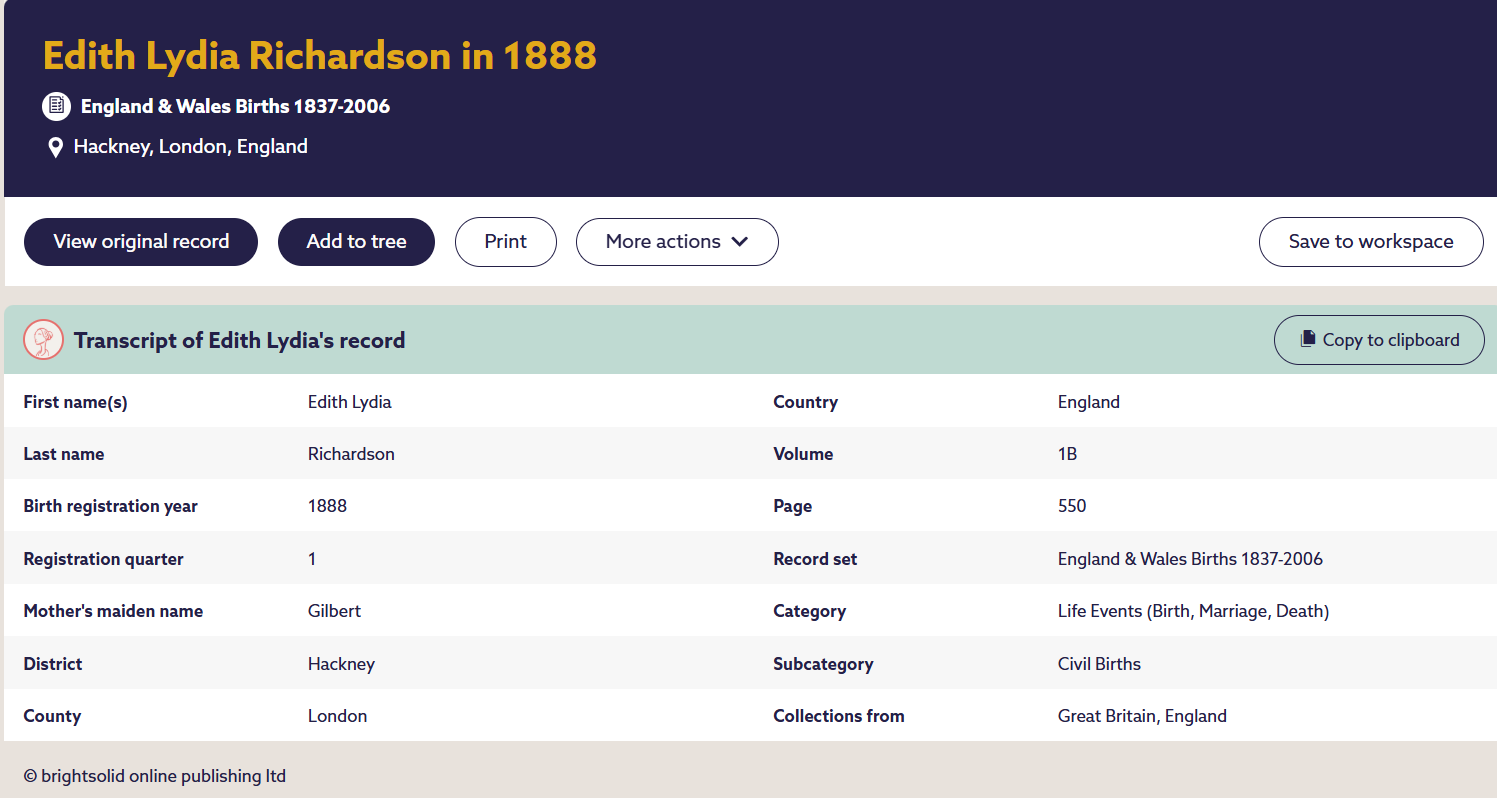
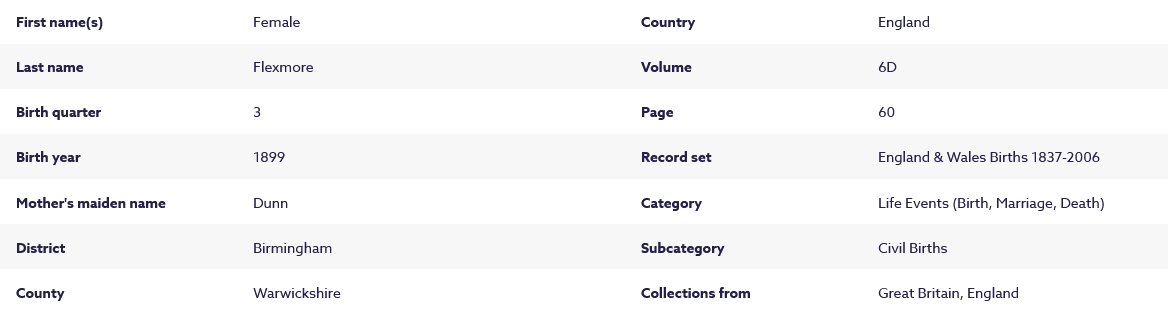
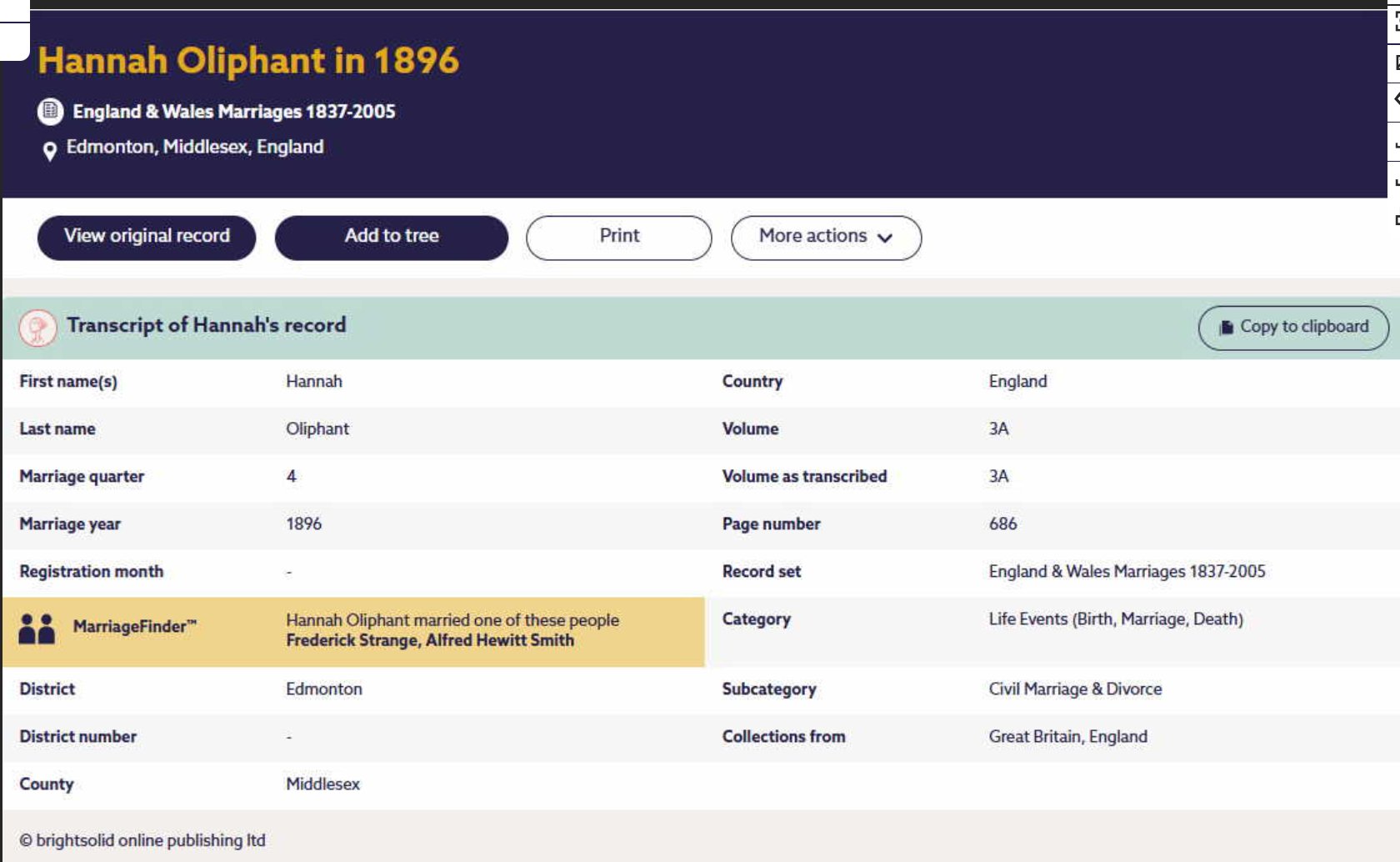
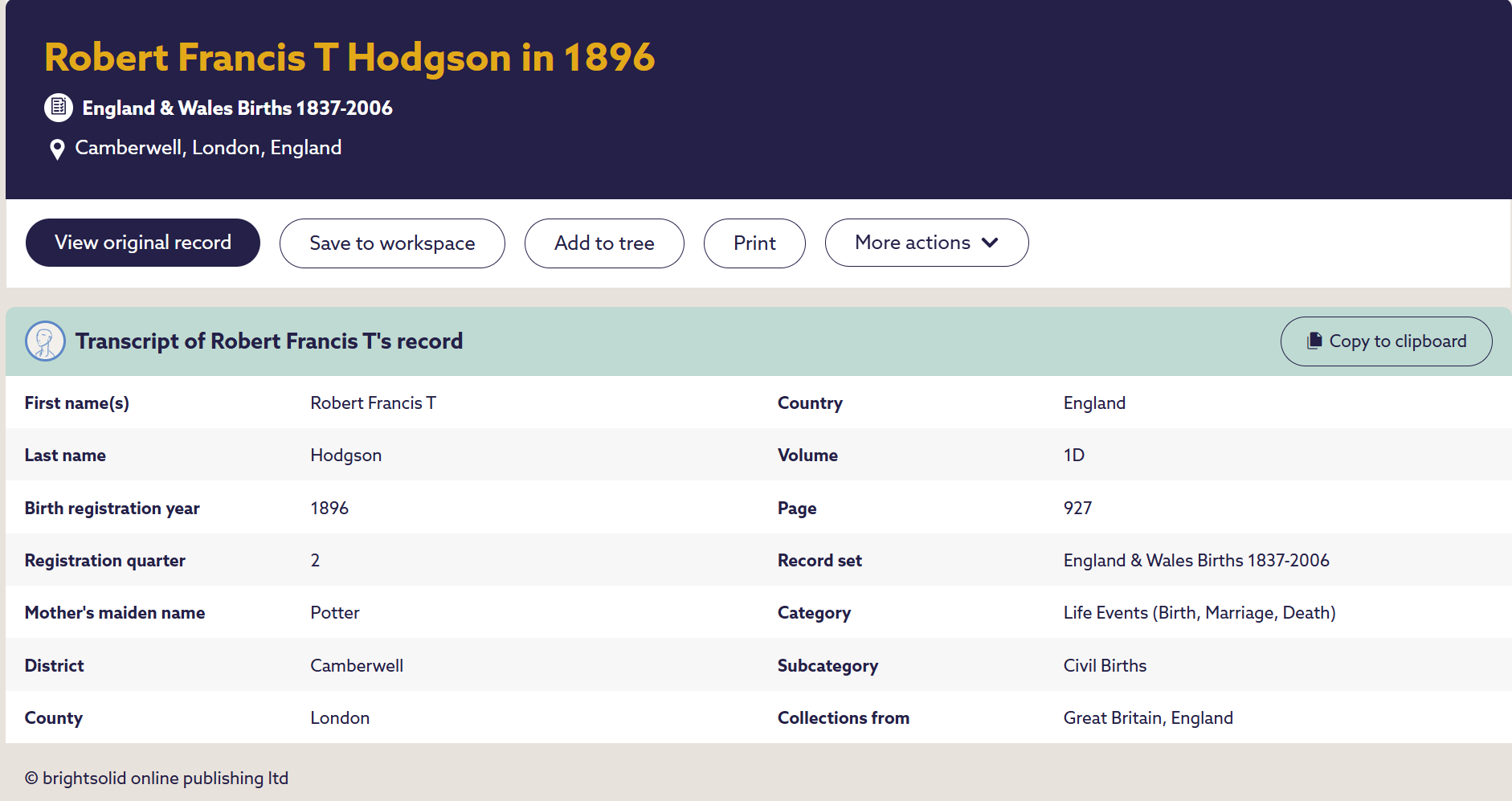
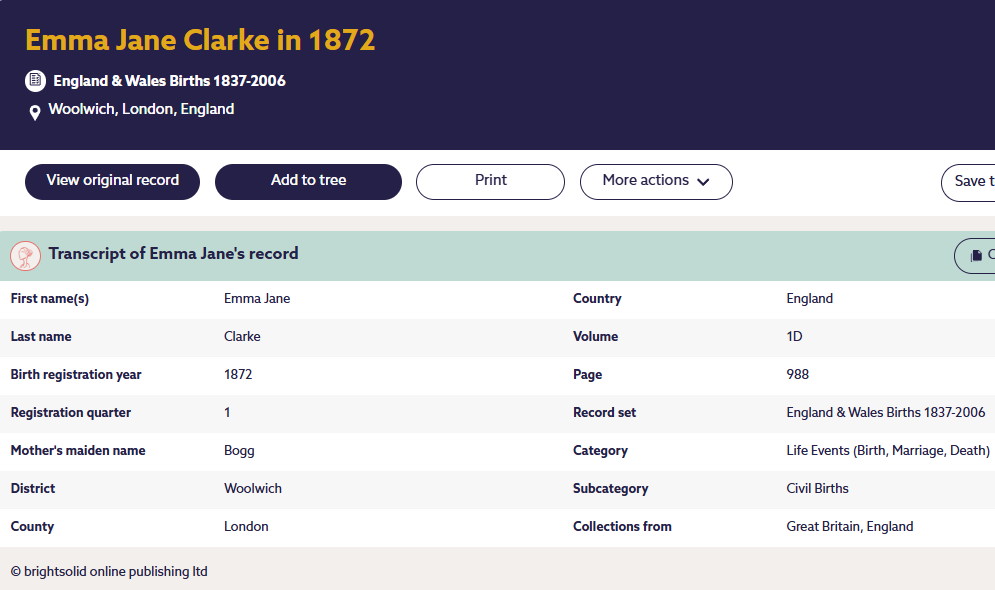
Helen Jane Matthew was registered at birth in Mile End Old Town, London, in the third quarter of 1871. Her mother's maiden name was Hayne, a Devon family whose connections would shape Helen's early years profoundly. The civil birth record is straightforward — but Helen herself complicated matters considerably when she came to fill in the 1921 Census form. There, in the space for birthplace, she wrote not "Mile End" but "At Sea — Paulsboro Bells (London)" — a claim that she may have been born aboard the paddle steamer SS Paulsboro Bells on the River Thames. Whether literally true, a playful embellishment, or a family legend handed down from a father who spent his life on ships, it is a detail entirely in keeping with the spirit of the woman who wrote it.
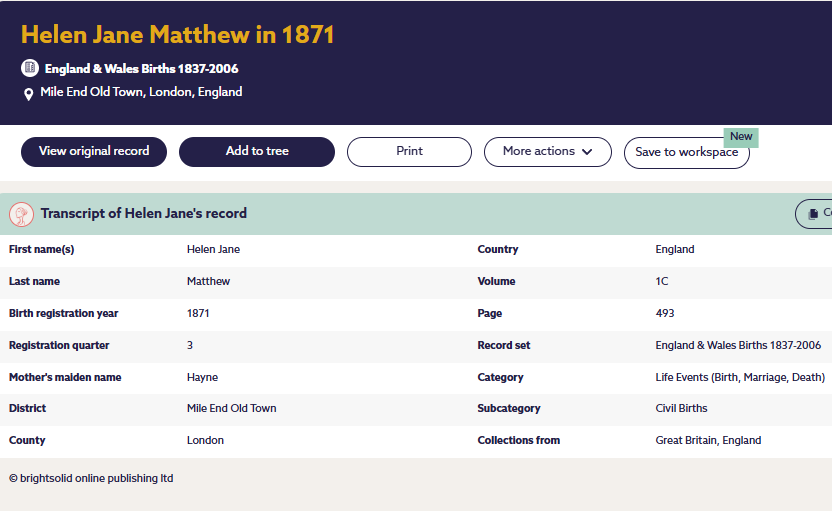
Civil Birth Record · Helen Jane Matthew · Q3 1871 · Mile End Old Town, London · Mother's maiden name: Hayne
✦ Research Note · The Paulsboro Bells Mystery ✦
Helen's census entry — "At Sea — Paulsboro Bells (London)" — is almost certainly a phonetic rendering, recalled fifty years after the fact, of a vessel name and location she had been told as a child. No paddle steamer named Paulsboro Bells appears in any Thames shipping record. However, the Thames was busy with a fleet of famous pleasure steamers during the 1870s, many following a "Belle" naming convention that was well established on the river long before the celebrated Belle Steamers company was formally constituted in 1887.
The Belle Steamers — which included vessels such as Clacton Belle, Woolwich Belle, London Belle, Southend Belle, Walton Belle, and Yarmouth Belle — were among the most celebrated paddle steamers on the Thames Estuary, running excursion services between London and the Essex and Suffolk coast. The London Belle herself, built in 1893 for the London, Woolwich & Clacton-on-Sea Steamboat Company, was a familiar sight on the river in the decades that followed. A vessel named in the same tradition — a Palace Belle, London Belle, or similar — operating in 1871 would be entirely consistent with the naming conventions of the period.
A particularly compelling possibility concerns the stretch of the Thames between St. Paul's Cathedral on the north bank and Borough Market on the south — one of the busiest and most recognisable reaches of the river. If Helen was born aboard a Belle steamer passing through this reach, a child growing up with that family story could easily have compressed the landmarks into a single half-remembered name: St. Paul's, Borough, and Belle blurring together over decades of retelling into "Paulsboro Bells (London)". The phonetic journey is entirely plausible — and it would place her birth at one of the most iconic stretches of the Thames.
That Helen's father William was working his way towards his Master Mariner's Certificate at the time of her birth makes the maritime connection all the more plausible. For a family whose life revolved around ships and the river, a birth aboard a Thames steamer — or at the very least a family legend of one — would have been precisely the kind of story handed down with pride.
This identification remains speculative and is presented as a line of enquiry. Research into Thames paddle steamer records of 1871 is ongoing. Further information on the Belle Steamers fleet can be found at paddlesteamers.info.
A Belle steamer moving through the heart of London on a summer’s day in 1871. St. Paul’s dome rising on the north bank. The bustle of Borough on the south. And somewhere aboard, a baby girl being born to a mariner’s family — who would grow up to play football before ten thousand people, write sports journalism under a pen name, and enter her birthplace on a census form fifty years later as “Paulsboro Bells (London)” — carrying the memory of that river, those landmarks, and that boat in a single compressed childhood phrase.
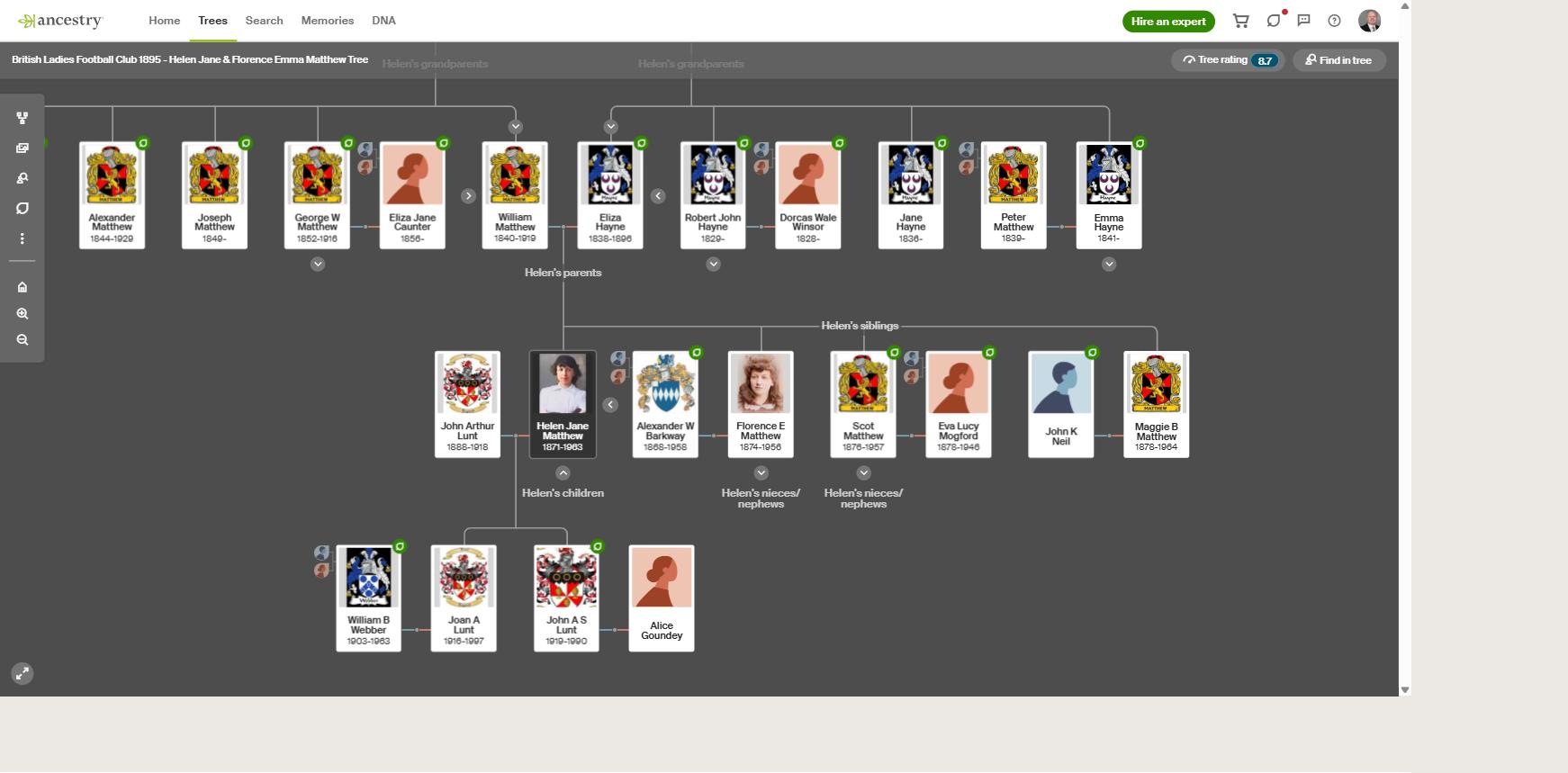
Her parents were William Matthew, a Scotsman born in Montrose, Forfarshire, and Eliza Hayne, born in Exmouth, Devon. At the time of Helen's birth, William was studying towards his Master Mariner's Certificate — a qualification he would go on to earn, becoming the captain of merchant vessels and eventually Master of the cargo ship SS Fulmar on the Liverpool–Lisbon–Casablanca–Madeira–Canary Islands route. Helen was named in honour of both her maternal and paternal grandmothers: Helen Banks and Jane Flinn.
A SEAFARING FAMILY MOVES NORTH
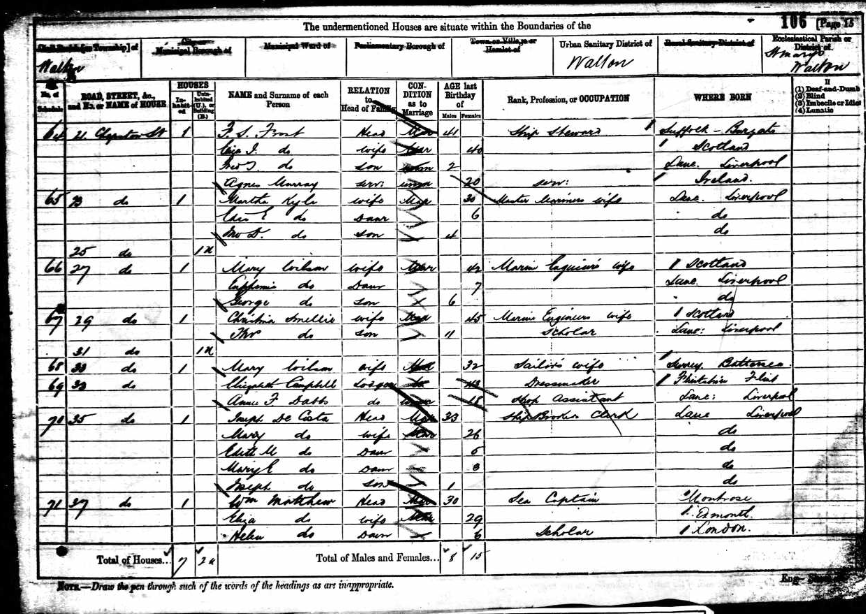
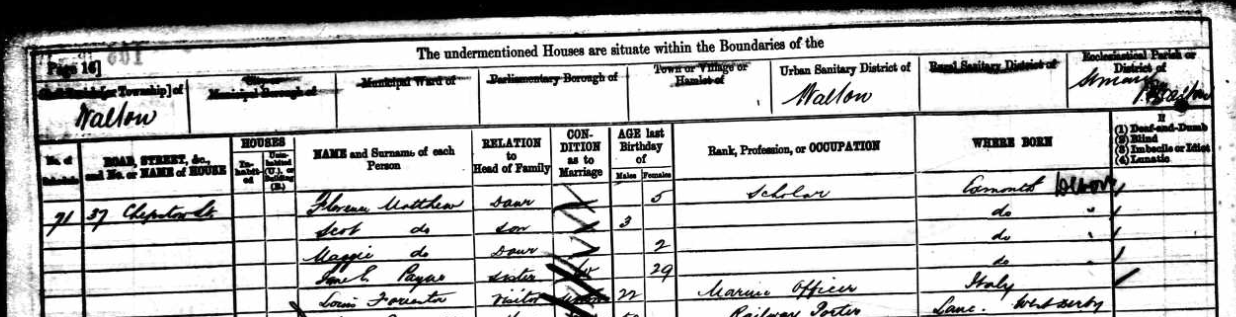
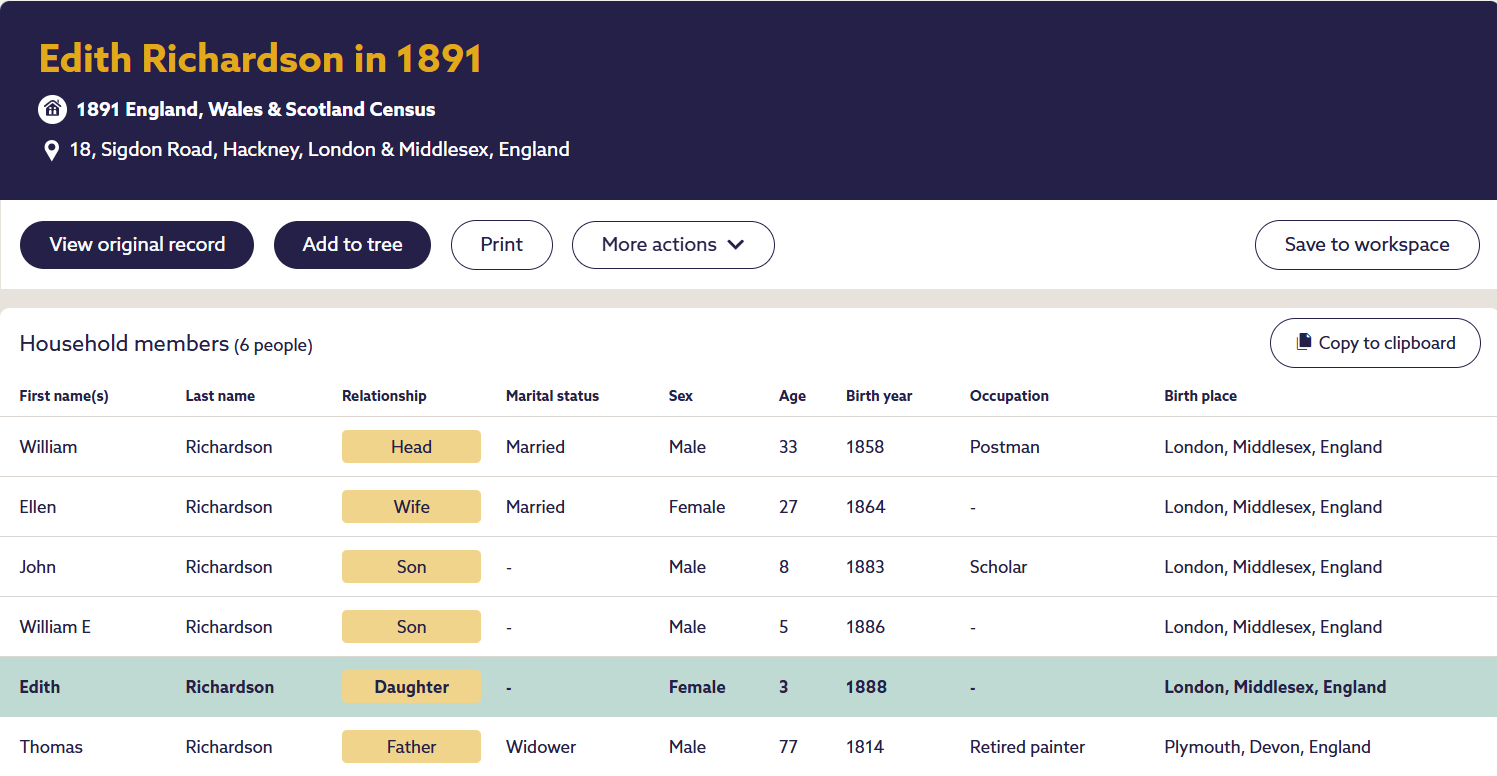
The Matthew family moved from Devon to Liverpool around 1880 — a natural step for a master mariner whose working life was centred on the great port city of the north. The 1881 Census finds the family at 37 Chepstow Street, Walton on Hill, Lancashire. William Matthew, aged forty-nine, is listed as a master mariner; his wife Eliza, aged forty-five, was born in Exmouth. Helen Jane, aged eighteen (the census gives a slightly variable age across records), was born in London. Also in the household were siblings Florence Emma (born 1874), Scot (born 1876), and Maggie B. (born 1878), along with Jane E. Hayne, Eliza's sister-in-law. The family tree also records Eva Lucy Matthew (born 1878, later Mogford) and John K. Neil Matthew among the siblings. Florence would later marry Alexander W. Barkway (born 1868), making him Helen's brother-in-law — and the family's Merseyside years would prove formative for both sisters.
1881 Census · The Matthew Family · 37 Chepstow Street, Walton on Hill, Lancashire · William Matthew, Master Mariner · Helen Jane Matthew, aged 6 (left); household continued (right)
THE LOTHIAN LASSES — JOURNALISTS, ARTISTS & FOOTBALL ENTHUSIASTS
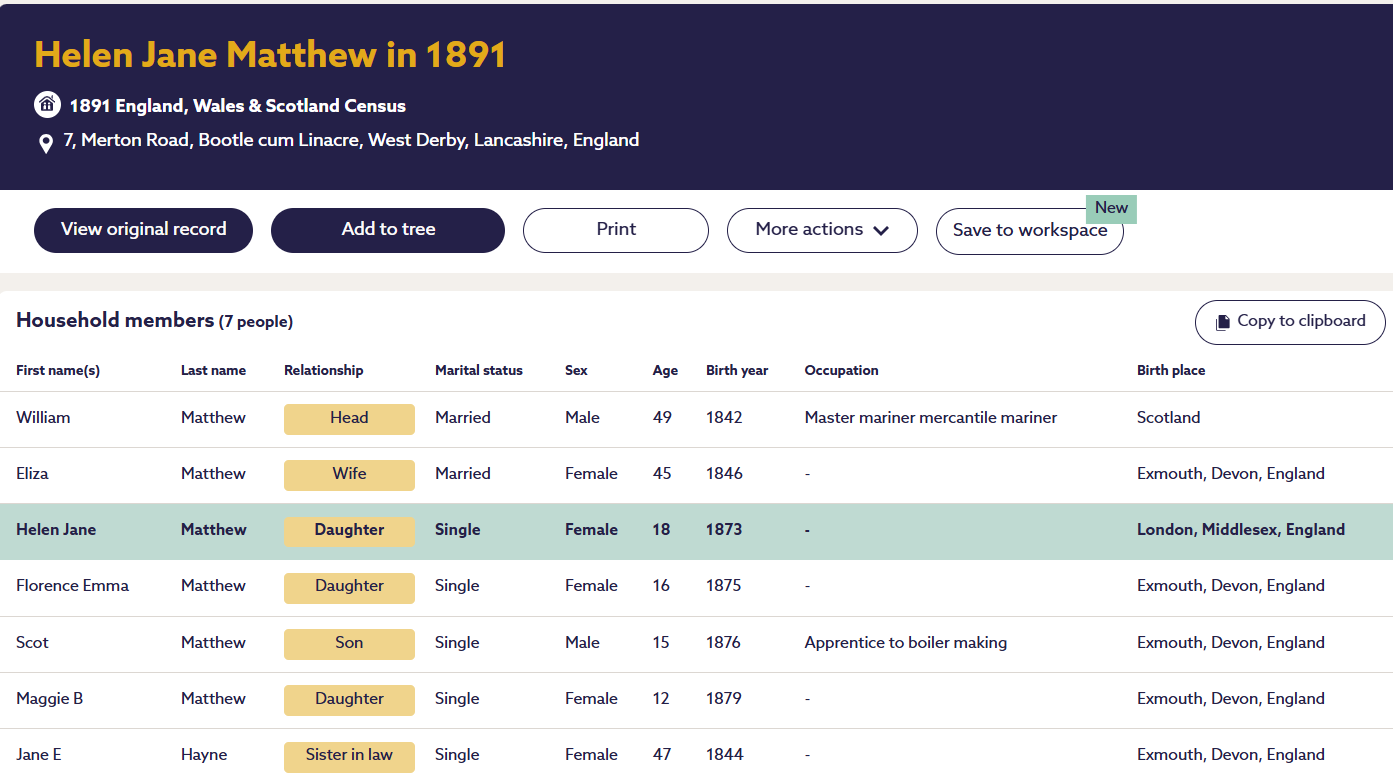
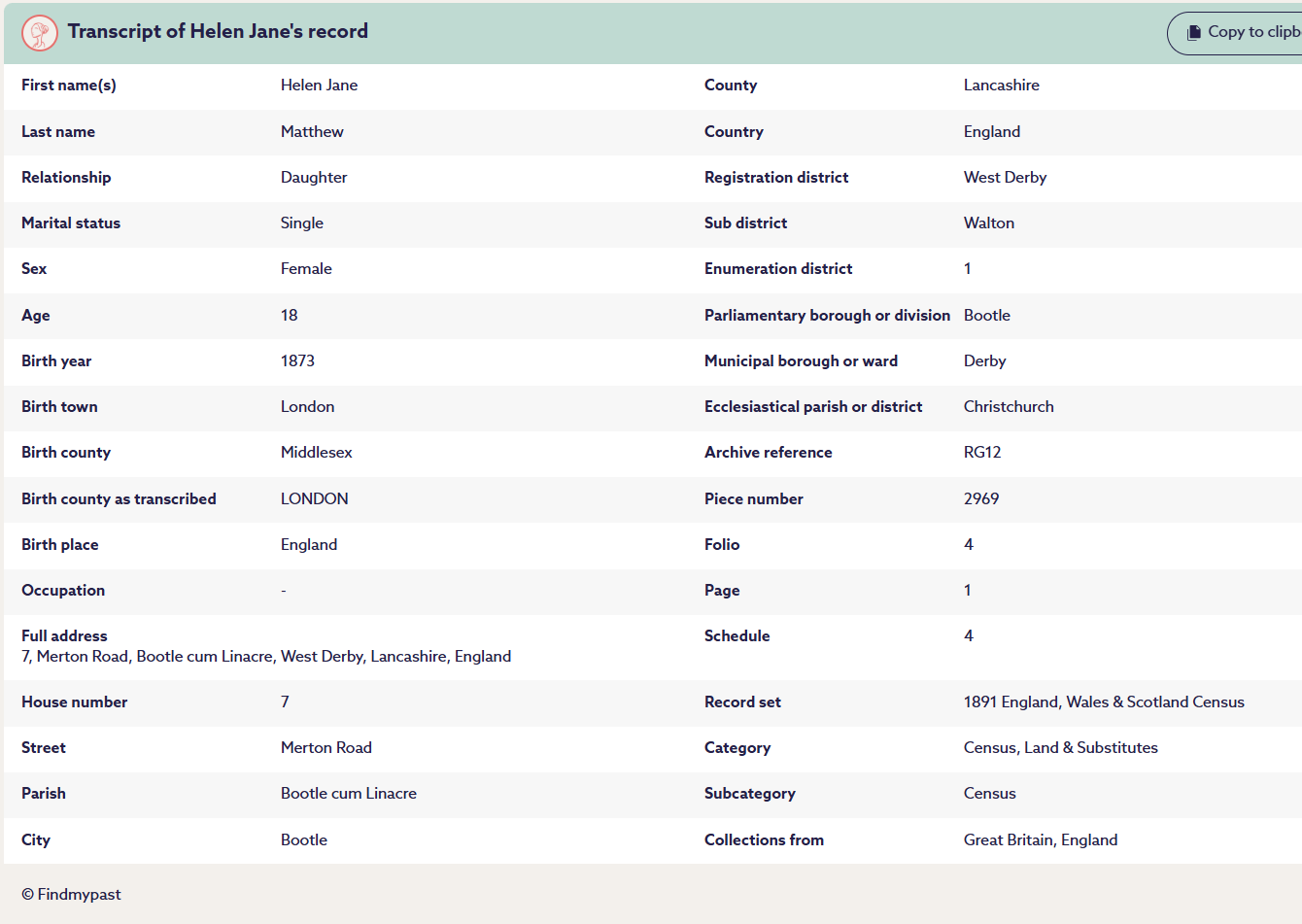
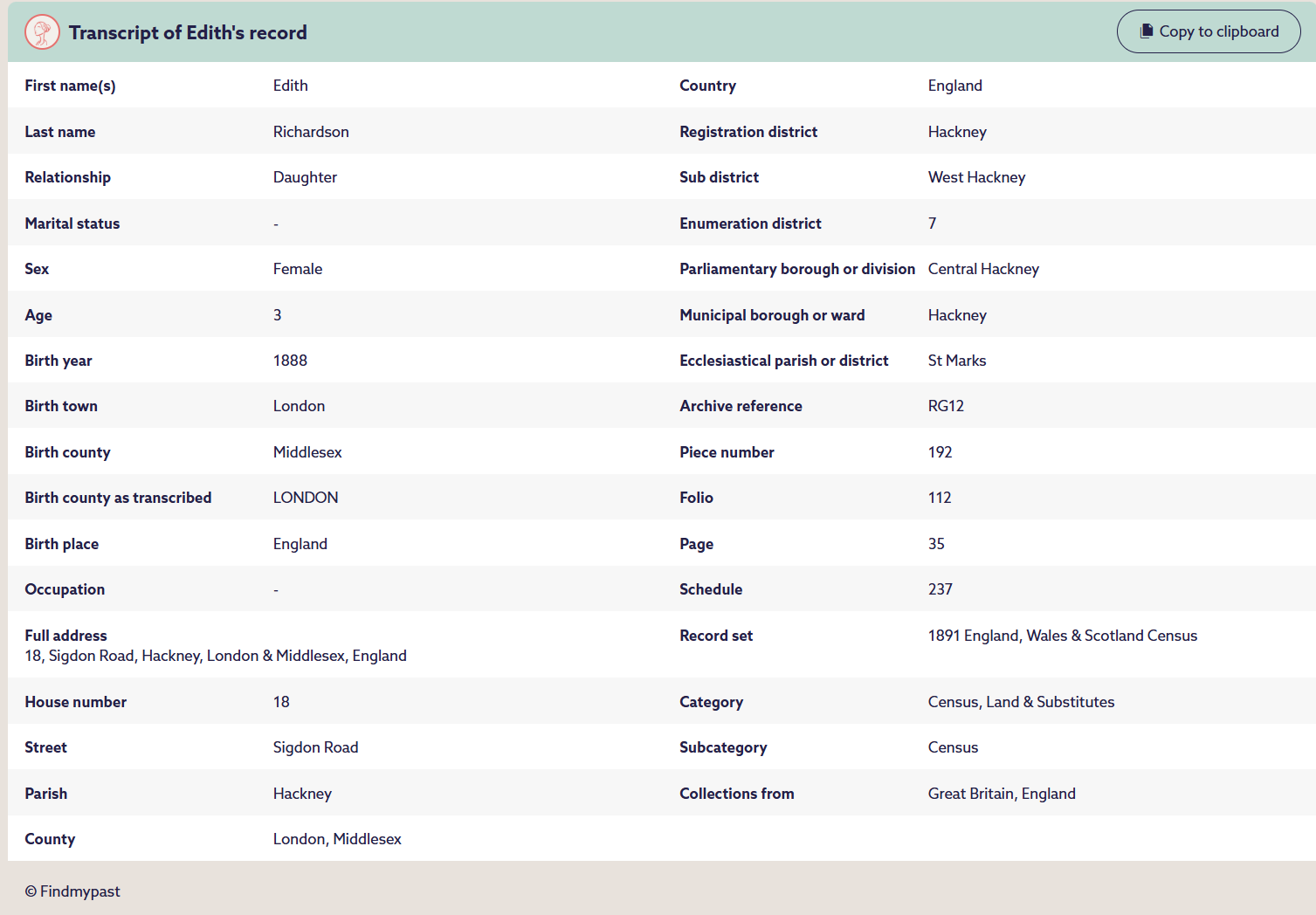
By 1891, the family had relocated to 7 Merton Road, Bootle cum Linacre, West Derby, Lancashire — still firmly in the orbit of the great port. Helen, now eighteen, remained at home as a daughter of the household.
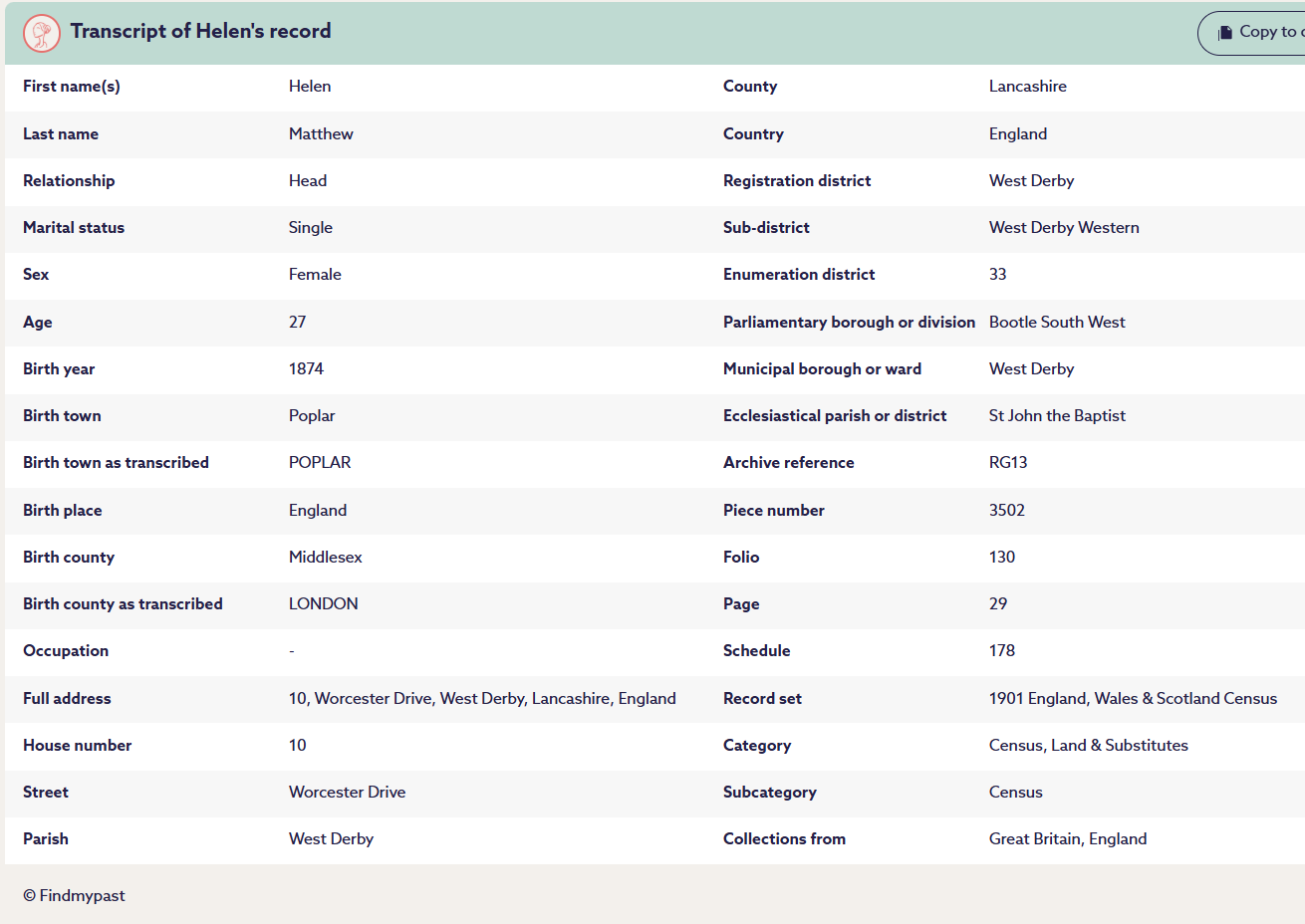
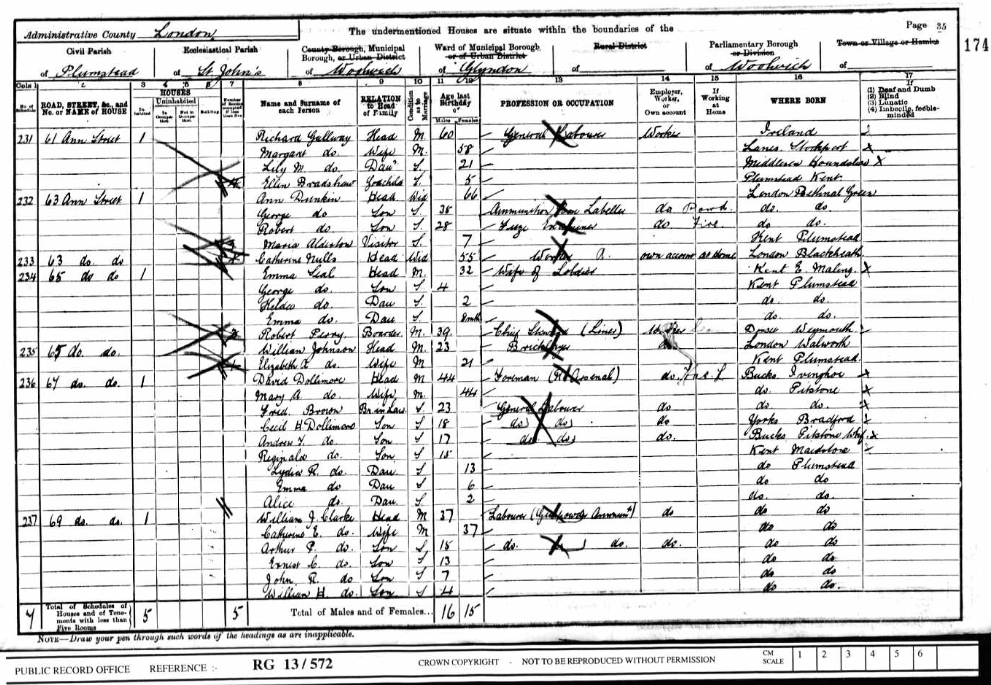
1901 Census Transcript · Helen Jane Matthew, aged 27, Head · 10 Worcester Drive, West Derby, Lancashire
It was in these Merseyside years, surrounded by the language of sport and the culture of a great port city, that Helen and her sister Florence began one of the most remarkable double acts in Victorian sporting journalism. Together, they wrote under the shared pen name The Lothian Lasses — contributing match reports, opinion pieces, and football commentary to Liverpool-area newspapers, most notably the Liverpool Evening Express and the Lancashire Evening Post. They were prolific, opinionated, and unmistakably knowledgeable.
The name itself was a carefully cultivated identity. Their father William Matthew had been born in Montrose, Forfarshire — and Helen and Florence were fond of presenting themselves as Scottish, daughters of the north, Lothian women through and through. It was, in truth, a piece of romantic self-fashioning. Both women were born in England — Helen in Mile End Old Town, London, and Florence in circumstances that the census records confirm were distinctly un-Scottish. Their father's birthplace lent them a framing they found useful and appealing, and they wore it with evident relish. Victorian sporting journalism was a man's world, and the Lothian Lasses navigated it by being distinctive, by being passionate, and by knowing their football better than most of the men around them.
Their great passion was Preston North End. In the early 1890s, Preston were the dominant force in English football — the Invincibles, the first Football League champions, the club that had defined what English football could be. The Lothian Lasses were devoted to them with the fervour that a later era might call fanatical. They made no secret of their Everton antipathy, and their copy was alive with the partisanship of true believers.
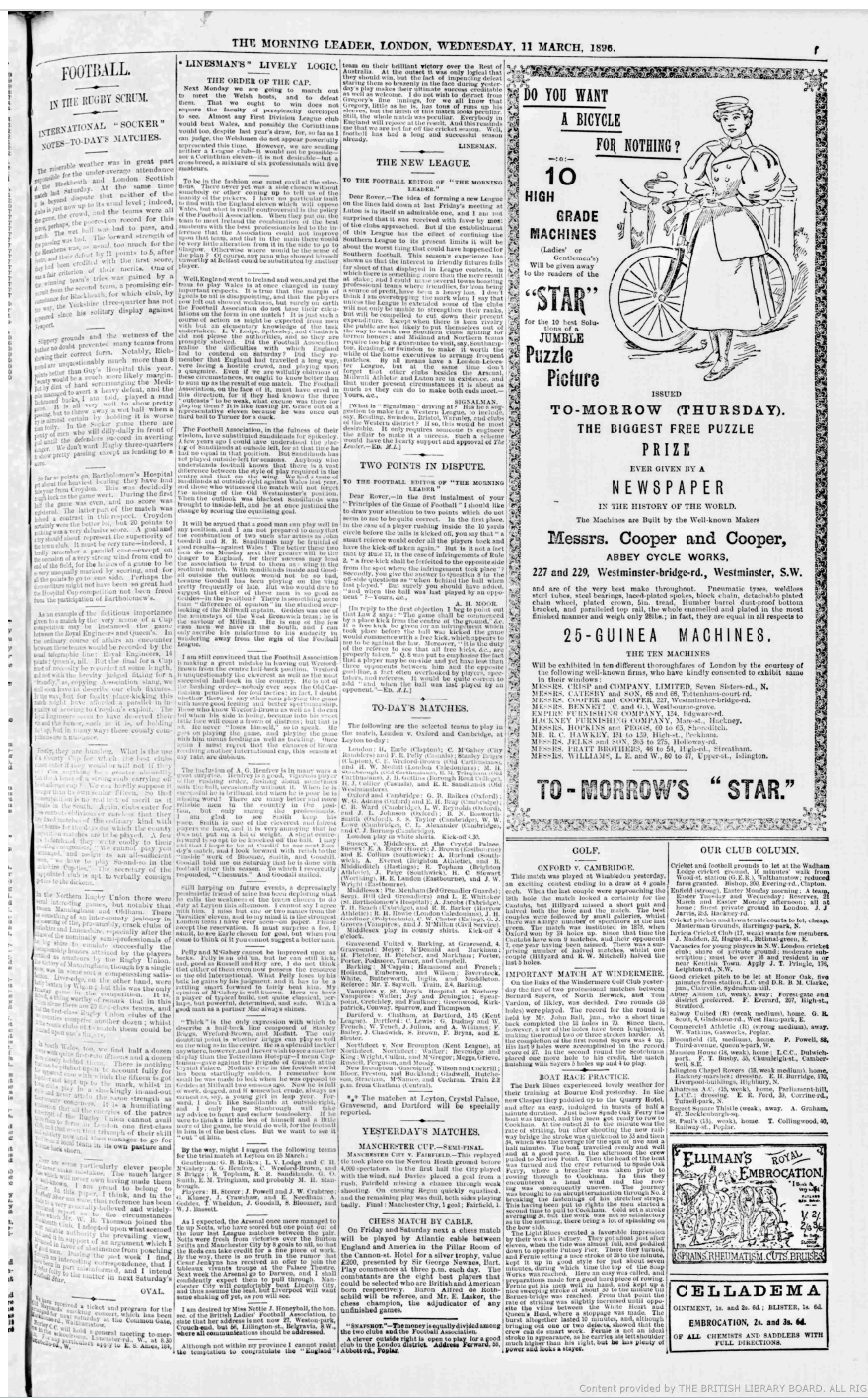
"Our old friends, the 'Lothian Lasses,' have broken out in a fresh place, and this week fill a column of the
Lancashire Evening Post with their effusions... They still dislike Everton as strongly as ever, and gush as much over Preston North End."
— Cricket and Football Field, 31 December 1892
What made the Lothian Lasses especially distinctive was the visual dimension of their work. Helen, in particular, supplied illustrations to accompany the articles — sketching players, matches, and football scenes, and initialling her work H.M.G. — a quality rare in the sporting press of the day. Florence provided the written voice of the column. A woman writing about football was unusual enough. A woman writing about football and drawing it was almost unheard of. The combination of Florence's prose and Helen's draughtsmanship made them a genuine double act, and their byline — such as it was, given the conventions of the era — was recognised by readers across the Merseyside sporting press.
Florence Emma Matthew went on to marry Alexander W. Barkway in due course, becoming Florence Barkway, and the couple had children together. Their eldest son, Alan Gordon Thomas Barkway, was born in 1896 in Bootle, Lancashire — the very streets where his mother and aunt had been writing their football columns just a few years before. He joined the Middlesex Regiment in December 1915. He died of wounds on 3rd May 1917, in the battle at Monchy-le-Preux, France, at the age of twenty-one. He is commemorated at the War Memorial, Arras, France.
Florence and Alexander had lost their eldest son Alan at twenty-one on a French battlefield. A third son, Alexander W. M. Barkway, was born in 1910. Florence lived until 13th May 1956, dying at the age of eighty-two — long enough to see women's football transformed from the scandalous novelty she had written about as a young woman into something approaching mainstream acceptance. Whether she ever reflected on those Merseyside days — the newspaper columns, the football sketches, the Preston North End fanaticism, the pen name she and Helen wore like a flag — we cannot know. She had lived through grief that most people cannot imagine. She had earned the right to whatever peace she found.
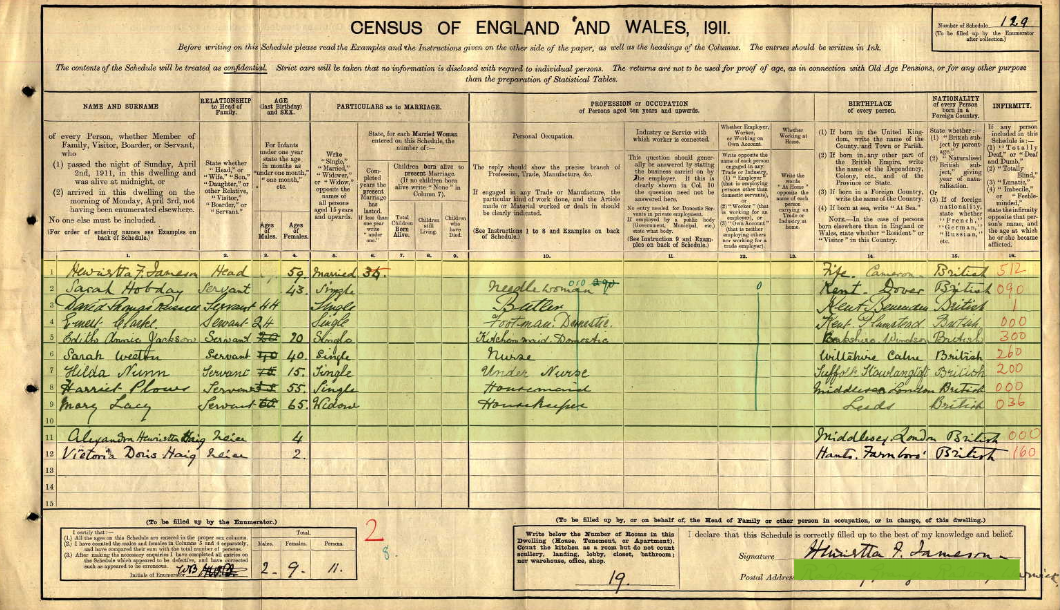
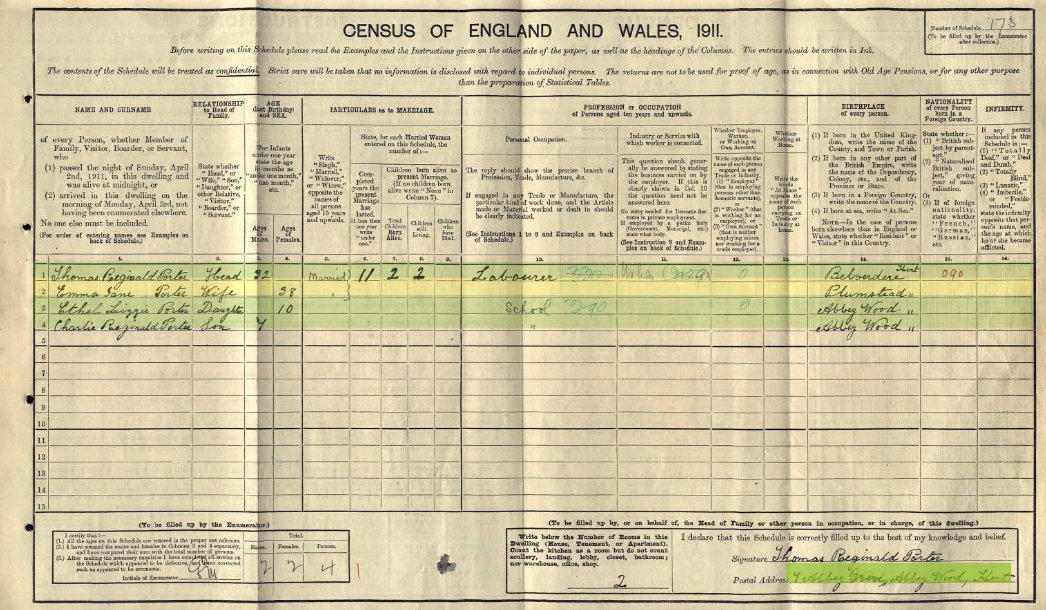
The 1911 Census, in which Helen listed her occupation as Journalist and her birthplace as "At Sea," confirms that she continued to regard her writing career as her primary professional identity well into her forties. Florence's contribution has been less documented, but the body of work the two produced together represents an extraordinary footnote in the history of women in sports journalism — predating, by several years, Helen's even more extraordinary step of taking to the football field herself.
THE MYSTERY BADGE ON THE BLOUSE — SOLVED
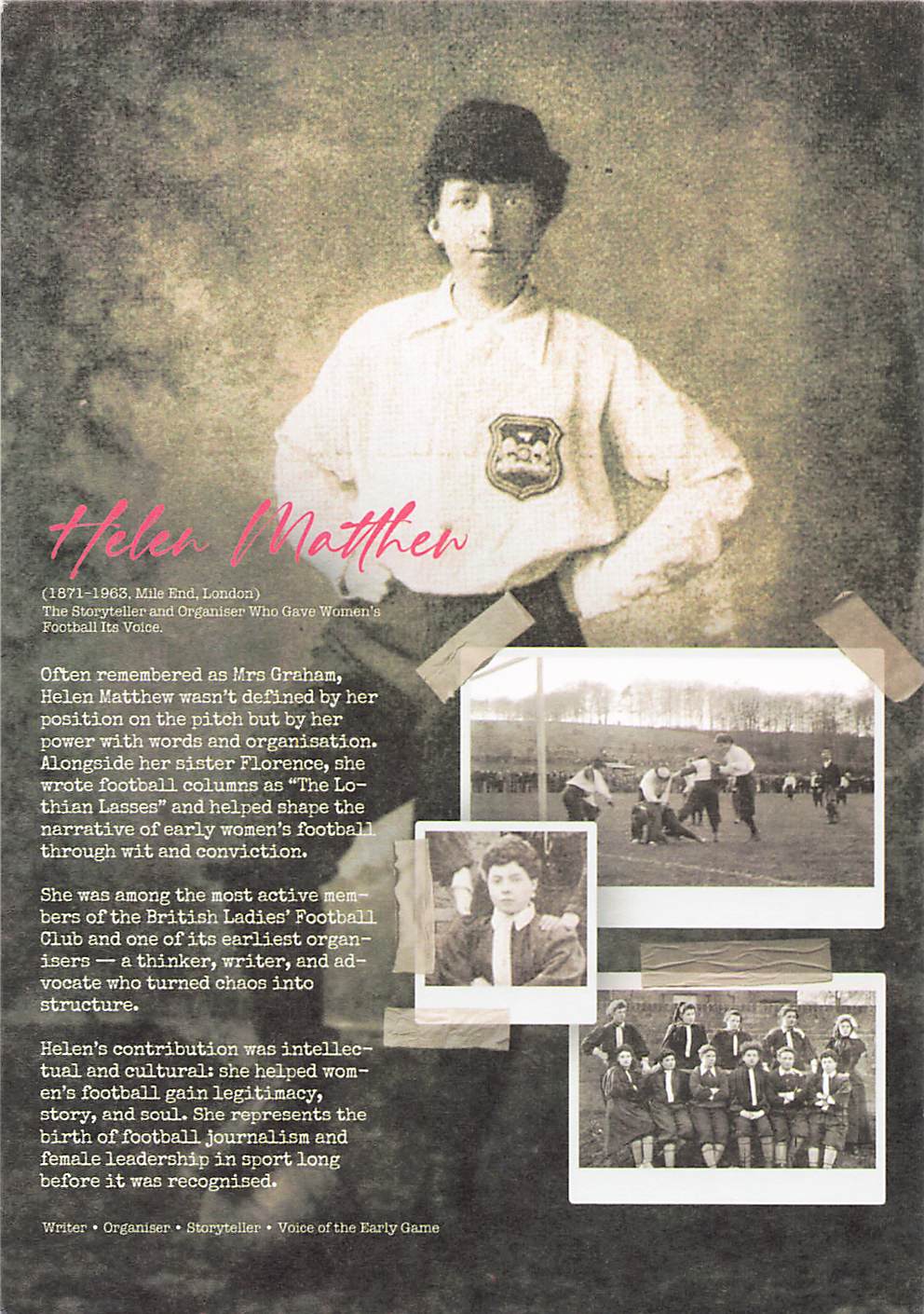
Among the most intriguing physical artefacts to survive from the British Ladies Football Club is the badge worn by Helen Jane Matthew in her 1895 football portrait. Sewn onto the left breast of her white blouse, it is clearly visible in the original photograph — a shield-shaped emblem in black and gold, of evident quality and deliberate design. For some time it resisted identification. The full story, it turns out, is more personal and more precise than any heraldic investigation could have yielded.
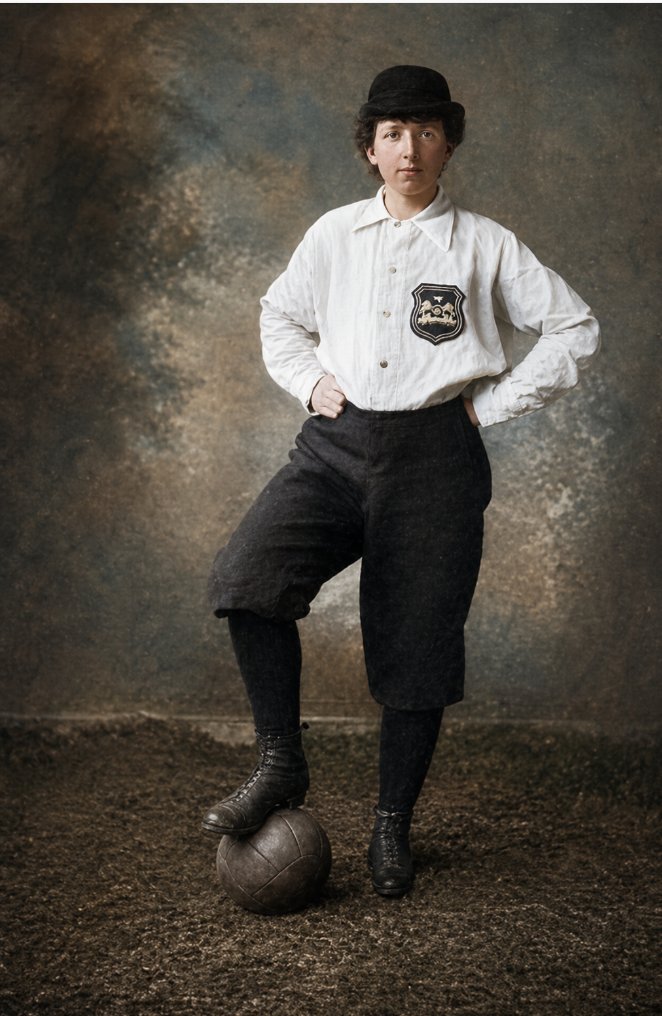
Helen Jane Matthew · Football portrait · 1895 · Badge visible on left breast

Close-up of the badge · Gold on black · Shield · Rosette · Bird · Supporters
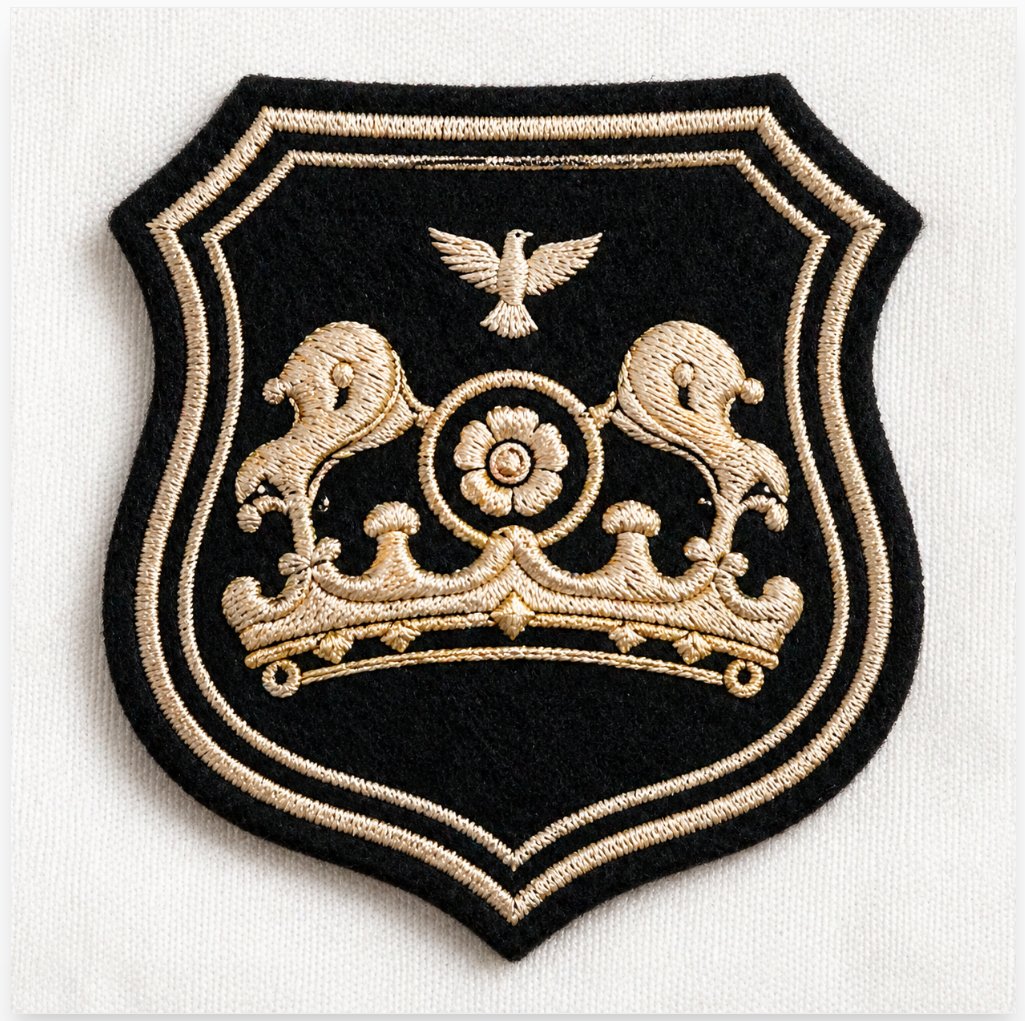
Rendered reconstruction · Central rosette · Symmetrical supporters · Bird at apex
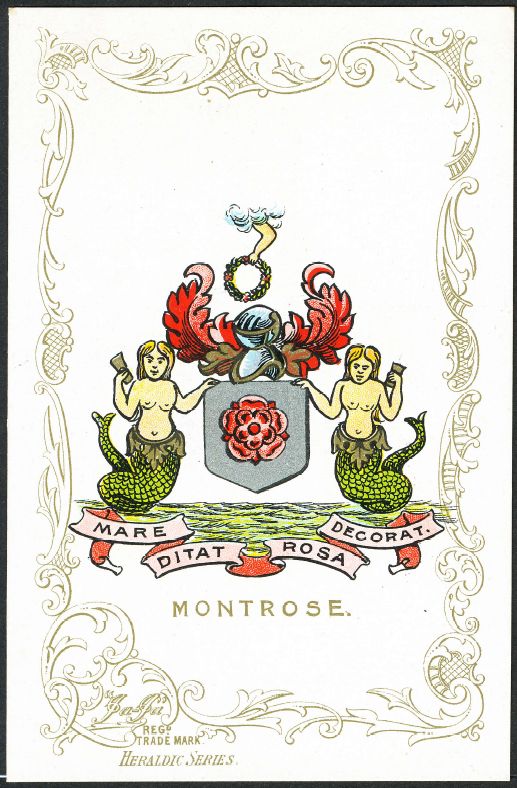
The Montrose coat of arms · Mare Ditat, Rosa Decorat · The sea enriches, the rose adorns
The badge is the crest of Montrose Football Club — derived from the Montrose coat of arms, with its central rose, symmetrical supporters, and device above, and its motto Mare Ditat, Rosa Decorat: "The sea enriches, the rose adorns." The story of how it came to be on Helen's blouse was uncovered by historian Stuart Gibbs and Forbes Inglis of the old Montrose Review, and first presented by Stuart in his women's football exhibition in 2012.
When the British Ladies Football Club played at Montrose in 1895, Helen — who had long claimed to have been born there, as the daughter of a Montrose man — was presented with a Montrose FC shirt in recognition of that connection. She wore it during the match. Afterwards, she removed the badge from the shirt and sewed it onto her own top. She wore it from that point on — the crest of the town her father came from, the town she had made her own through years of cheerful biographical invention, now literally stitched onto her chest.
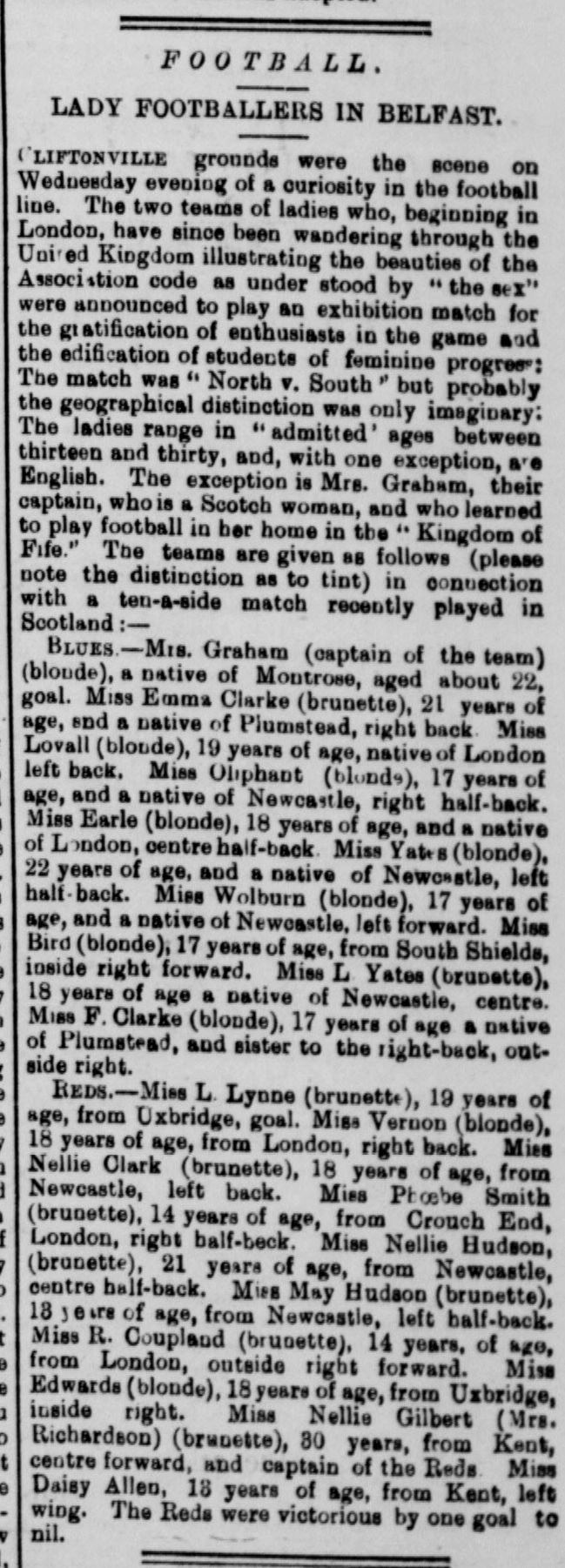
It was the press article reporting on that Montrose match — which included details of Helen's family background — that allowed Stuart Gibbs and Forbes Inglis to work out Mrs. Graham's true identity as Helen Jane Matthew. That identification, first established in 2012, was subsequently obscured when court records from 1900 reported her name as "Helen Graham Matthews," and further complicated by an erroneous narrative that placed her as the organiser of an 1881 women's football tour — a claim, Stuart notes, that had no obvious evidential basis but took over a decade to dislodge.
The badge, then, is the complete picture of Helen Matthew in miniature. Preston North End's colours on the outside. Montrose on her heart — not as an abstraction, but as a physical object, cut from a shirt given to her on a Scottish afternoon in 1895, carried south, and worn for the rest of her playing days. Mare Ditat, Rosa Decorat. The rose adorns.
THE BRITISH LADIES FOOTBALL CLUB — MRS. GRAHAM
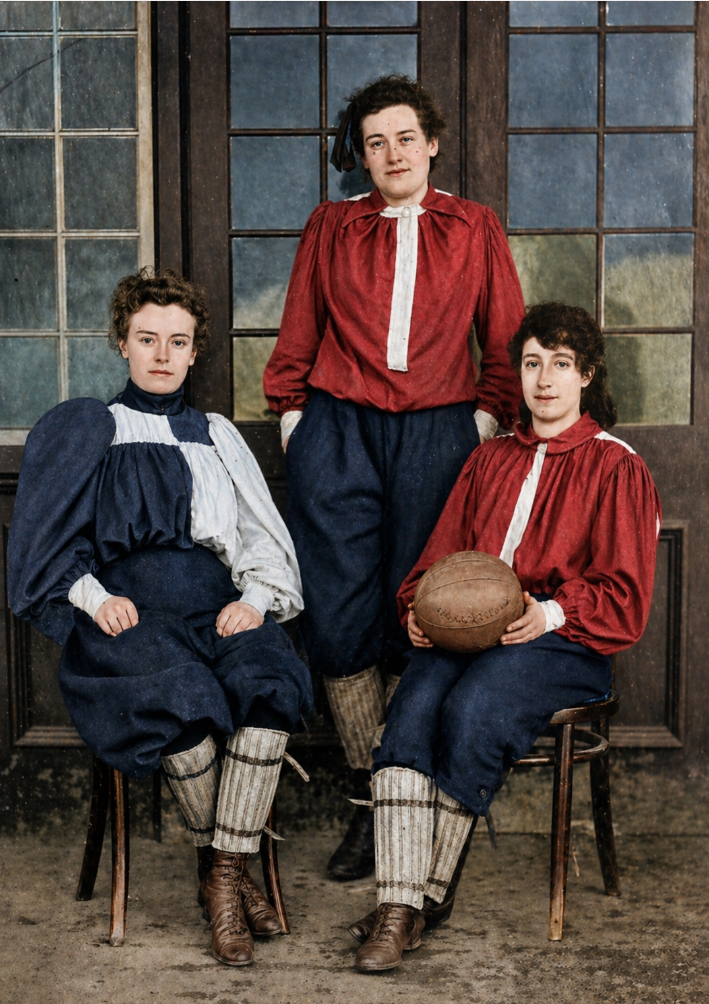
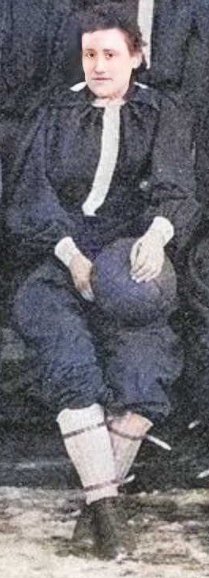
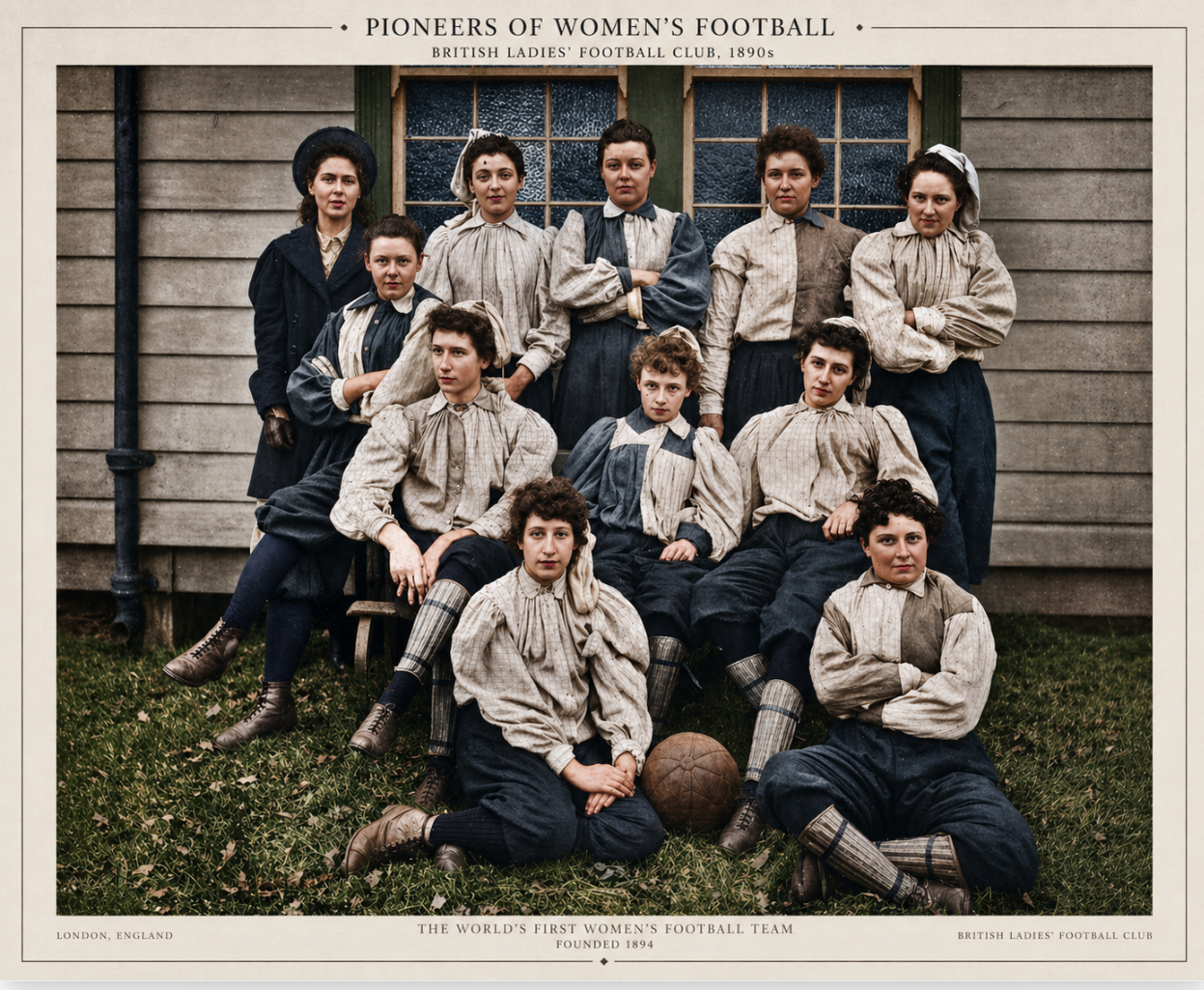
Nettie Honeyball and Helen Jane Matthew (Mrs. Graham), with a third teammate, in the club's North and South team colours · Colourised
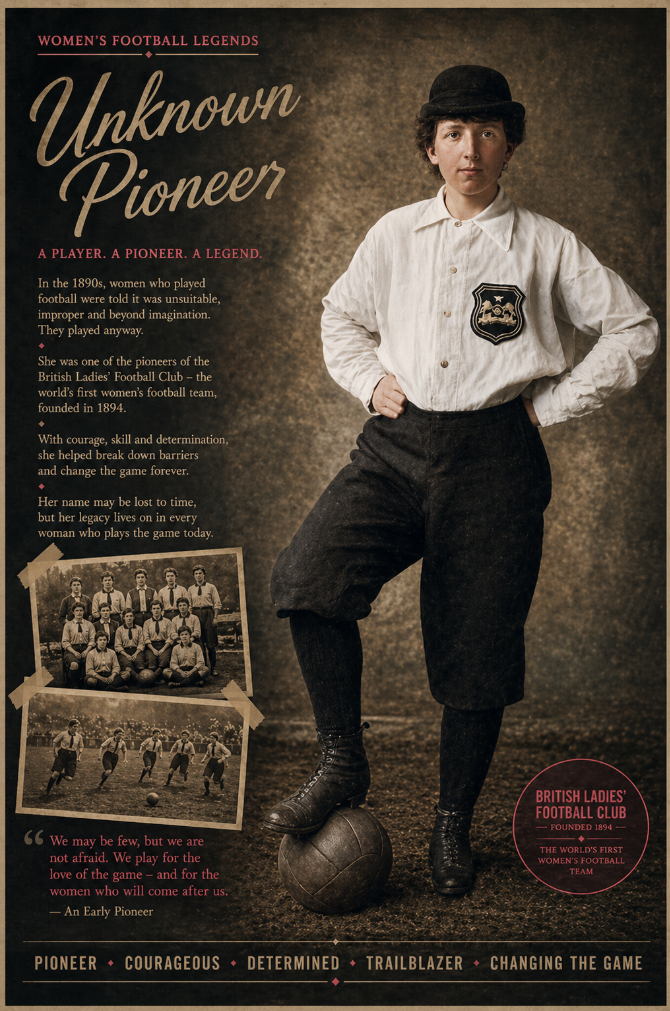
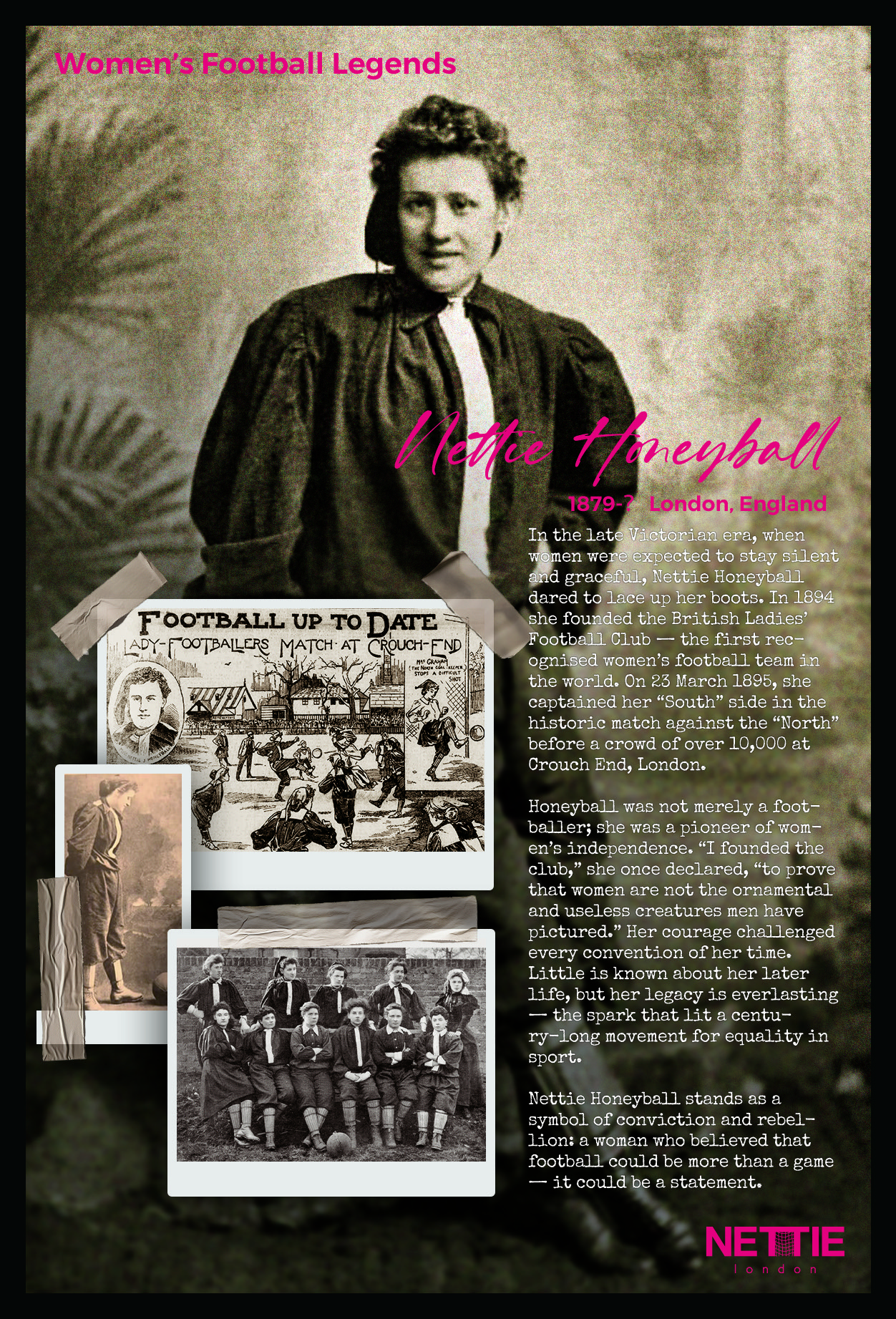
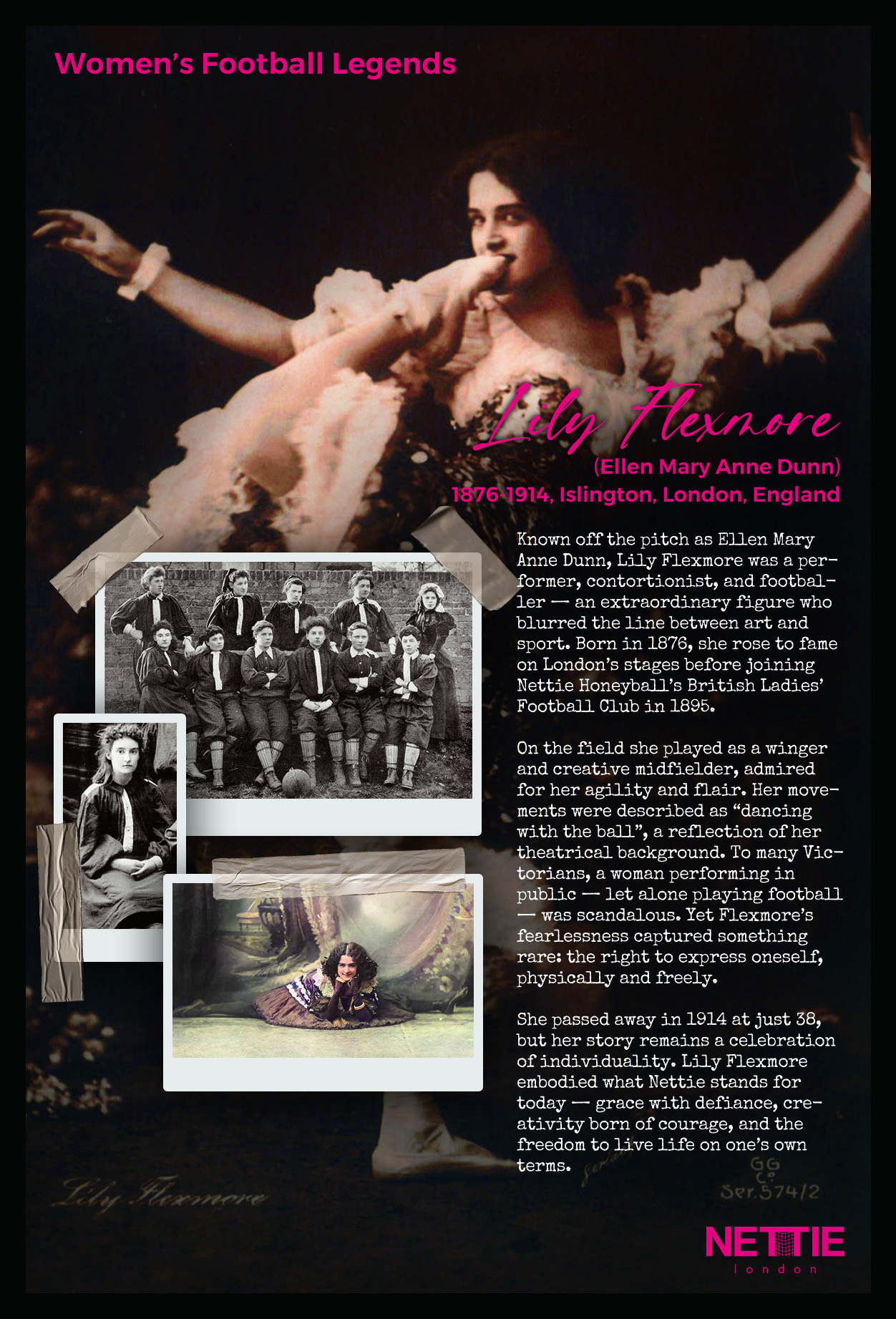
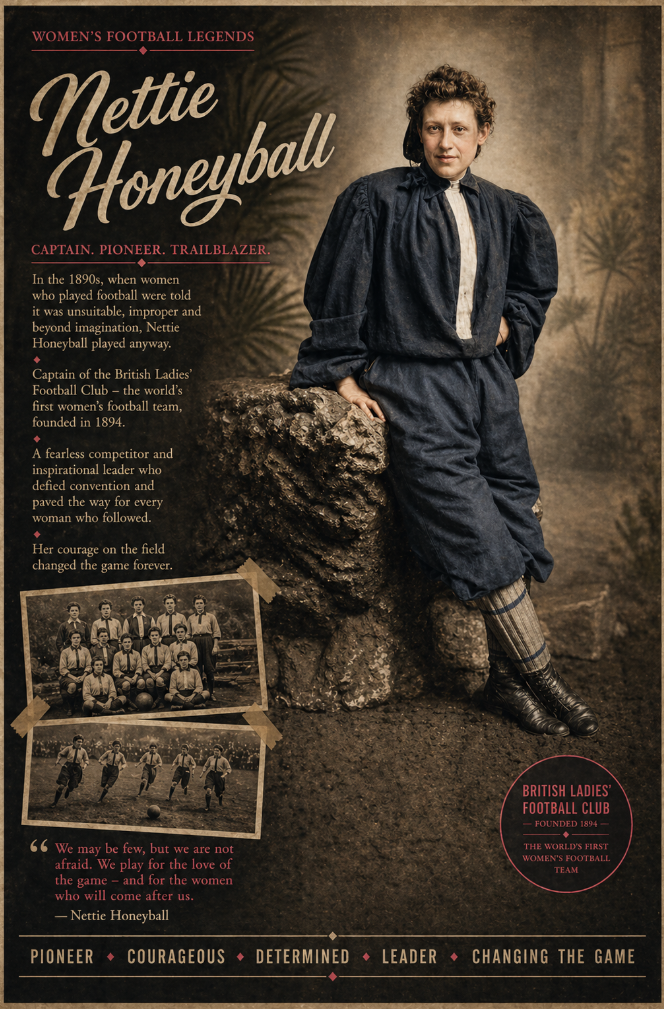
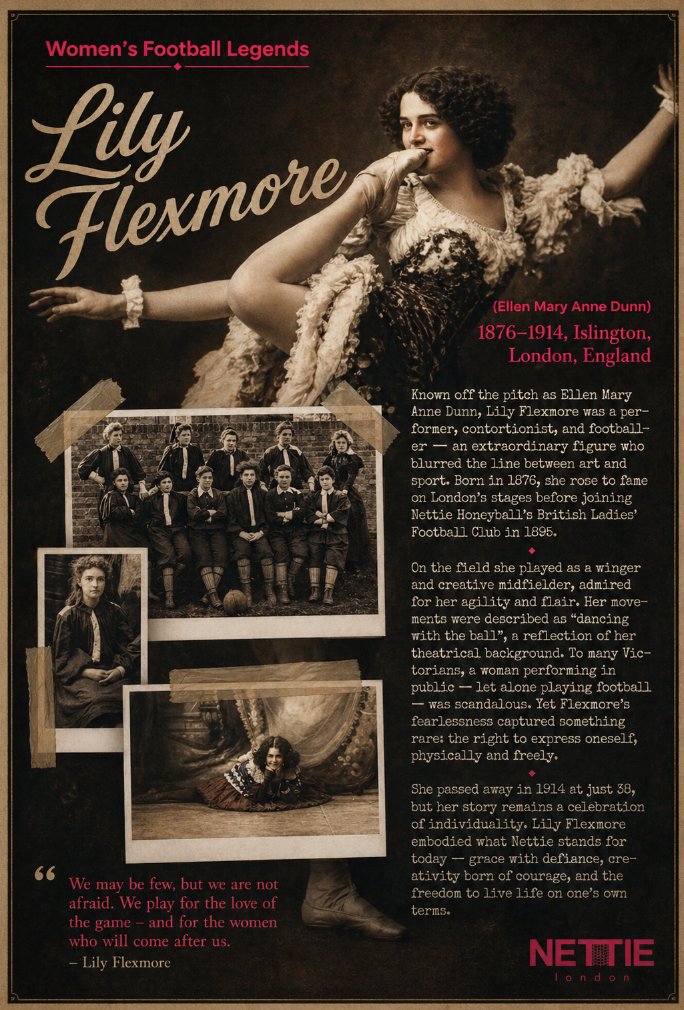
Women’s Football Legends · Helen Jane Matthew · British Ladies’ Football Club, 1890s · “We may be few, but we are not afraid. We play for the love of the game — and for the women who will come after us.” · Nettie London postcard series · Note: the postcard was originally issued as ‘Unknown Pioneer’ — the figure has since been identified as Helen Jane Matthew, who played for the BLFC as Mrs. Graham and later founded Mrs. Graham’s XI. Nettie London has been notified and an updated edition is forthcoming.
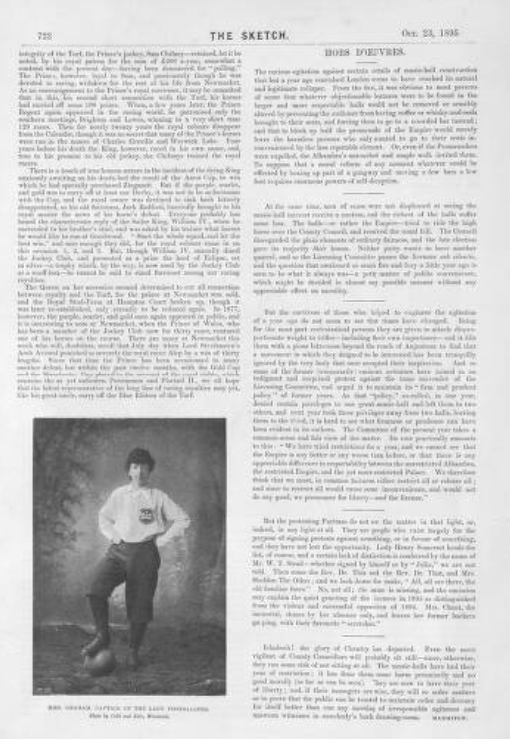
The photograph itself is not a modern invention. It was first published in The Sketch of Wednesday 23rd October 1895, captioned simply “Mrs. Graham, Captain of the Lady Footballers,” with a photographer's credit reading “Photo by Cobb and Keir, Warwick.” More than a century before Nettie London reissued it as an anonymous ‘Unknown Pioneer’ postcard, it appeared in the pages of a Victorian illustrated weekly, correctly captioned, above a page of horse-racing notes and society gossip — a reminder that Helen's face was, however briefly, a recognised one in the popular press of her own day.
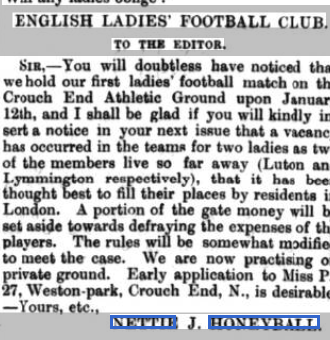
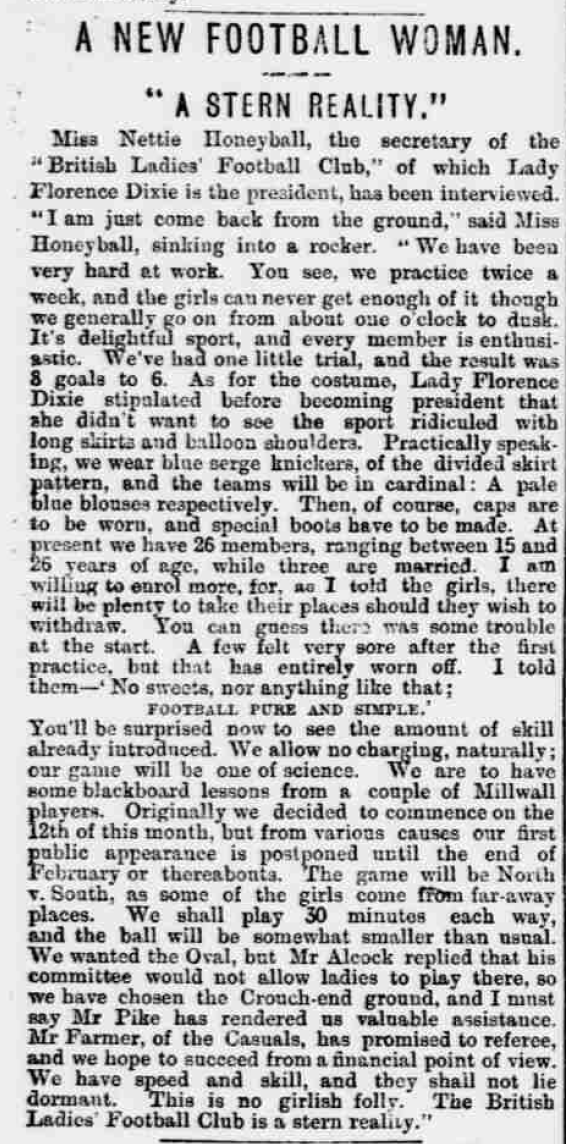
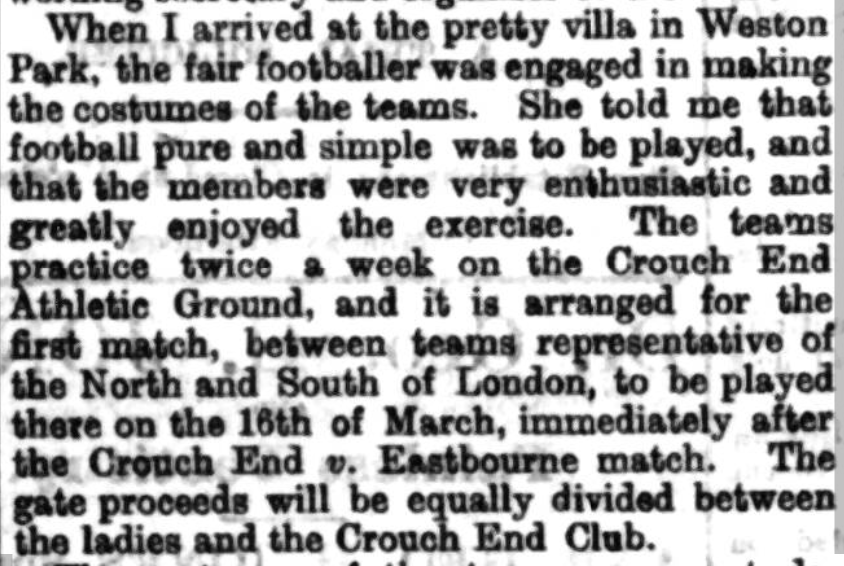
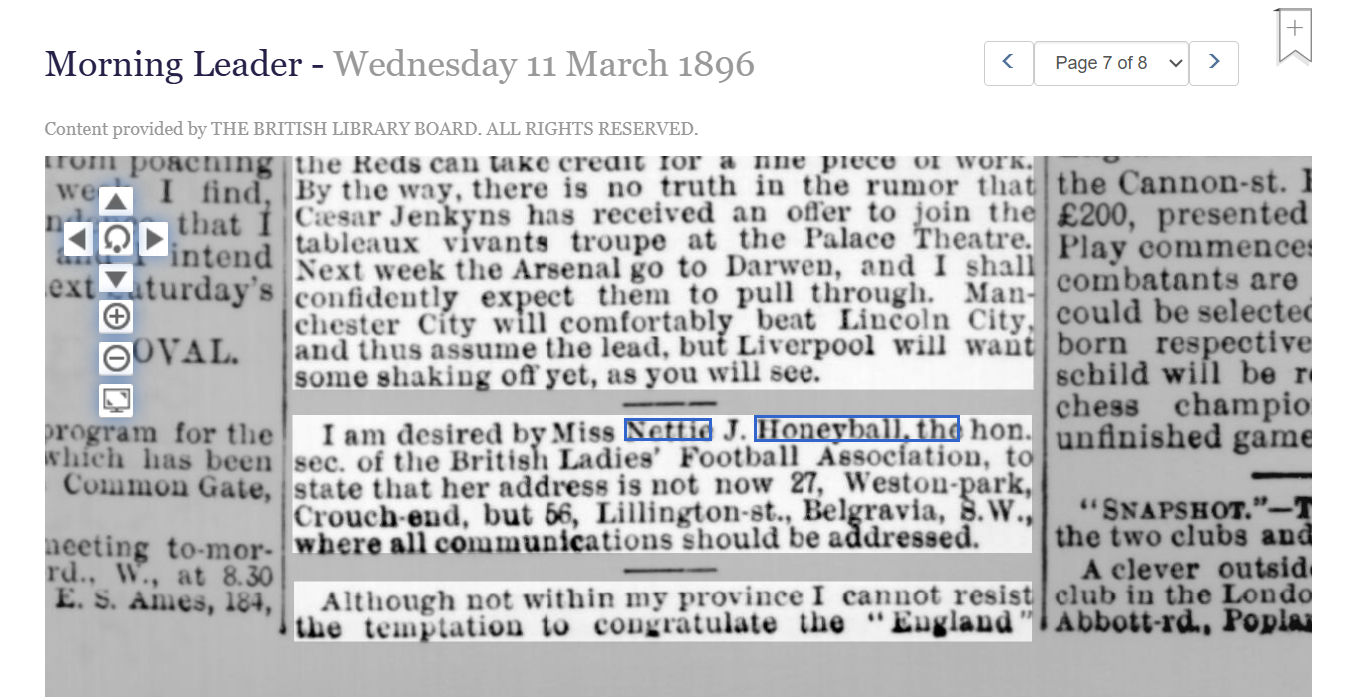
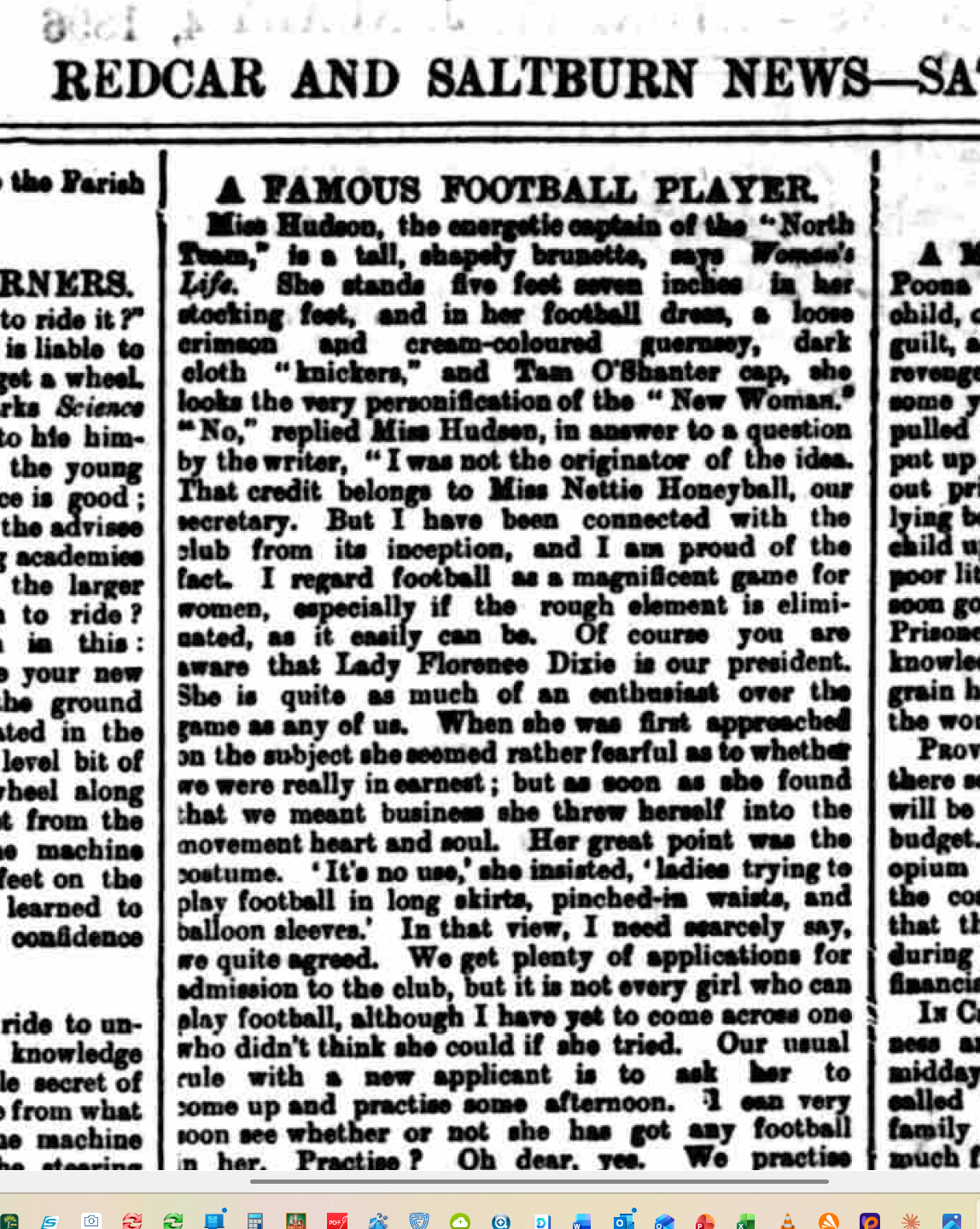
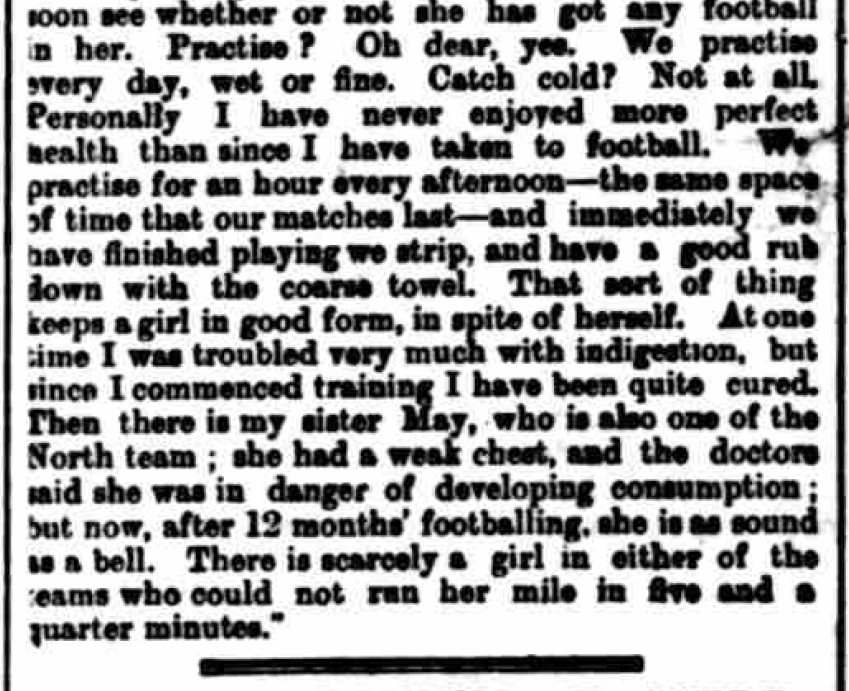
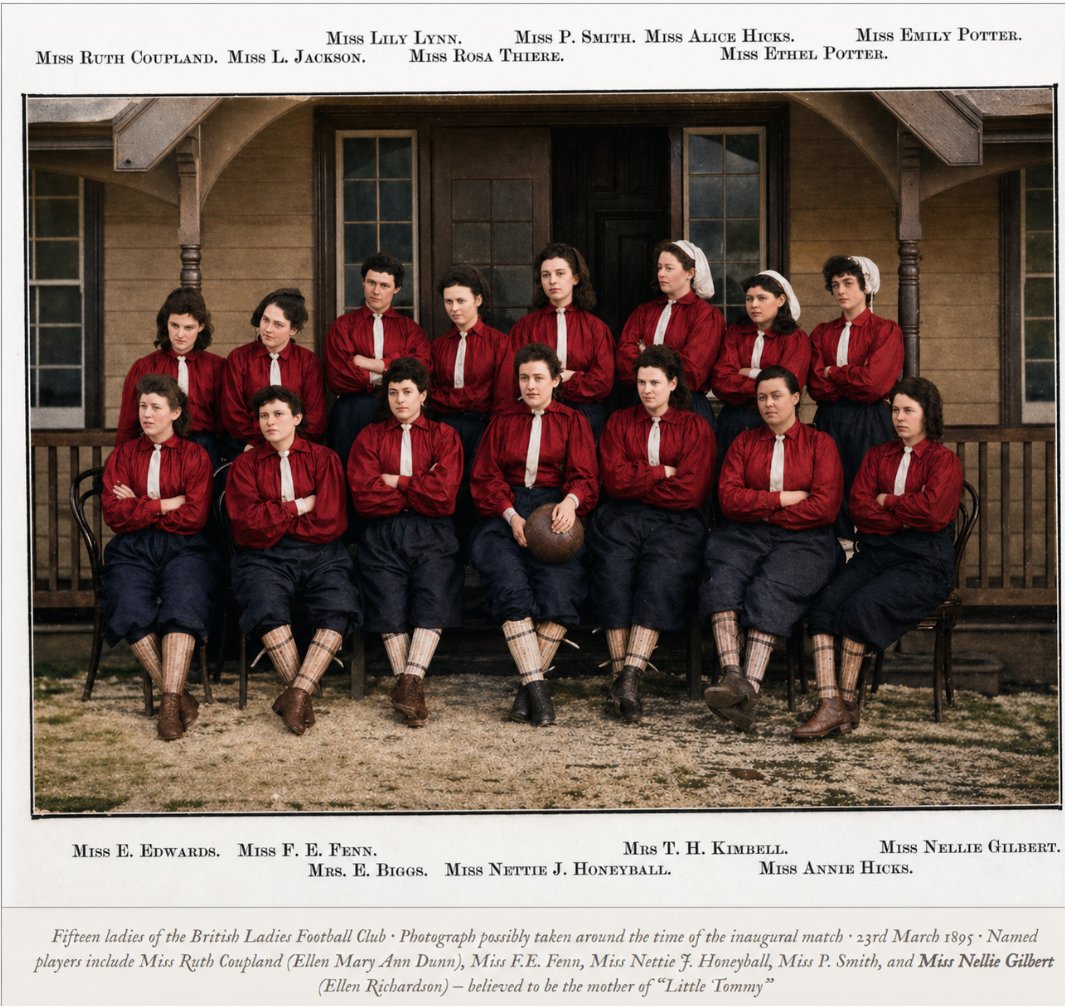
Helen Jane Matthew became a prominent member of Nettie Honeyball's British Ladies Football Club, playing in the inaugural match at Crouch End Athletic Ground, Nightingale Lane, Hornsey, London, on 23rd March 1895. Like several of the lady footballers of 1895, Helen did not play under her own name. Her pseudonym was Mrs. Graham — a classically Victorian choice, lending an air of respectability and married propriety while concealing the identity of a woman who was, at the time, single. Helen remained associated with the club as both player and administrator, and in due course formed her own team, known as Mrs. Graham's XI, under which name they continued to play.
The kit Helen chose for Mrs. Graham's XI was plain white blouses and navy knickers — a combination that any follower of football in 1895 would have recognised instantly. It was the kit of Preston North End: the Lilywhites, the Invincibles, the club that had won the first Football League title and FA Cup double in 1888–89, and that Helen and Florence had followed with devoted, partisan fervour from the Liverpool press box for years. Preston had adopted plain white shirts in 1887, and by 1895 those colours were inseparable from the club's identity. When Helen dressed her team in white and navy, she was not choosing colours at random. She was paying tribute — stitching her devotion to Preston North End into the fabric of her own team's identity, match by match, town by town, wherever Mrs. Graham's XI took the field.
Imagine the scene. Helen Matthew — journalist, sketch artist, born aboard a paddle steamer on the Thames, who told everyone she was from Montrose, who played football under a false name, who would become two people in a Teignmouth letting agency at the age of sixty-eight — sitting down to decide what her team would wear. And quietly, with complete deliberateness, dressing them in Preston North End's colours. No announcement. No explanation. Just white blouses and navy knickers, match after match, town after town, up and down the country. If you knew, you knew. If you didn't, you just saw a women's football team. But Helen knew. Every time she pulled on that white blouse and walked out onto the pitch, she was wearing her heart.
The Lothian Lasses had written that they "gush as much over Preston North End" as they disliked Everton. Gush is exactly the right word — the word of someone who can't quite help themselves, who knows it's slightly excessive and does it anyway. Helen couldn't take Preston North End onto the pitch with her. So she brought the pitch to Preston North End.
✦ Research Note · Before Crouch End
Historian Stuart Gibbs (Manchester Metropolitan University) has noted that just a few weeks before the BLFC’s inaugural match on 23rd March 1895, the Midlands Ladies Football Club played a match in Birmingham at the Lower Aston Ground — and that Mrs. Graham is believed to have taken part. If confirmed, this would make Helen Jane Matthew’s footballing career begin not at Crouch End but in Birmingham, weeks before the BLFC’s celebrated debut. Research into this match is ongoing.
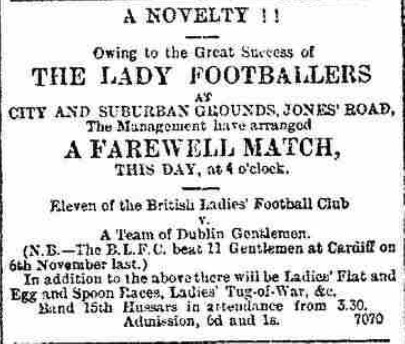
Financial precarity dogged the touring club almost from the start, and Mrs. Graham was frequently at the centre of it. In June 1896, Mrs. Graham was sued in the Wishaw Small-Debt Court, Scotland, by J. W. McMillan of Largs for £7 of butcher's meat, and by John Paton of Skelmorlie for £1 1s. 9d. — the price of twenty-nine mornings' milk at ninepence a morning. Judgement was given for the plaintiffs. A related account, shared with this website's author by fellow researcher Karen Wall, describes a similar incident at Exeter, where Mrs. Graham's XI ran up a bill of £16 for travel and accommodation that could not be paid. The railway company reportedly took away some of the ladies' clothing in lieu of payment; the local Mayor declined to help; and it was left to the kindness of a local coffee-shop owner to come to the team's assistance. A public subscription raised £6 4s. 6d., and the ladies were taken to St David's station, their fares to London paid from the proceeds. Neither incident is yet backed by a primary newspaper source in this archive, and both are presented here as reported.
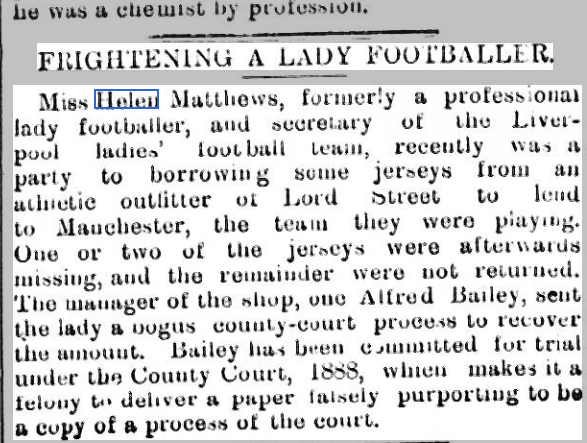
An undated cutting in this archive — probably from the mid-to-late 1890s, given its description of her as "formerly a professional lady footballer" — shows the same precarity cutting the other way. Headlined "Frightening a Lady Footballer," it reports that Miss Helen Matthews, "formerly a professional lady footballer, and secretary of the Liverpool ladies' football team," had borrowed jerseys from an athletic outfitter on Lord Street to lend to the visiting Manchester team; one or two went missing and the rest were not returned. The shop's manager, one Alfred Bailey, responded by sending Helen a bogus county-court process in an attempt to recover the cost — and was himself committed for trial, since delivering a paper falsely purporting to be a copy of a court process was a felony under the County Court Act, 1888. It is a small but telling counterweight to the Worcester Assizes verdict that would follow, decades later: on this occasion, when a dispute over borrowed kit ended up in the machinery of the law, it was the tradesman who was prosecuted, not the footballer.
A remarkable contemporary document confirms her continued involvement in the world of women's football several years later. In April 1900, Helen — identified in court proceedings by her playing name, Miss Helen Graham Matthews — appeared as a witness at Liverpool Police Court in a case of alleged fraud against a lady footballer. She testified that she had formerly been a professional lady footballer and the secretary of a ladies' football club in Liverpool, and that a sporting outfitter named Frank Sugg had lent the club a number of jerseys. The case illuminates not only Helen's ongoing role in the sport but also the precarious financial environment in which women's football operated at the turn of the century.
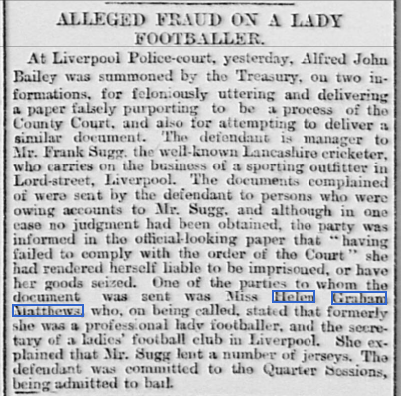
Liverpool Police Court, April 1900 · Alleged Fraud on a Lady Footballer · Miss Helen Graham Matthews testified that she had been a professional lady footballer and secretary of a ladies' football club in Liverpool
THE 1901 CENSUS — HEAD OF HOUSEHOLD
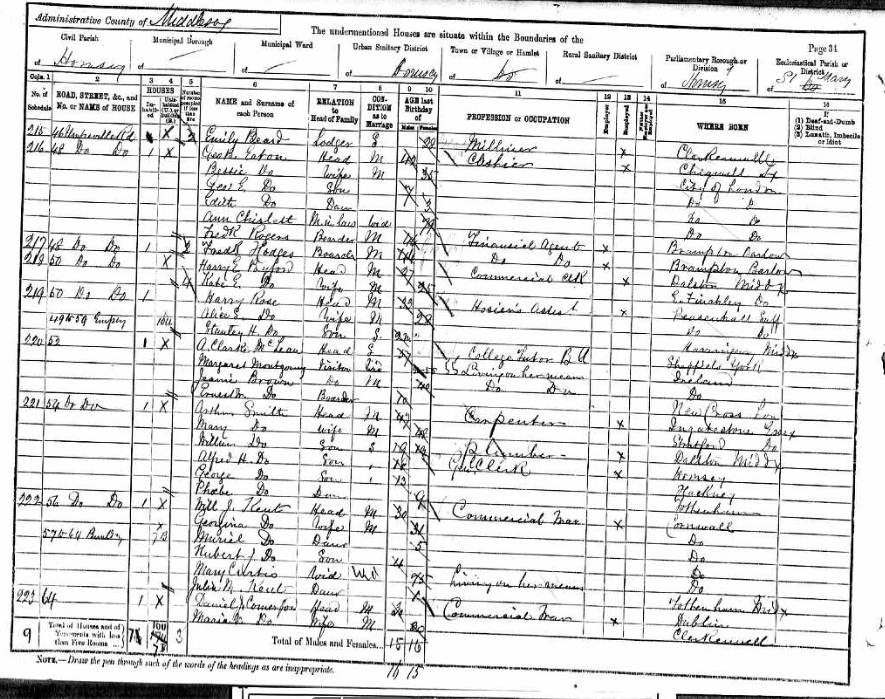
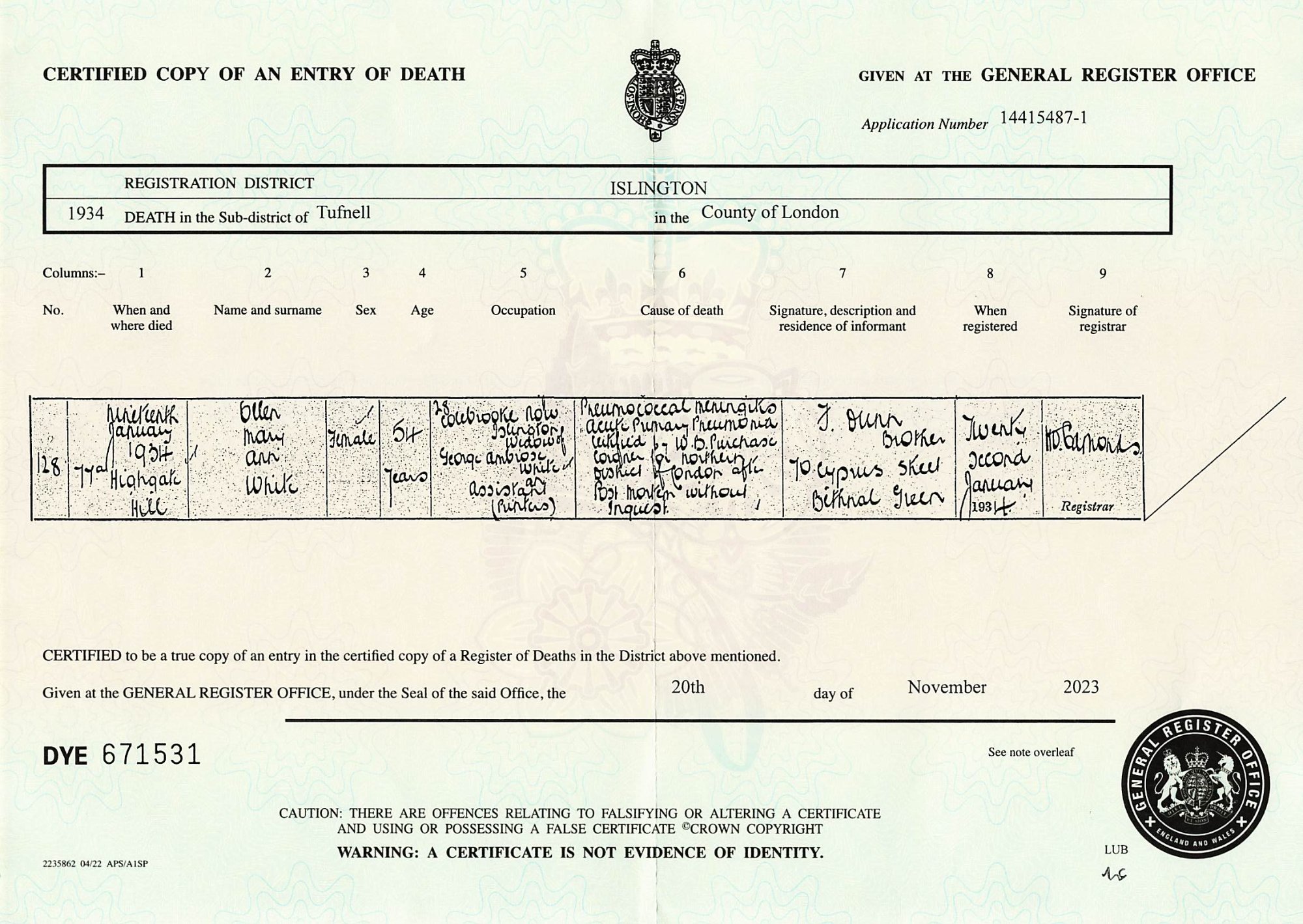
By the time of the 1901 Census, the family home in West Derby had contracted. Helen's mother Eliza had died in September 1896 at 12 Worcester Drive, West Derby — her death certificate recording carcinoma of the uterus and anaemia, certified by the attending physician. William Matthew was at sea, as Master of the cargo ship SS Fulmar. Helen, now listed as Head of Household at 10 Worcester Drive, West Derby, was aged twenty-seven (the census gives her birth year as 1874, one of several discrepancies across records) and remained single. Living with her was her maternal aunt Jane Hayne, aged fifty.
1901 Census · Helen Matthew, Head · Single, aged 27 · 10 Worcester Drive, West Derby, Lancashire · with Jane Hayne, sister-in-law
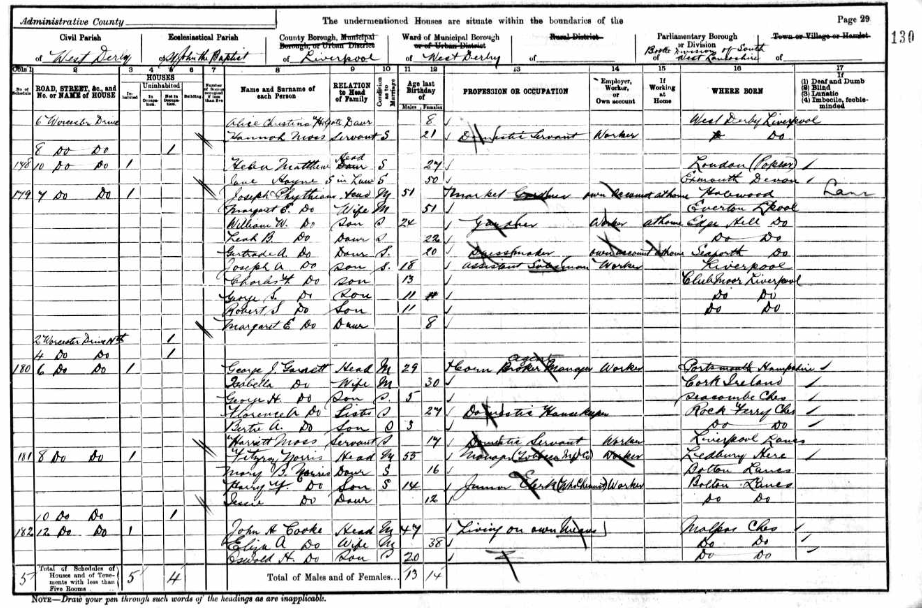
1901 Census original record · Worcester Drive, West Derby · Helen Matthew listed as Head, Single · her father William at sea as Master of SS Fulmar
NELLIE RAYMOND — JOURNALIST, 1911
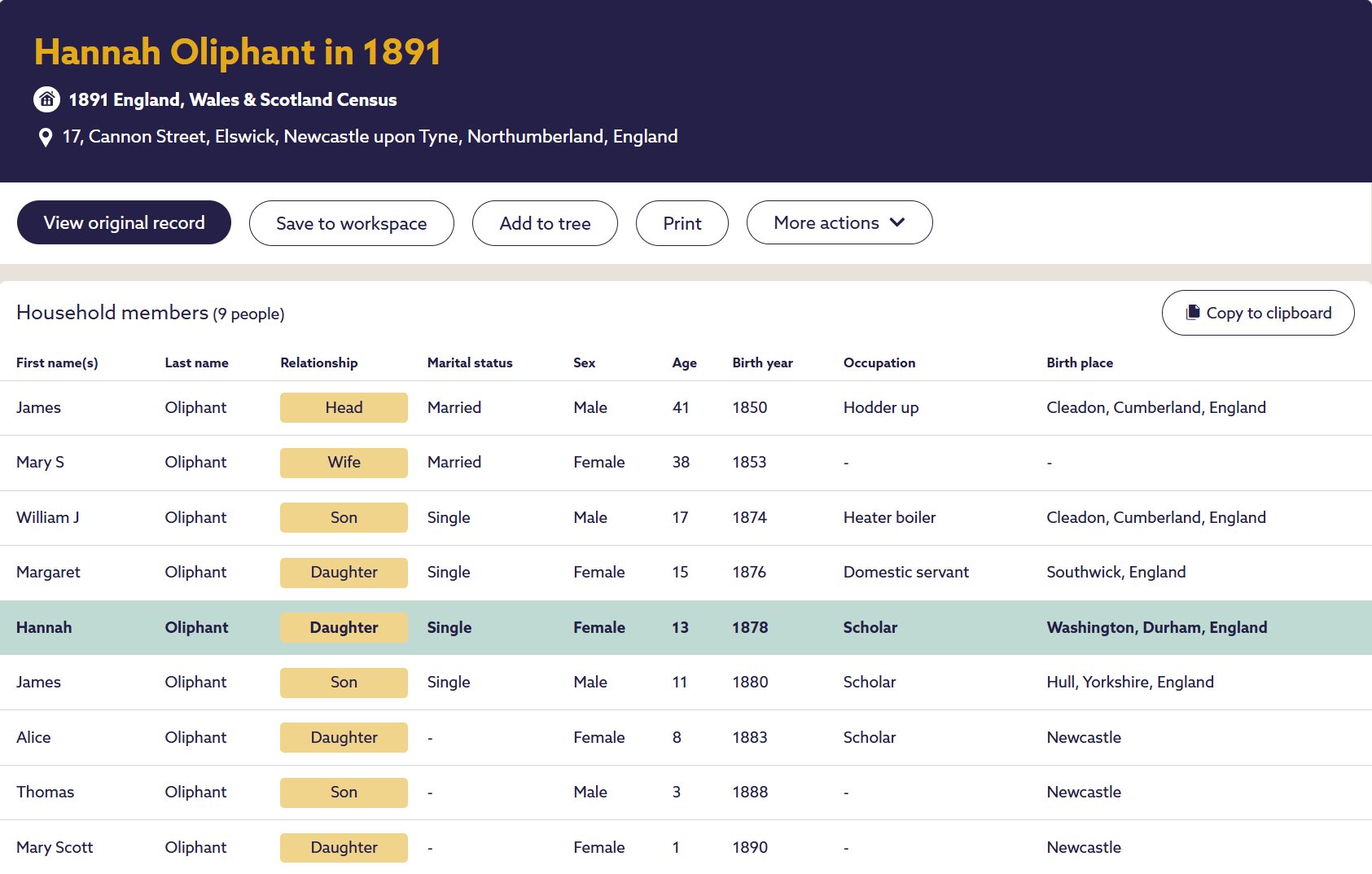
By 1911, Helen had adopted yet another assumed identity. The 1911 Census finds her at 194 Longmoor Lane, Walton on the Hill, Liverpool — living with her father William, now a widower aged seventy and an "amster mariner steamship," and the faithful Jane Hayne, spinster, aged seventy-eight. Helen appears in the census record not as Helen Matthew but as Nellie Raymond, Married, aged thirty-four, occupation: Journalist, Industry: The Press. She lists her birthplace as "At Sea." The census form was signed in her own hand as "Nellie Raymond." That she chose to use a fictitious married surname here — as she had used a fictitious married identity as "Mrs. Graham" on the football field — speaks to the ongoing complexity of Helen's relationship with public identity.
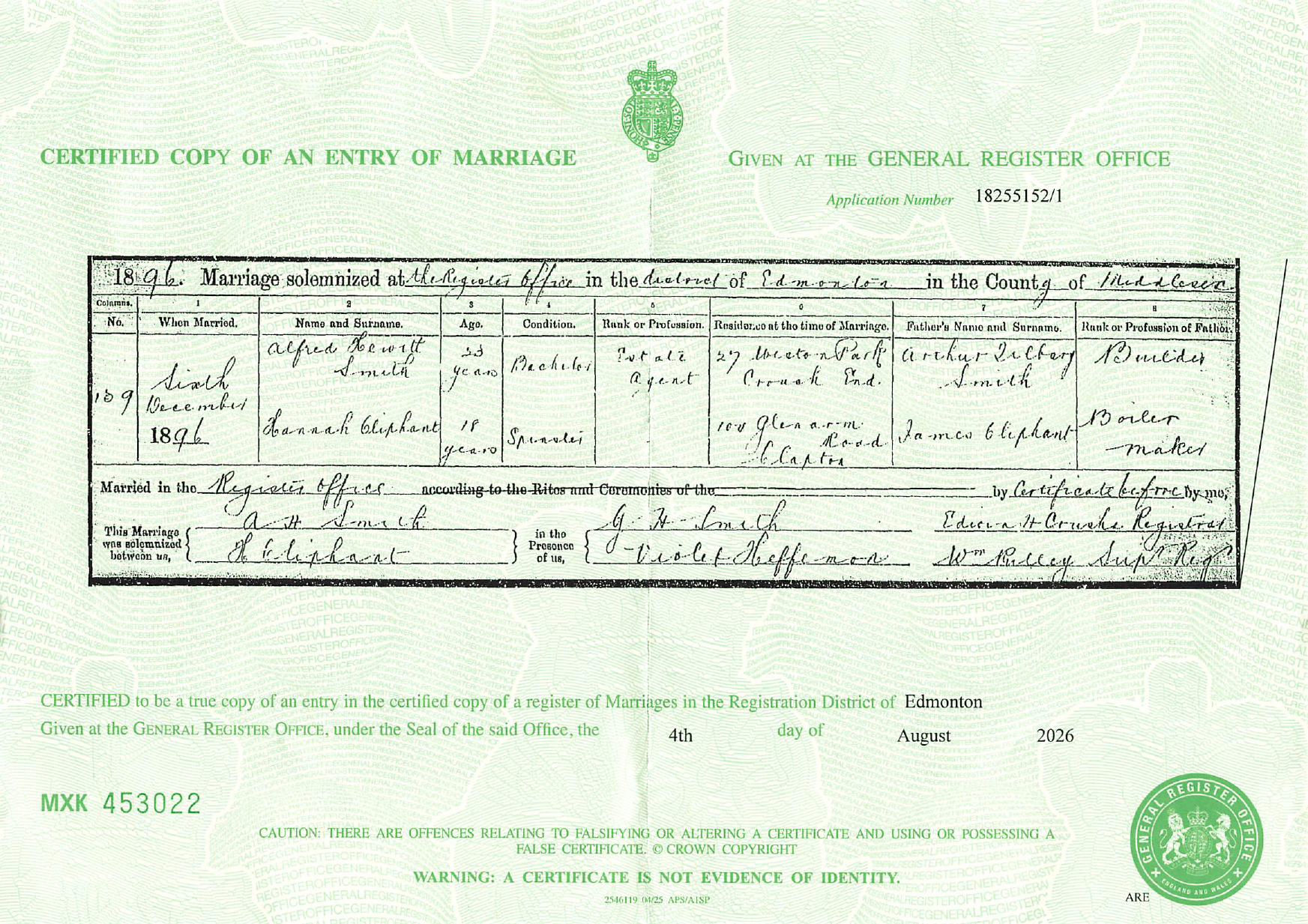
MARRIAGE — JOHN ARTHUR LUNT, 1915
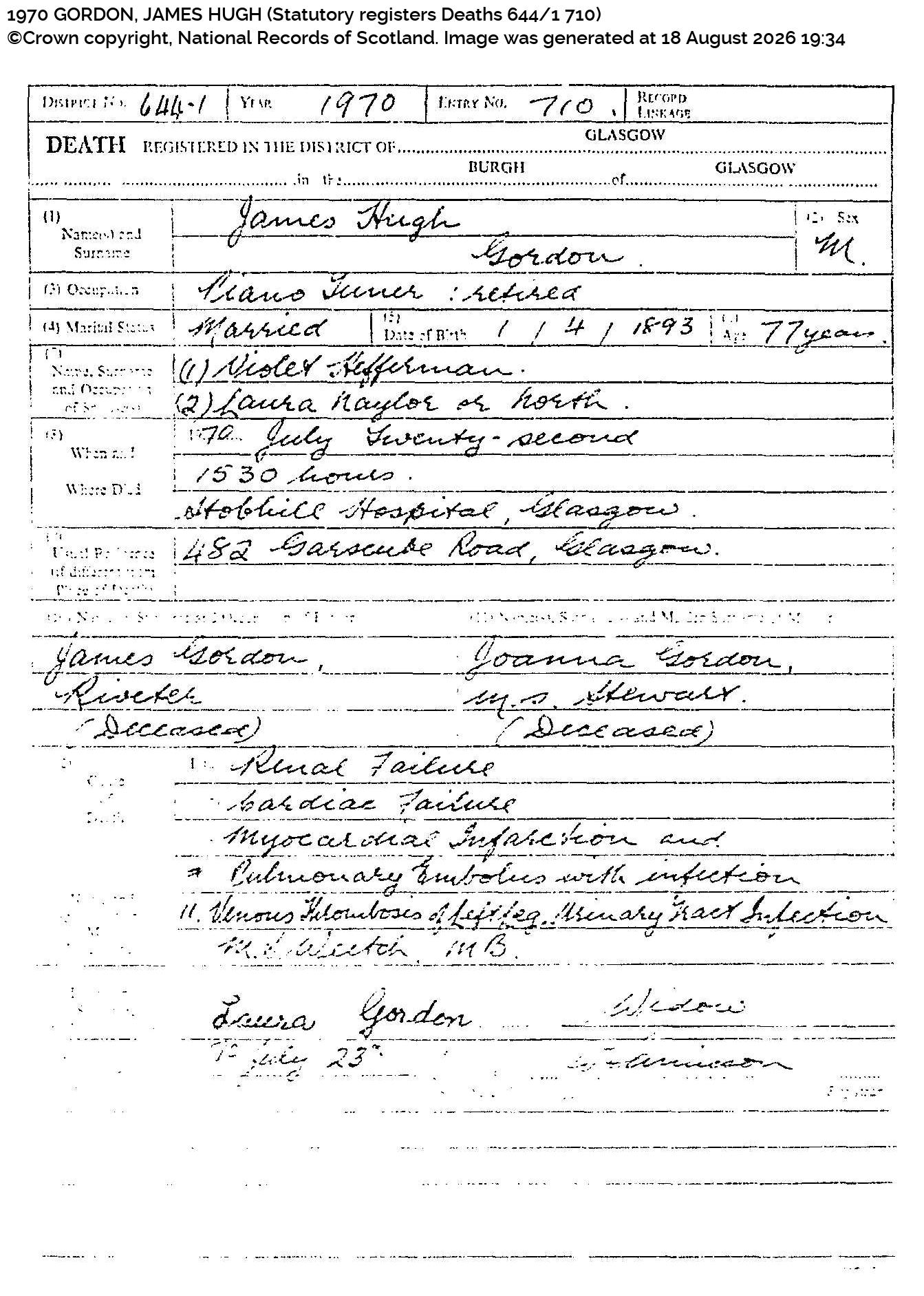
In July 1915, Helen Jane Matthew married John Arthur Lunt in Chester, Cheshire. She was forty-four years old; he was twenty-seven. John Arthur Lunt was a racehorse owner and trainer in the North of England. The couple would go on to have two children: Joan Allan Dice Lunt, born in 1916 in Birmingham, and John Allan Seymour Lunt, born in 1919 in Bournemouth. Their happiness together was brief and brutally interrupted. John Arthur Lunt died on 14th September 1918 at 50 Lee Bank Road, Edgbaston, Warwickshire, aged just thirty-two. The cause of death was recorded as pleurisy and pneumonia. Helen was pregnant with their second child at the time of his death. John Seymour Lunt was born the following year, in 1919.
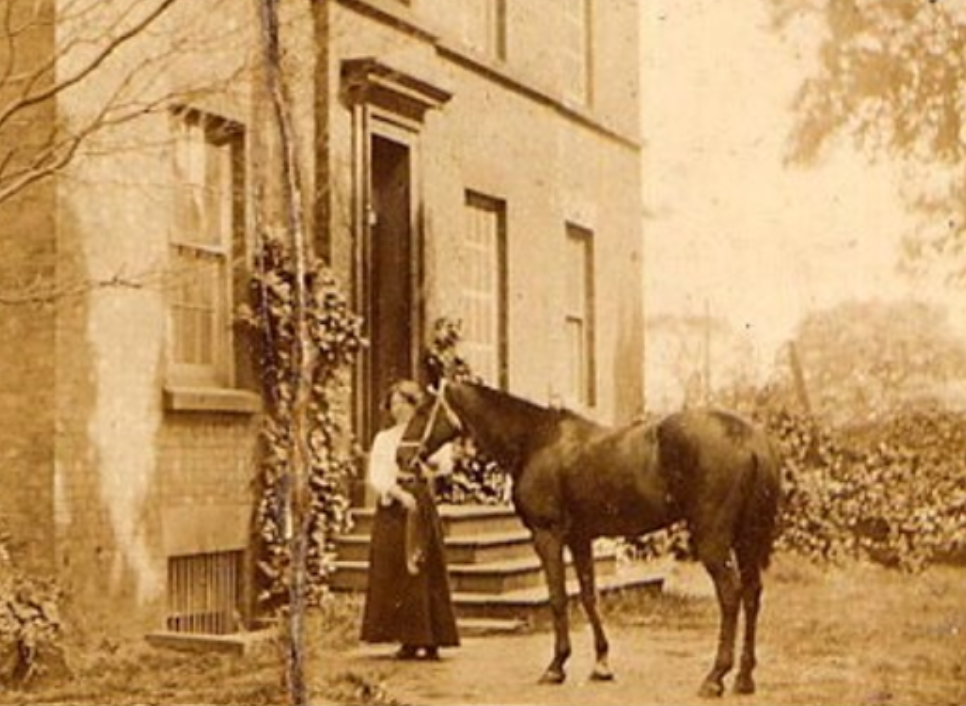
Helen Jane Matthew with a racehorse, believed to date from her years with John Arthur Lunt · The football pioneer, the journalist, the sketch artist, now a trainer's wife in the world of the turf
THE 1921 CENSUS — WIDOW, GENTLEWOMAN
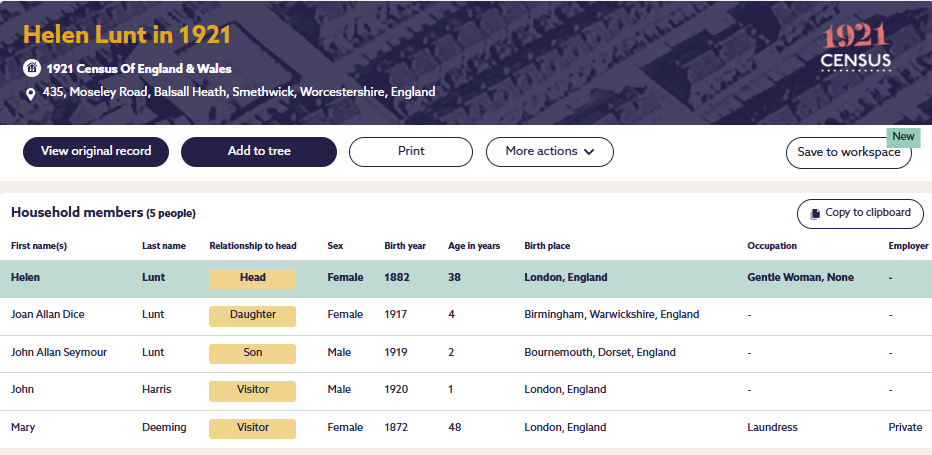
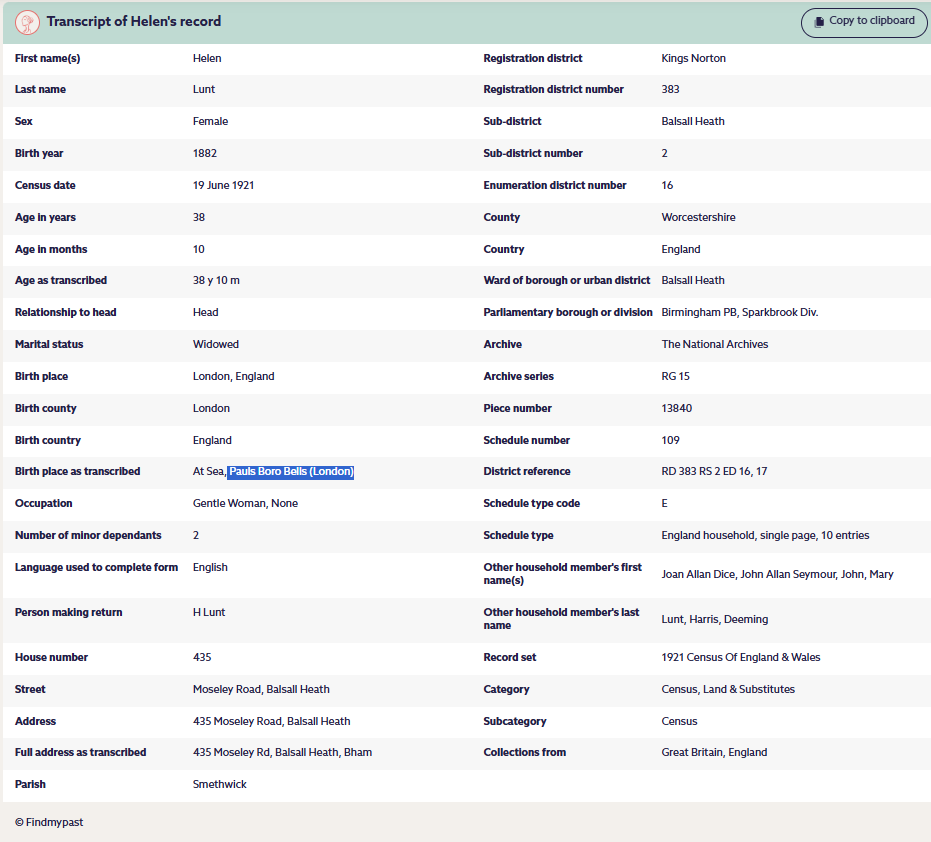
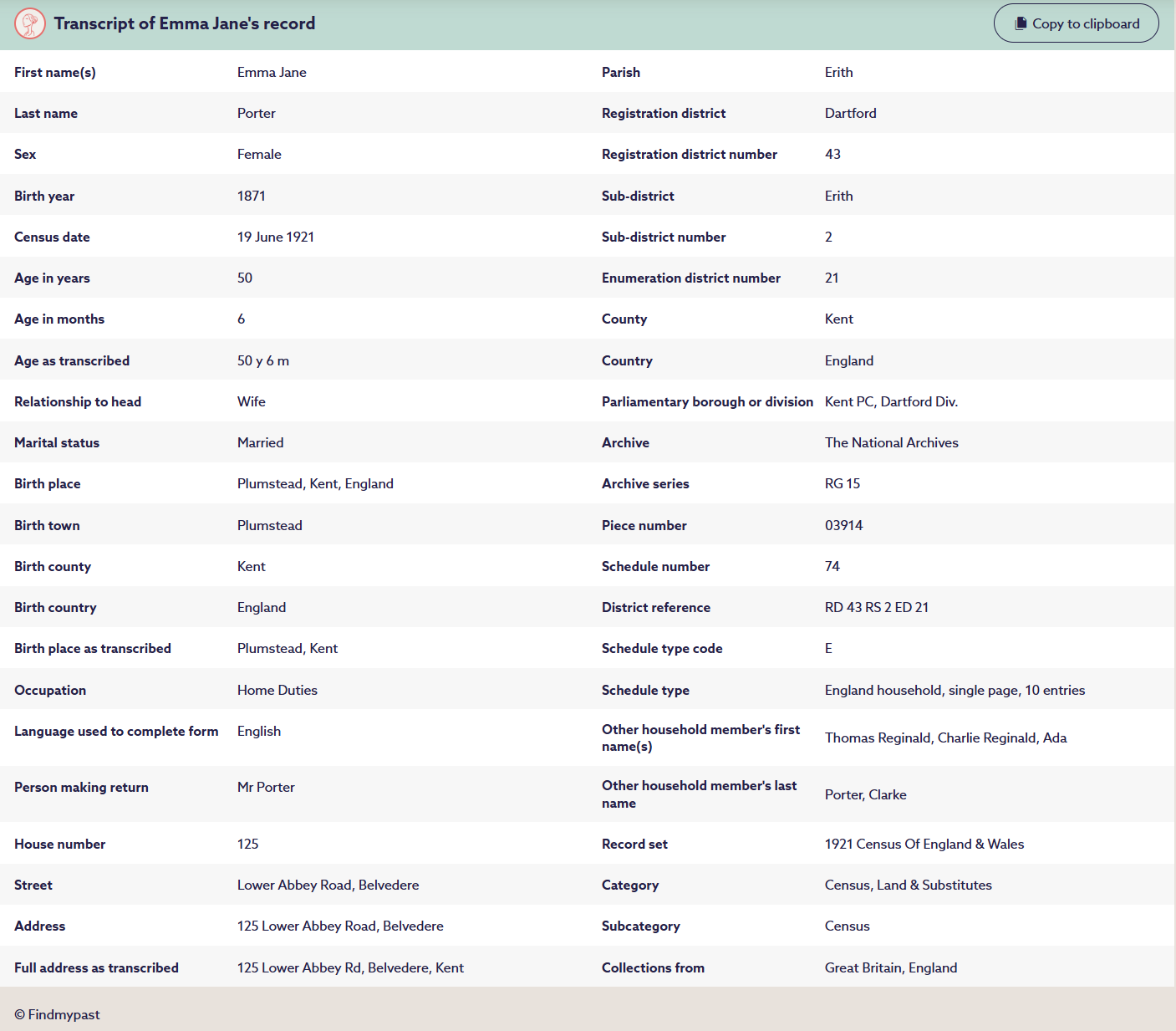
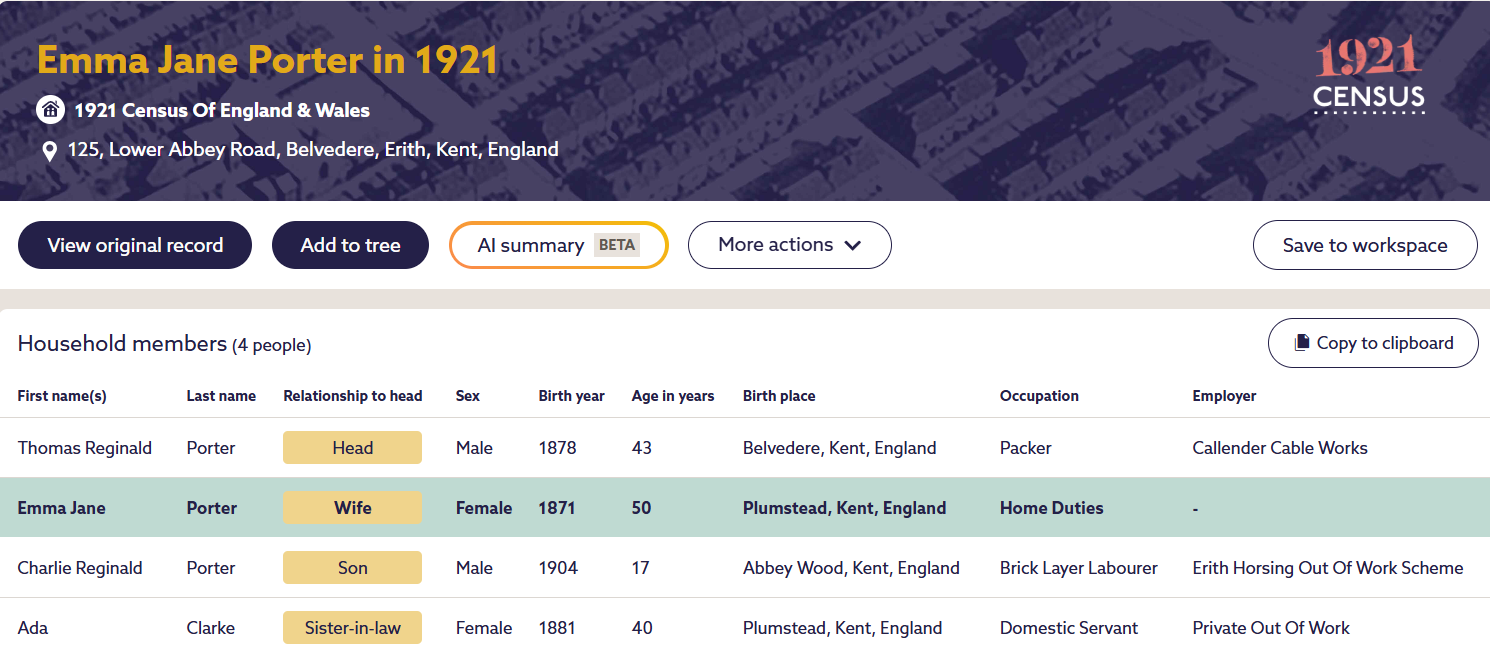
The 1921 Census records Helen — now Mrs. Helen Lunt — as Head of Household at 435 Moseley Road, Balsall Heath, Birmingham, Worcestershire. She was widowed, aged thirty-eight (birth year given as 1882 in the census transcription, one of the characteristic discrepancies in her records), and listed her occupation as Gentlewoman, None. In the household were her daughter Joan Allan Dice, aged four, and her son John Allan Seymour, aged two. Helen described her birthplace as "At Sea — Paulsboro Bells (London)." She signed the census return herself as H. Lunt.
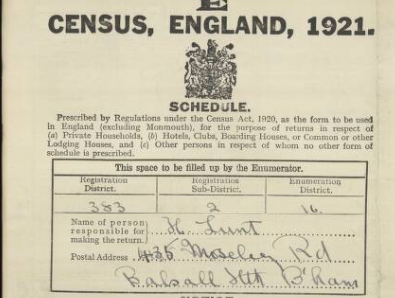
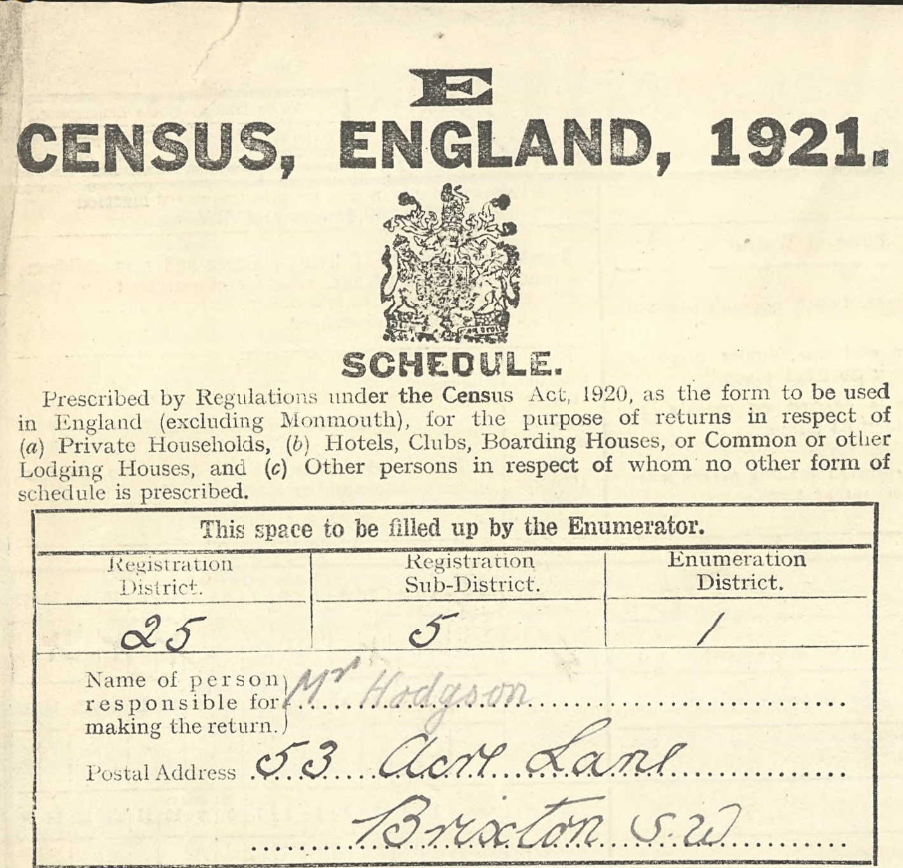
1921 Census Cover Page · 435 Moseley Road, Balsall Heath, Birmingham · Name of person responsible: H. Lunt
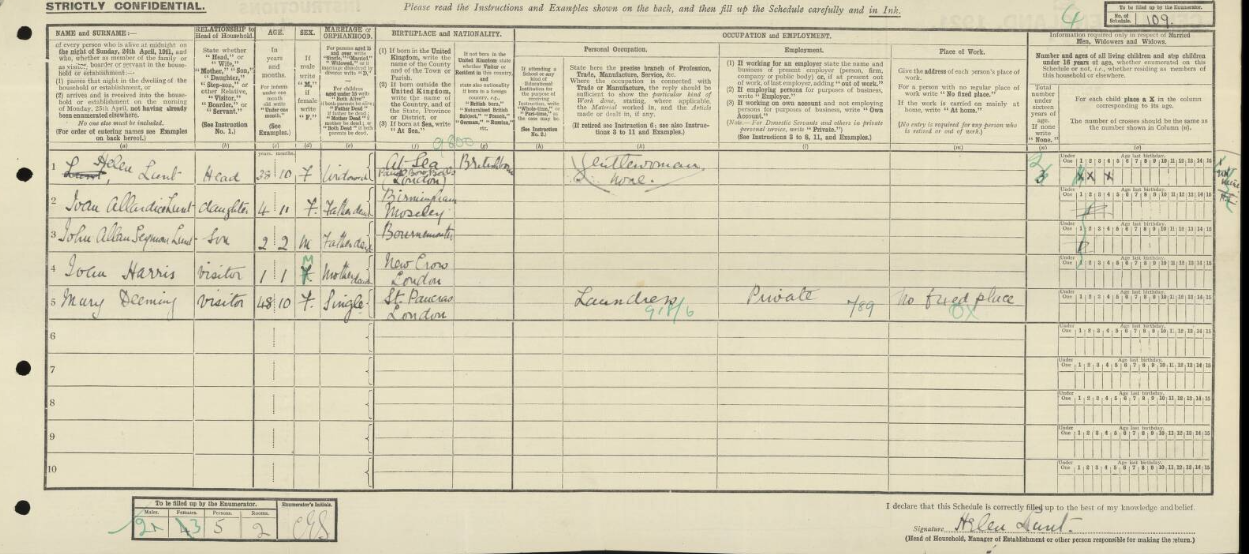
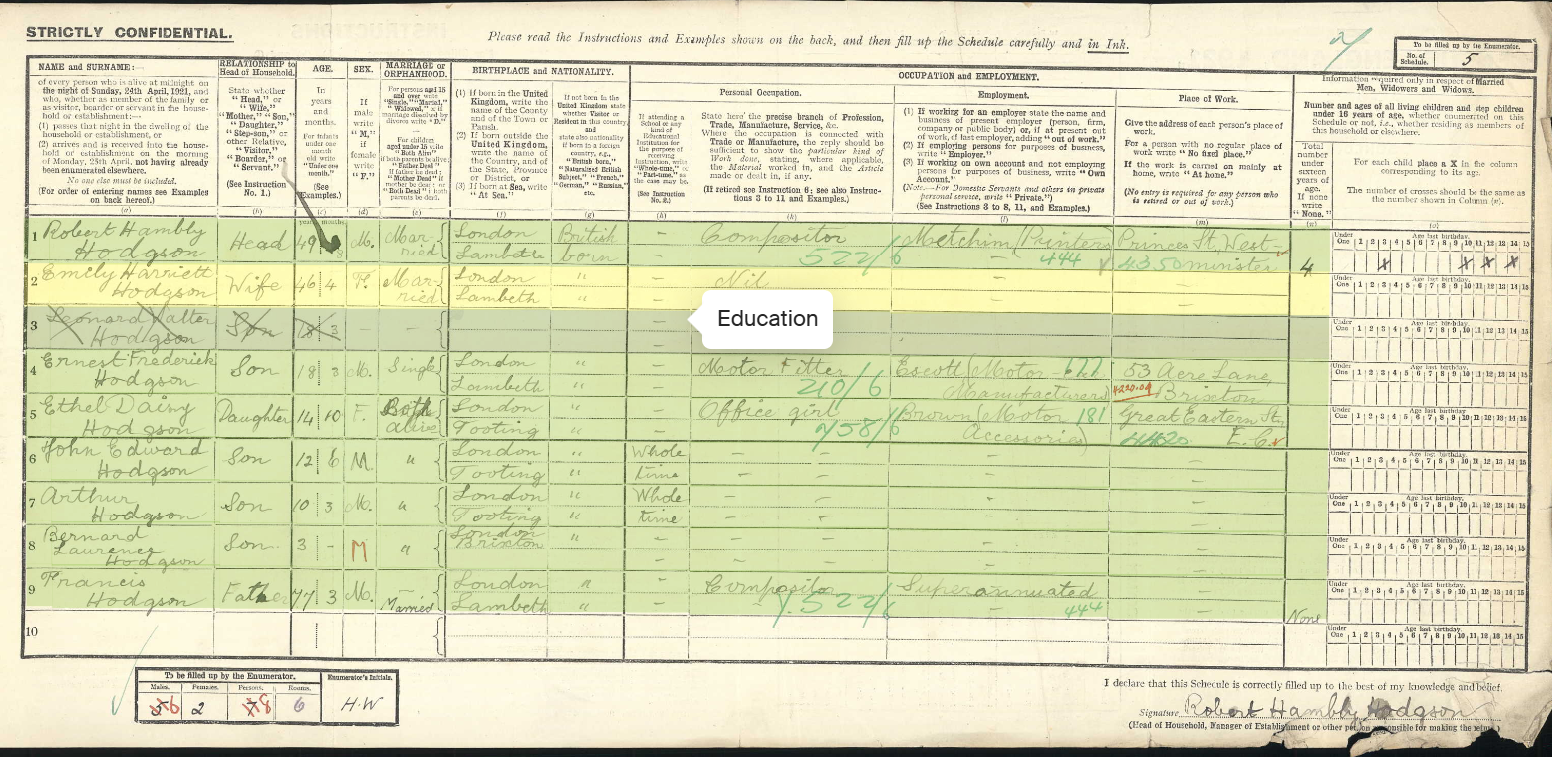
1921 Census · Helen Lunt, Head, Widowed · Occupation: Gentlewoman, None · 435 Moseley Road, Balsall Heath · Signed "H. Lunt"
1921 Census transcription · Helen Lunt, aged 38, Widowed, Gentlewoman · 435 Moseley Road, Balsall Heath · Children: Joan (4) and John (2)
A WIDOW IN CRISIS — 1918–1922
The years that followed John Lunt's death in September 1918 were ones of genuine desperation. Helen was forty-seven years old, pregnant, with a two-year-old daughter and no income. John Arthur Lunt had been a racehorse owner and trainer — not a profession that left a widow well-provided for. The 1921 Census finds her at 435 Moseley Road, Balsall Heath, Birmingham, describing her occupation simply as "Gentlewoman, None" — a Victorian formulation that meant, in plain terms, that she had no work and no means. Her two young children, Joan (aged four) and John (aged two), were with her. The household was signed by her as "H. Lunt." She was, to all appearances, entirely alone.
The newspaper records of 1920 to 1922 reveal what happened next. Facing destitution, Helen began a series of increasingly desperate attempts to raise money — obtaining goods from tradespeople on the promise of payment, issuing bills of exchange that could not be met, living under variant names (Helen Hayne, her mother's maiden name; Helen Lunt, her married name) at a succession of Birmingham addresses. The Western Mail of 19th March 1920 records early proceedings in Cardiff. The Bridgnorth Journal of 31st January 1922 records a court appearance. By the spring of 1922, the full weight of the law had caught up with her.
What the records do not shout loudly enough — and what deserves to be said plainly — is that throughout these proceedings, Helen defended herself. She did not engage a solicitor. She did not rely on a barrister to speak for her. She stood up in court and argued her own case. The woman who had spent thirty years writing, reporting, debating and arguing in print — who had covered football matches for the Liverpool Evening Express, who had published opinion pieces under a pen name, who had crossed every professional boundary her era placed in front of women — was not going to be silent in a courtroom. She spoke for herself. That she lost does not diminish the fact that she tried. It speaks volumes about who she was.
THE BURNHAM PHOTOGRAPH — A PROVISIONAL IDENTIFICATION
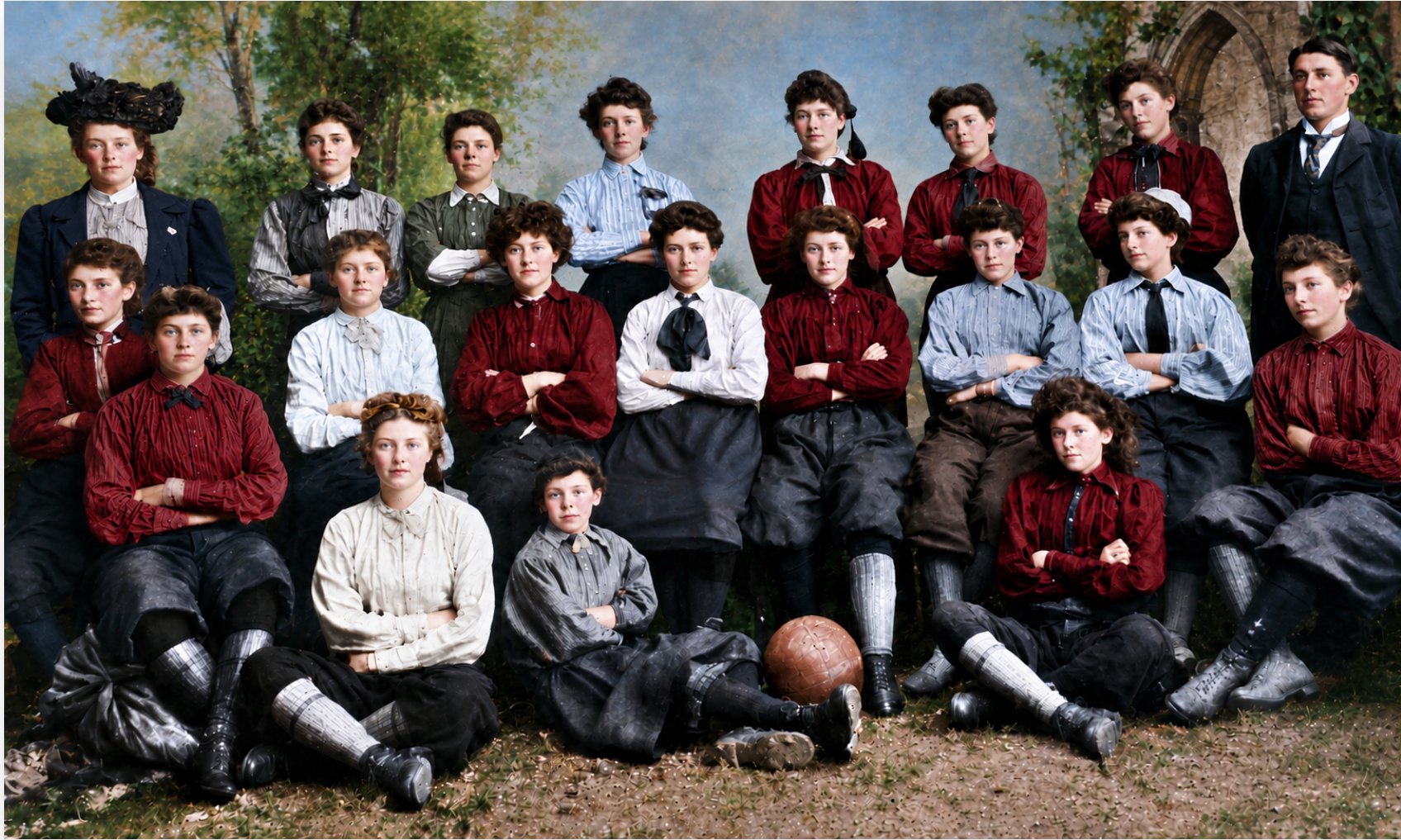
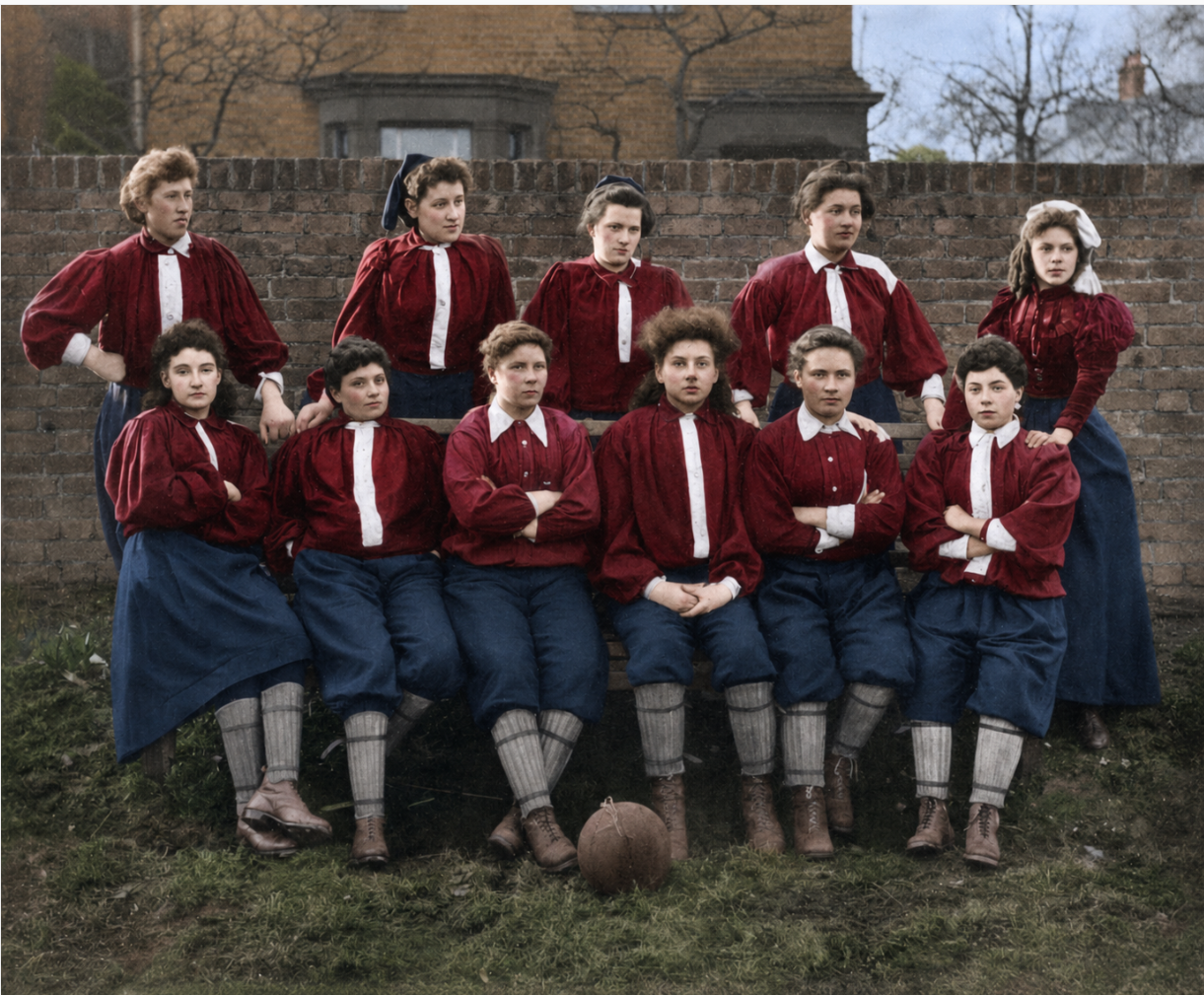
The Burnham photograph — an outdoor group portrait of approximately nineteen or twenty players, taken in autumn 1895 and reproduced as a sketch in the Evening Express of 2nd November 1895 — has long been identified by Stuart Gibbs as a photograph of the Original Ladies touring side following the split of the British Ladies Football Club into two separate touring groups in September 1895. The previous assumption was that the two sides operated independently of one another.
In May 2026, Stuart Gibbs drew attention to a figure standing fourth from left in the back row of the Burnham photograph — a young woman in a white high-necked blouse, with curly hair, bearing what appears to be a badge or brooch on her left chest. Stuart's provisional identification is that this figure may be Mrs. Graham — Helen Jane Matthew — and that the object on her chest may be the Montrose FC badge, which Helen was known to wear as a statement of her Scottish identity and her father's Montrose origins. The badge identification was originally established by Stuart Gibbs through collaborative research with Forbes Inglis of the Montrose Review.

Figure standing fourth from left in the back row of the Burnham photograph · possibly Helen Jane Matthew (Mrs. Graham) · note the badge or brooch on the left chest · Colourised · identification provisional
If the identification is correct, it raises significant questions about the relationship between the two touring sides. The September 1895 announcement stated that the groups had no relation to each other — but if Mrs. Graham was present in a photograph of the Original Ladies, the division may have been less absolute in practice than the press reported. It would also raise the question of whether Mrs. Graham's XI ever played matches without Mrs. Graham herself.
✦ Research Status
This identification is provisional. The source photograph is of poor quality, and the badge detail — though visible in colourised form — cannot be confirmed as the Montrose FC crest from the available image data alone. The identification was proposed by Stuart Gibbs in May 2026 and is subject to ongoing research. It is presented here in that spirit: as a live research question, not a conclusion.
⚠ Worcester Assizes · 7th June 1922
Helen Hayne, otherwise known as Helen Lunt, was tried at Worcester Assizes on 7th June 1922, charged with fraud and obtaining credit while an undischarged bankrupt. She had obtained goods from a Worcester firm on forged bills of exchange, and had lived successively under the name Mrs Lunt at 119 Trafalgar Road, Moseley (1920), at 435 Moseley Road, Birmingham, and at Cradley, each time continuing the same pattern of obtaining credit she could not repay.
Helen gave evidence on oath in her own defence — without a solicitor, without counsel, representing herself entirely. She told the court that the bills of exchange had been given to her by a Captain Field, a friend of her late husband John Lunt, who had been a breeder of thoroughbred horses and with whom she and John had been engaged in racing business together. She said she had known Captain Field for ten years, meeting him frequently at race meetings, and had corresponded with him by letter to G.P.O. addresses at racing towns. She believed the bills were given in recognition of a service she had rendered in connection with a young man who got into trouble with a young woman. She had tried to find Captain Field at meetings, but had never had his home address. A witness — Mary Deeming, a laundress who had been her servant at Shepherds Hay, Cradley — corroborated that she had seen a gentleman known as Captain Field call at the house.
Helen told the jury that she and Captain Field had been partners in bookmaking, with a share of profits up to September 1921 of £1,900 — but that Field had told her he could not spare the capital to pay her out. She declared herself “absolutely guiltless” of any intent to defraud. She had already been held in prison for five months awaiting trial. When asked about the complaints made against her to the Birmingham police, she said — in words that still carry their force a century later — that it was “a savage thing to keep her in prison twelve months, waiting for trial, and giving her no opportunity to make a proper defence.”
The judge noted that she had practically admitted the offence of obtaining credit. The jury found her guilty on both counts. The judge, who had letters showing she had tried to obtain credit saying that “she could not call to pay because she had had a long day with the Ledbury Hounds”, stated that he was satisfied she was “a most impudent swindler.” She was sentenced to three years’ penal servitude for fraud, and a concurrent twelve months’ imprisonment for obtaining credit as an undischarged bankrupt. She lodged an appeal — her case appearing in the lists alongside that of Horatio Bottomley, the fraudster MP, heard before Mr Justice Bray, Mr Justice Coleridge, and Mr Justice Roche. The outcome of Helen’s appeal is not currently known.
Sources: Berrow’s Worcester Journal, 10 June 1922 · Evening Despatch, 7 June 1922 · Birmingham Daily Gazette, 8 June 1922 · Sheffield Daily Telegraph, 29 June 1922 · Bellshill Speaker, 30 June 1922
THE CHILDREN — WHAT BECAME OF JOAN AND JOHN?
At the time of Helen's sentencing, her daughter Joan was six years old and her son John was three. Women sentenced to penal servitude in England in the 1920s were not permitted to bring young children to prison. The question of where Joan and John went during their mother's imprisonment is one that the records do not directly answer — but the most likely answer points clearly in one direction.
Helen's sister Florence Emma Matthew — her fellow Lothian Lass, her closest companion through the Liverpool years and the football years and the journalism years — was living with her husband Alexander W. Barkway at 276 Gloucester Road, Bootle. The 1939 Register confirms Alexander Barkway there, born 17th October 1868, a joiner in ship housing, living with Florence E. Barkway. If any family member was able and willing to take in two small children, it was Florence. The sisters had been inseparable since childhood. It is difficult to imagine the children going anywhere else.
Whether Helen served the full term of her sentence, or whether her appeal reduced it, is not yet known from the available records. What is clear is that she eventually emerged, rebuilt what she could of her life, and made her way south.
ALONE IN THE COURTROOM
Picture her. Worcester Assizes, June 1922. Fifty-three years old. Five months already imprisoned, awaiting a trial she had no means to properly prepare for. Joan was five years old. John was two. Somewhere — with Florence and Alexander Barkway in Bootle, or with strangers, or with whoever would take them — her children were waiting for their mother to come home.
And Helen Jane Matthew stood alone in that courtroom. No solicitor at her elbow. No barrister to rise and speak for her. No one to frame her story, to present Captain Field and the race meetings and the bookmaking partnership and the £1,900 she was owed and could not recover. No one to tell the jury who she actually was — that she was a journalist, a sketch artist, a lady footballer, a woman who had written sports copy for the Liverpool Evening Express from the press box at a time when women were not permitted in press boxes. No one to say any of it.
She took the oath herself. She gave evidence herself. She told them about Captain Field, about the bills given in good faith, about trusting the wrong man at the worst possible moment. She tried. And when they pressed her about the Birmingham complaints — the complaints of a desperate woman trying to feed two infants — she looked at the court and said, plainly and without self-pity, what was simply true:
“It was a savage thing to keep her in prison twelve months, waiting for trial, and giving her no opportunity to make a proper defence.”
The judge called it practically an admission. The jury found her guilty. The apparatus moved on.
How in God’s name could they have been so cruel? They cared not one whit for her circumstances. Not one whit for the dead husband, the two small children, the five months already served, the absence of any counsel, the racing partnership that had left her penniless and holding forged paper she had believed to be good. She was a woman alone in a system built by men, for men, that had decided in advance what she was. And what she was, to them, was an impudent swindler.
What she was, in truth, was a woman trying to survive.
A WOMAN IN FULL — CONTEXT AND COMPASSION
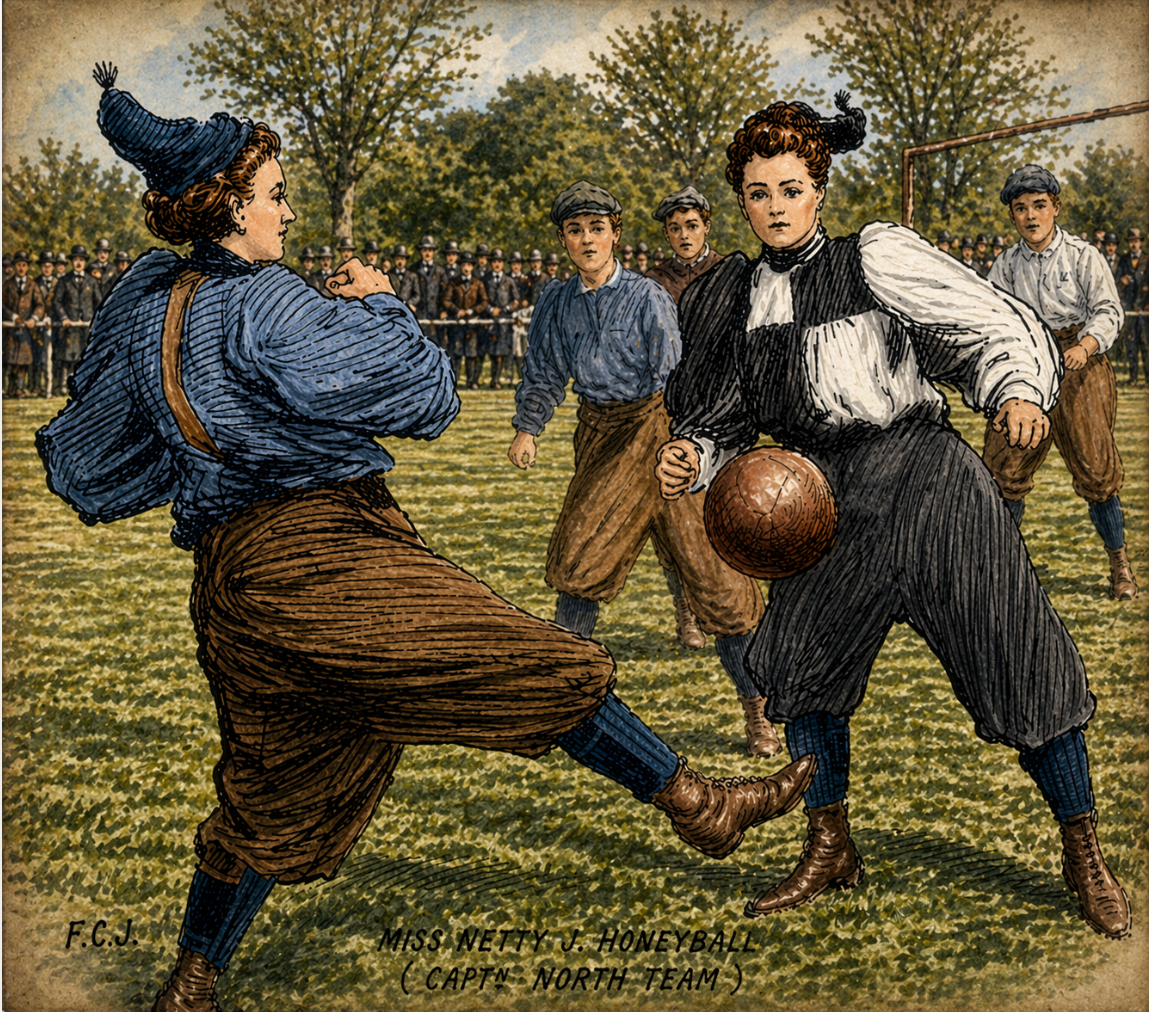
It would be easy — and wrong — to allow the Worcester Assizes verdict to define Helen Jane Matthew. The judge's verdict tells one story. The records tell another. She was a woman of genuine intellectual distinction: a journalist, a sketch artist, a published sports writer who had covered Preston North End for the Liverpool Evening Express from the press box at a time when women were not supposed to be there at all. She had played football before ten thousand spectators, scoring a goal for the North Team, even though she was, in fact, the North Team goalkeeper. She had formed her own team. She had written, drawn, reported, and argued for forty years.
When her husband died in 1918, leaving her pregnant, widowed, and penniless, she had no trade that Victorian and Edwardian society would reward in a woman of her age. Journalism, her great skill, was precarious. The fraud she committed was the fraud of desperation, not of greed — she was trying to feed and house two very small children. The judge who called her an impudent swindler and sent her to prison for three years was sentencing a woman who had once been described in the sporting press as one of the most knowledgeable football writers in the north of England. These two things are both true.
Helen Lunt — hero of the British Ladies Football Club, of Mrs. Graham’s XI — was reduced to a figure of contempt by a system that never knew real struggle, never knew the imminence of starvation, never knew the unbearable sight of her children going hungry. She stood in that courtroom alone, and she spoke for herself. The court did not listen. History must.
THE 1929 ELECTORAL REGISTER — LONDON
The 1929 Electoral Register places Helen in London, registered in the Parliamentary Borough of St Pancras, South-East Division — returned to the capital, listed as Helen Matthew, retaining her maiden name. The register confirms her continuing civic presence.
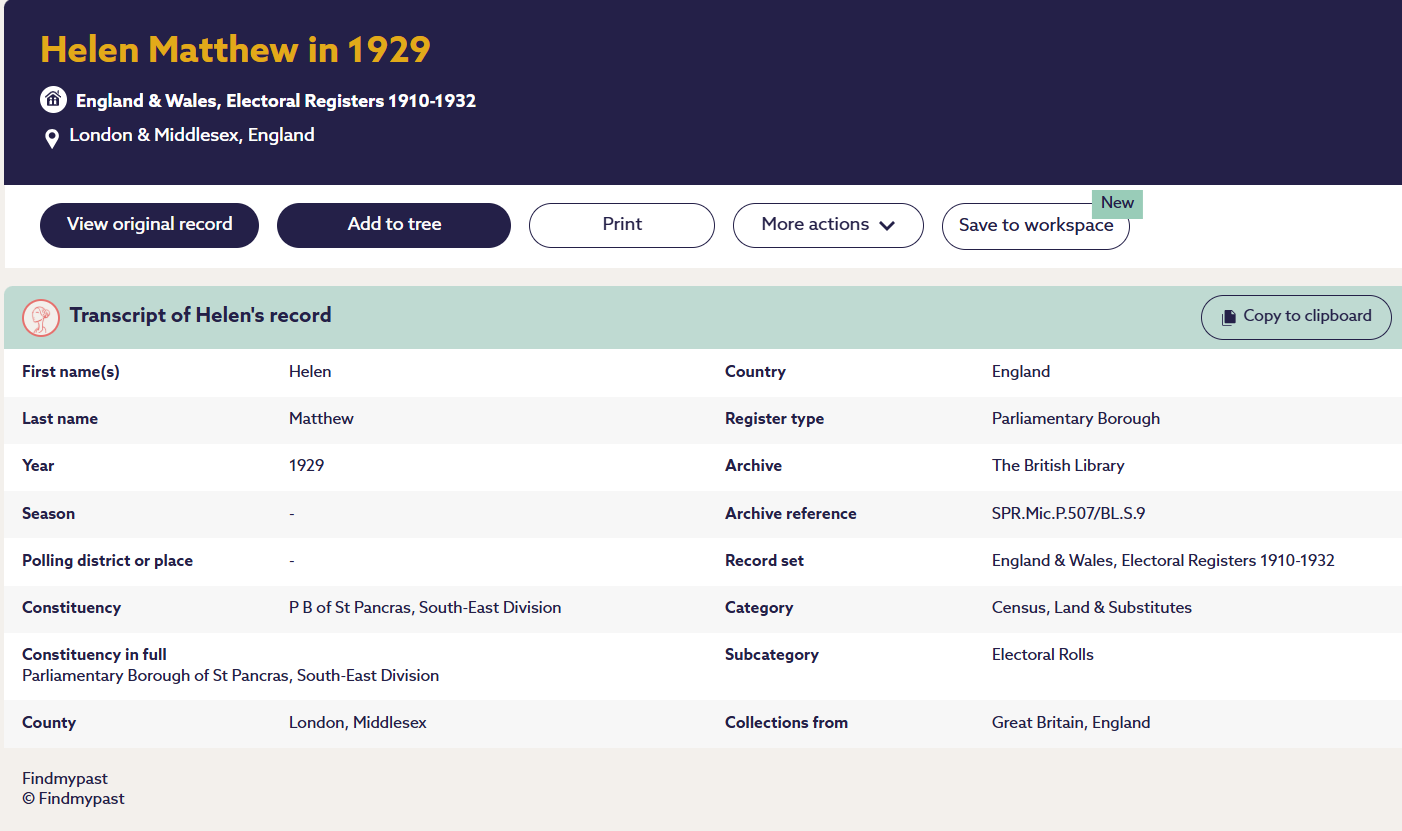
Electoral Register, 1929 · Helen Matthew · Parliamentary Borough of St Pancras, South-East Division · London & Middlesex
LATER LIFE — RETURN TO DEVON
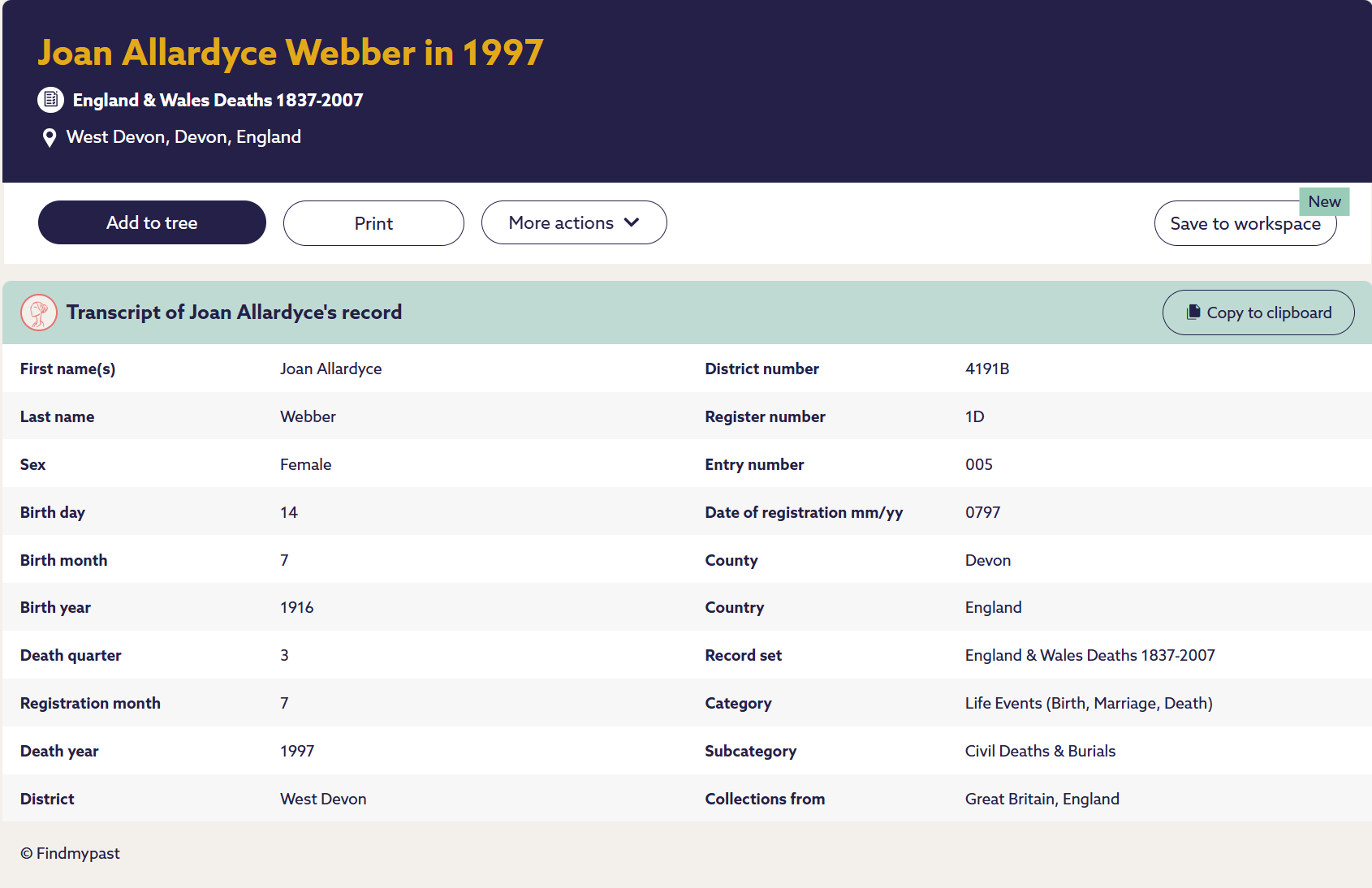
At some point in the latter 1920s or 1930s, Helen made her way back to Devon — the county of her mother’s family, the Haynes of Exmouth, the landscape of her earliest years before the move to Liverpool. The 1939 Register records her at 34 Manor Inn Brook Street, Dawlish, Devon, listed as widowed, born 10 August 1876, occupation Journalist. Still a journalist. Still herself. She had found her way, in the long final chapter of her life, back to the south-west. In her final years she lived with her daughter Joan Allan Lunt — by then Mrs. Joan Allardyce Webber — at Bitton Park Road, Teignmouth. Joan had married William B. Webber in Newton Abbot in October 1938. It was in Joan’s home that Helen spent her last years, and it was from Joan’s home that she was taken to hospital in Exeter after her fall.
DEVILMENT IN DAWLISH — 1939
Seventeen years after Worcester, Helen surfaced again in the pages of the press — this time in the Western Morning News of Friday 23rd June 1939, in a story that has rather more of the comic novel about it than the criminal court. She was sixty-eight years old. She had lost none of her ingenuity.
The case, heard at Newton Abbot County Court before His Honour Judge Thesiger, concerned a house called The Croft in Teignmouth, Devon. The property had been advertised to let in the early part of 1939. A woman presenting herself as Miss Taylor came to view it — charming, credible, and possessed of an excellent reference. She informed the agents that she had lived for fourteen years with a certain Mrs. Lunt, a lady of considerable means and sound investments, and that Mrs. Lunt wished to take the property. A tenancy agreement was duly signed. Shortly afterwards, Mrs. Lunt herself appeared and took occupation of the house.
The difficulty, as Mr. McGahey for the plaintiff observed to the court, was that Miss Taylor and Mrs. Lunt were the same person. The letters — the reference, the tenancy correspondence — were examined. His Honour Judge Thesiger remarked that he had "not the faintest doubt" that the signature on every document was in the handwriting of Mrs. Helen Lunt. Helen did not appear to contest the matter.
The judge made an order for possession forthwith, and for payment of £40 1s for use and occupation of the property. No custodial sentence. No great drama. Just Helen, at sixty-eight, quietly declining to pay rent by the elegant expedient of becoming two people at once — one to secure the tenancy, one to live in it — and then departing when the game was up.
It is impossible not to smile, a little. The woman who had been Mrs. Graham on the football pitch, Nellie Raymond in the census, born at sea, born in Montrose, the Lothian Lasses in the press — she had been constructing alternative selves for fifty years. By 1939 it was simply second nature. Teignmouth was not Worcester. There was no jury, no prison sentence, no children waiting at home. There was only a Devon judge, a small civil penalty, and Helen — incorrigible, inventive, unreformed — moving on to whatever came next.
DEATH — 5 SEPTEMBER 1963
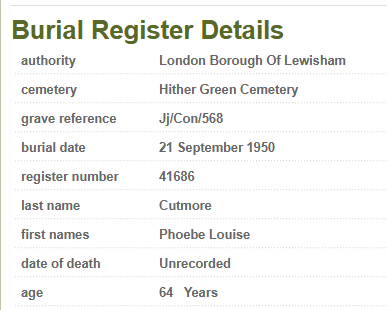
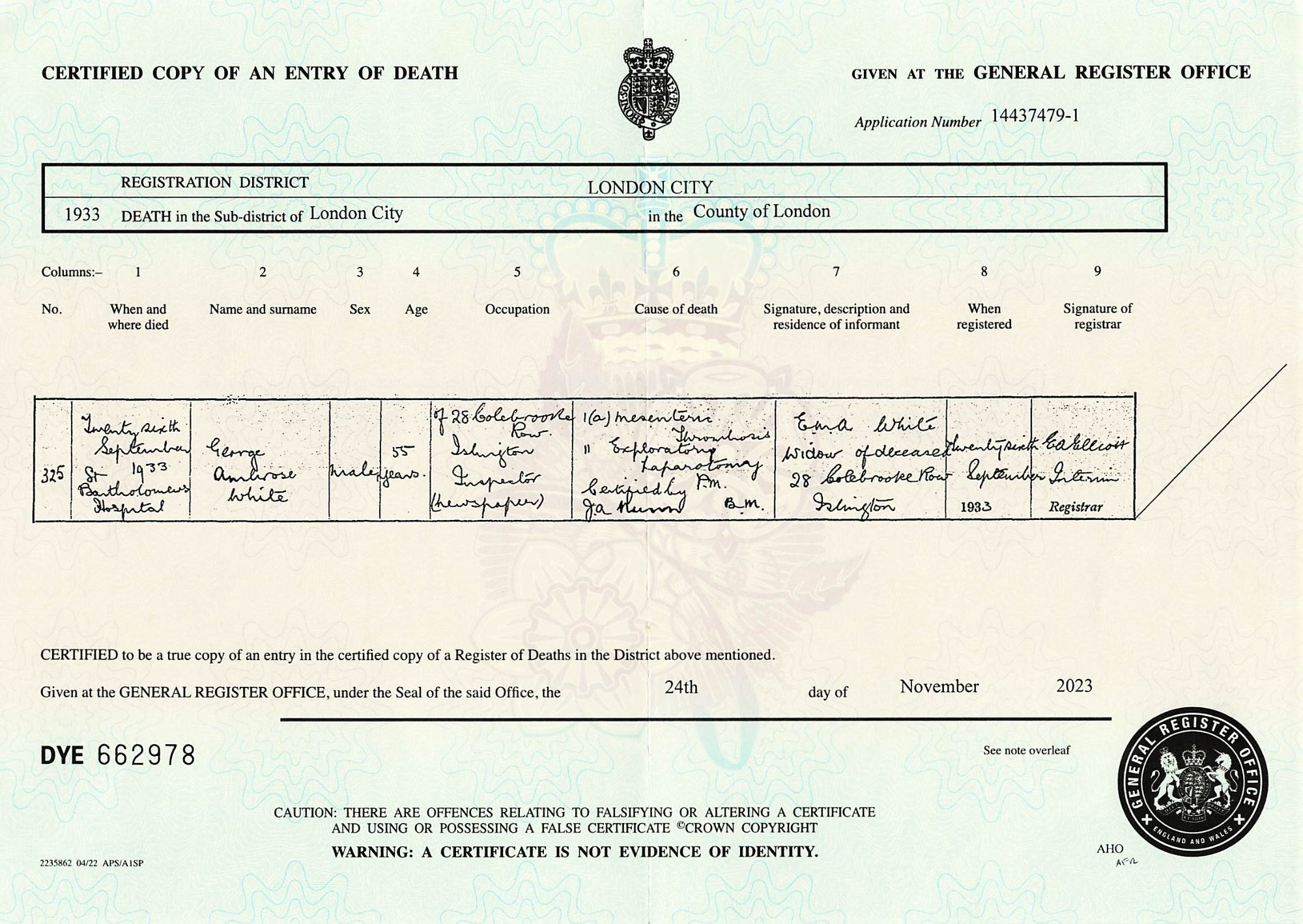
Helen Jane Matthew died on 5th September 1963, in hospital at Exeter, following a fall at her home in Teignmouth. She was ninety-two years old. A family friend, Miss E. Houghton, calling at the house, had found her lying on the floor at the foot of her bed. She had tripped over a bedroom mat. The woman who had been fleet of foot before ten thousand spectators at Crouch End in 1895 — who had run, tackled, and played in front of a crowd that stretched as far as the eye could see — was brought down, in the end, by a mat on the floor of her daughter’s bedroom. The coroner recorded a verdict of misadventure. The Express and Echo of 6th September 1963 noted that she was the daughter of a Liverpool ship’s captain and the widow of John Arthur Lunt, who before his death forty-four years earlier had been a racehorse owner and trainer in the North of England. She had been receiving treatment for a fracture of the right thigh. She was living with her daughter, Mrs. Joan Allardyce Webber.
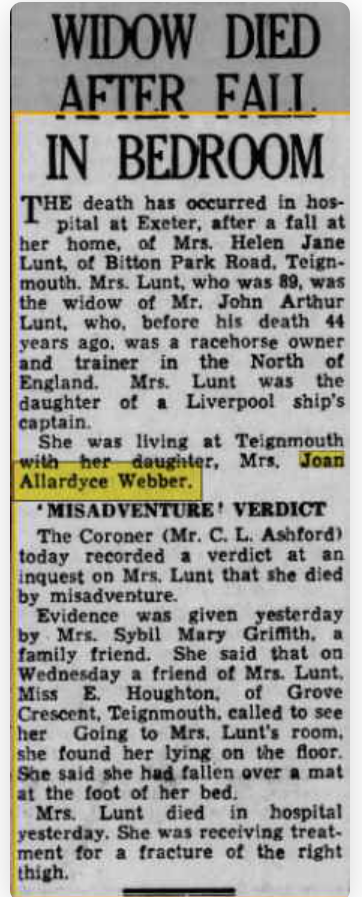
Express and Echo, 6 September 1963 · Widow Died After Fall in Bedroom · Mrs. Helen Jane Lunt, aged 89 [sic], of Bitton Park Road, Teignmouth · died in hospital at Exeter · verdict of misadventure
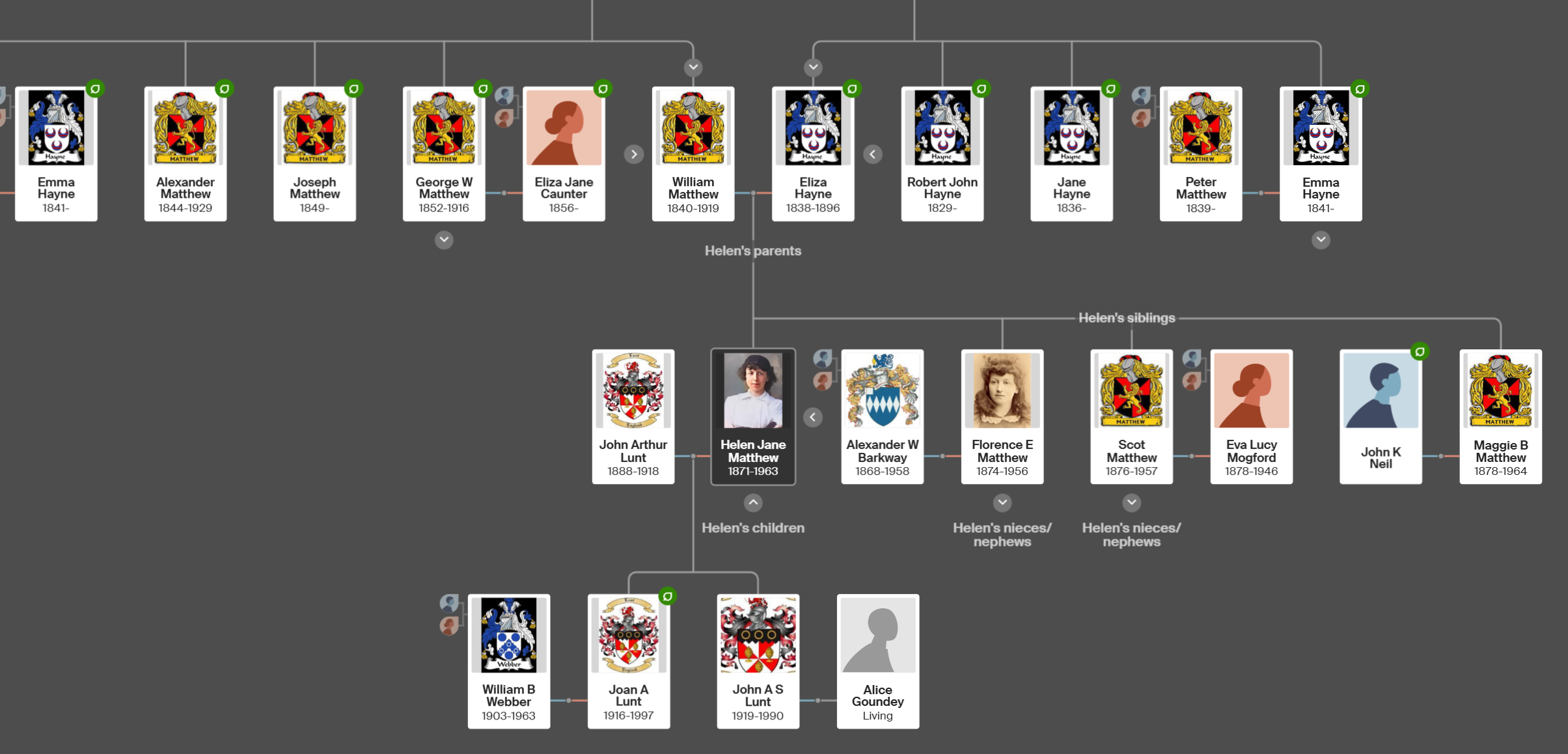
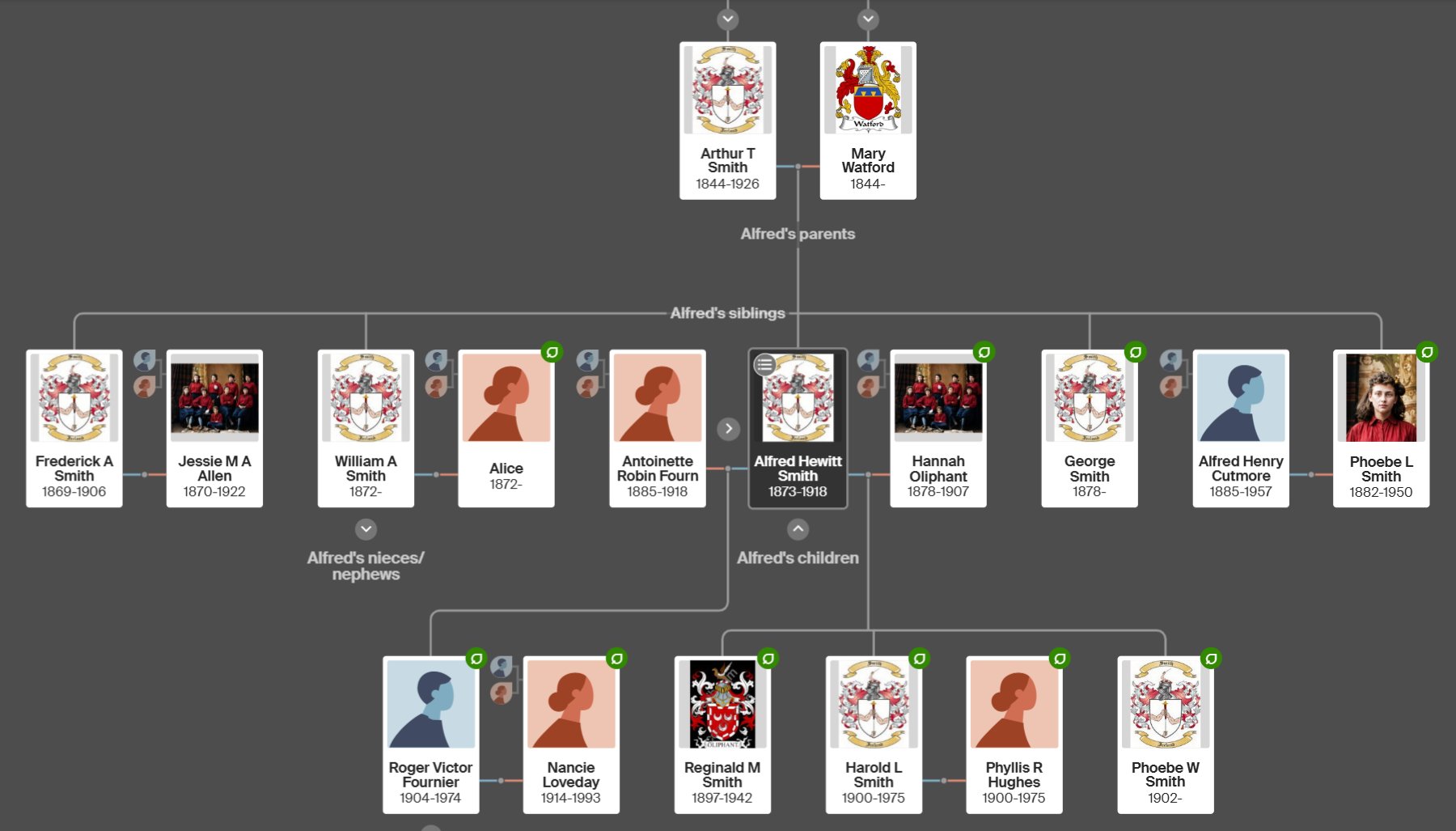
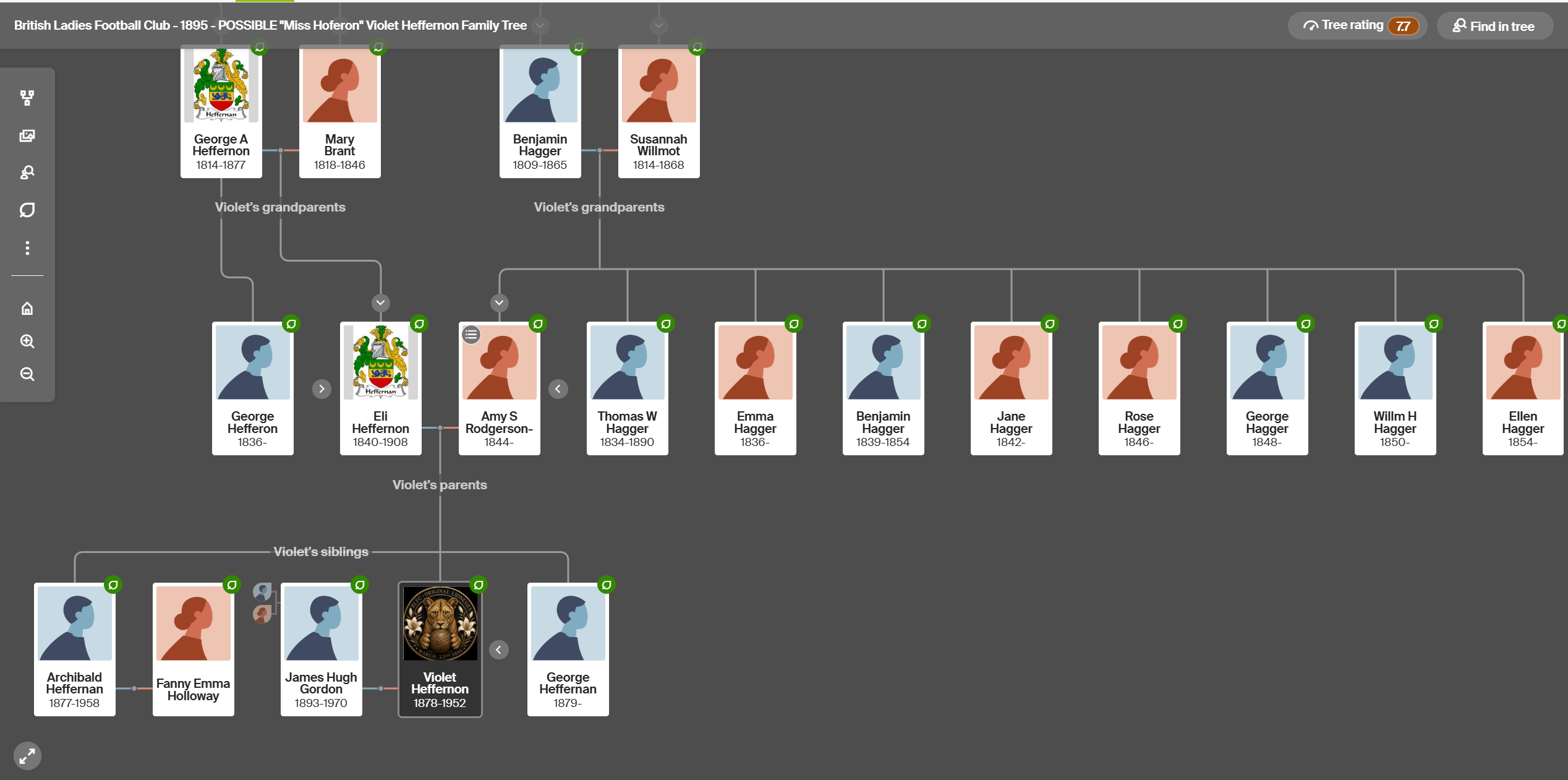
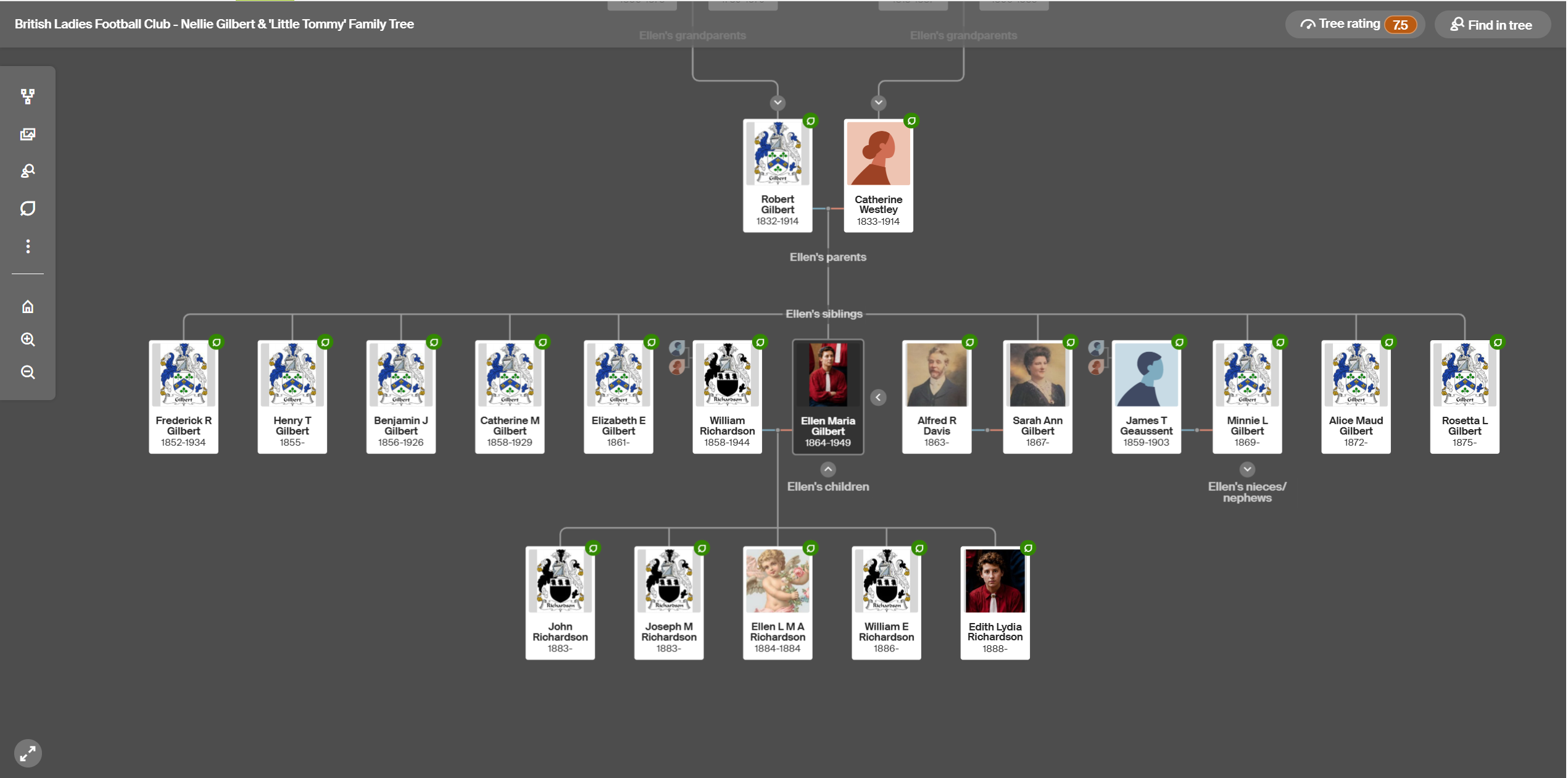
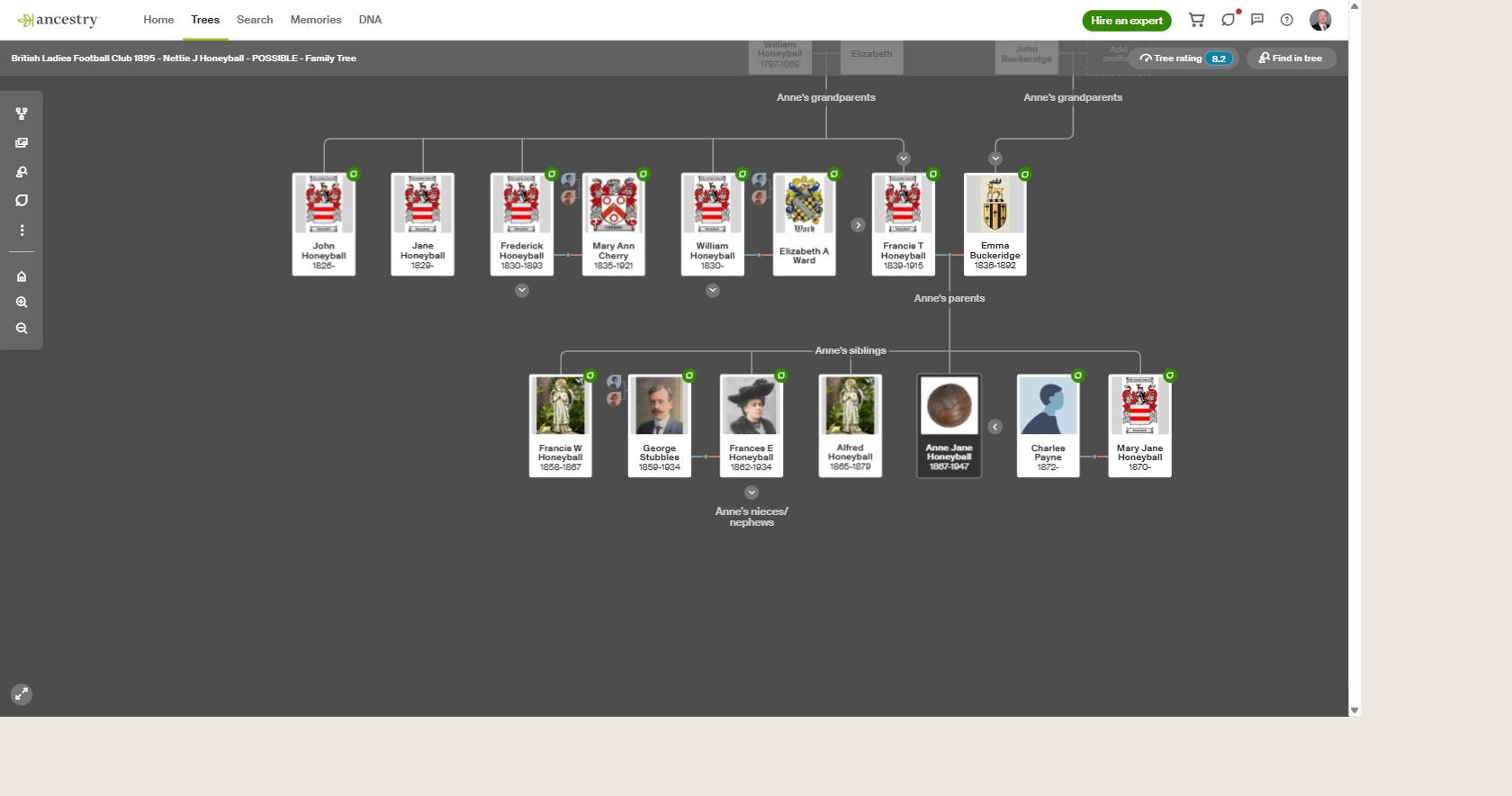
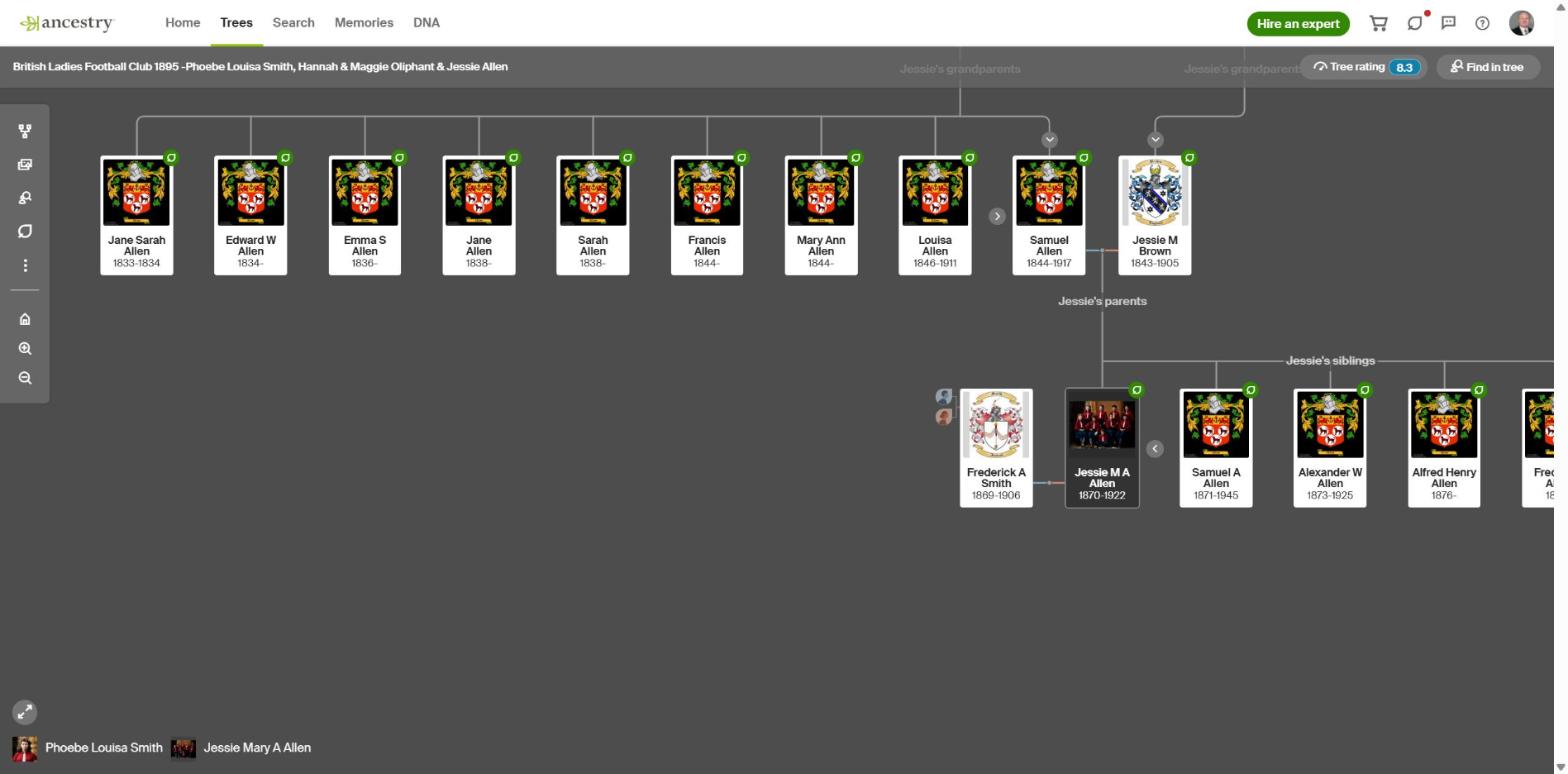
Helen Jane Matthew · Ancestry.co.uk Family Tree · Showing parents William Matthew and Eliza Hayne, siblings, husband John Arthur Lunt, and children
THE SKETCH INTERVIEW — OCTOBER 9TH, 1895
On October 9th, 1895, The Sketch published an interview with Mrs. Graham — Helen Matthew under her playing pseudonym — conducted by one of the magazine's representatives. It is one of the most revealing surviving accounts of Helen in her own words, and it repays careful reading.
The interviewer had been sent to find the captain of the British Ladies Football Club. He describes his surprise at watching her handle the ball: "To see her kick the ball almost the whole length of the ground, and handle it as though it were a globe of worsted, is not calculated to deepen one's impression that a lady footballer is an incongruity." High praise, given the cultural climate of the time.
Mrs. Graham is characteristically direct. When asked about the prejudice the club faces, she replies that the worst of it is that men will not take their play seriously — yet she has toured Scotland and finished at Belfast before audiences of spectators who thought it their duty to chaff and persist in doing so. She is philosophical about this: "We do not like it, inasmuch as we wish to stand on the merits of our play."
On the question of whether football is too manly for women, she is unequivocal: "You are chaffing. Speaking as one who has played the game from childhood — my brothers, who are well-known players, taught me — my firm opinion is that women can, if they are robust and strong enough physically, acquire a fair proficiency in Association."
She speaks of training — skipping ropes, running, ball-kicking — and of the club's immediate prospects: the fixture list nearly complete, a provincial tour planned for the populous English centres, and then Scotland. She is already planning ahead. The club is, in her telling, a serious sporting enterprise, not a novelty.
✦ The Brothers Question
Helen states plainly that her brothers — plural — taught her football from childhood, and that they were well-known players. But the genealogical record confirms only one sibling: Scot Matthew, born 10th January 1876 in Exmouth, Devon — four and a half years Helen's junior. When Helen was fifteen and developing her footballing interests, Scot would have been ten or eleven years old. An older sister being coached by a younger brother is not impossible, but it does not quite match the confident plural claim of brothers who were well-known players.
Three possibilities present themselves. First, there may have been a brother — older than Helen, born before 1871 — who died in infancy or childhood and left no trace in later census records. A child born between 1865 and 1871 who did not survive to the 1881 census would be extremely difficult to identify. Second, Helen may be using "brothers" loosely — encompassing a cousin, a brother-in-law, or a neighbour treated as family in the way Victorian households frequently absorbed young men. Third — and most consistent with everything else we know of Helen Jane Matthew — she may simply have been embellishing. The interview is a performance, conducted under a pseudonym, for a public readership. A woman who spent fifty years constructing alternative selves was not above lending her footballing credentials a more impressive masculine foundation than the record strictly supports.
The question is open. No second brother has been identified. The claim is noted — and treated with the same careful scepticism that all of Helen's self-presentations deserve.
Source: The Sketch, 9 October 1895, p.621 · Image © Illustrated London News Group · Image created courtesy of The British Library Board
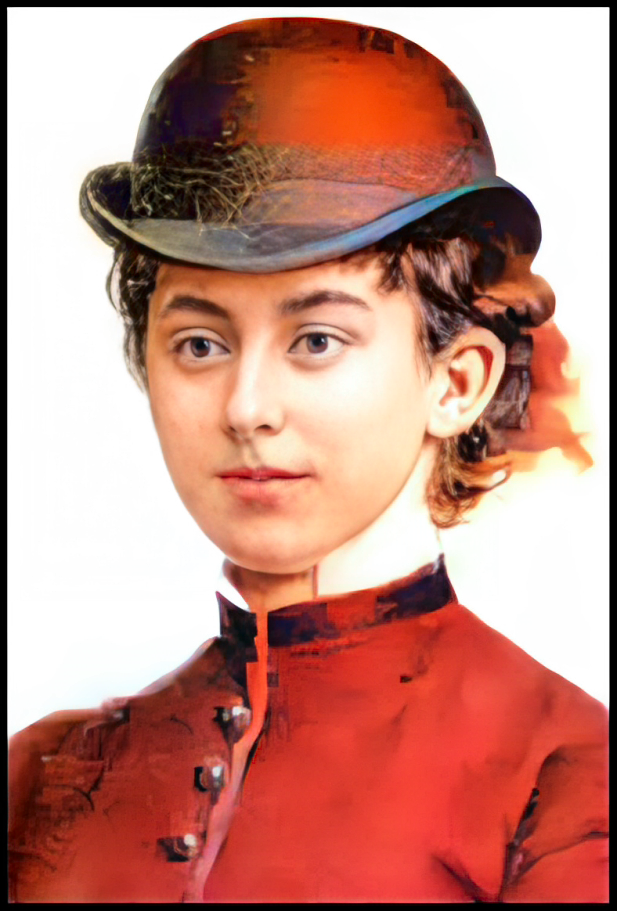
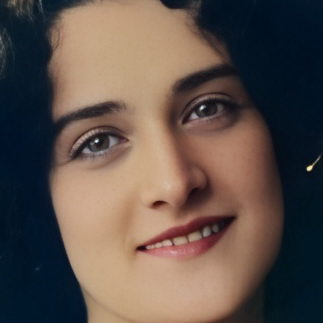
Helen Jane Matthew was born — perhaps on the Thames — to a sea captain father and a Devon mother. She wrote about football under one name, played it under another, and signed a census form under a third. She was fleet of foot before ten thousand people at Crouch End in 1895. She was brought down, sixty-eight years later, by a bedroom mat. She lived through the birth of women’s football in England and survived long enough to see it establish itself as something more than a Victorian curiosity. She deserves to be remembered by every name she used — and by the face that looks out, composed and unguarded, from her portrait.













.png)